The Outcasts Among Us

This parish has a wonderful reputation in the archdiocese. We have good and holy priests, deep roots, a beautiful church filled with Catholic families, and numerous vocations to the priesthood and religious life. When I tell practicing Catholics outside “the Bubble” of St. Michael where I work and worship, they know this place and tell me I am blessed.

Many of you have had the same experience—so a few facts may come as a surprise. For example, did you know that any given fall, only about half of the parish’s school-age youth are enrolled in either the LIFT program or the Catholic school? Or that each year we see a spike in LIFT enrollment among families with children in the sacrament grades—second grade for First Holy Communion; ninth and tenth grade for Confirmation—followed by a drop of about 50 percent after First Holy Communion, and nearly 100 percent after Confirmation? This tells us two things: first, the number of St. Michael youth enrolled in religious education on a regular, year-after-year basis is probably closer to 40 percent, and second, many of the Catholic families in our parish come for the sacraments but form no abiding relationship with Jesus, the Catholic Church, or the Body of Christ—the community of the faithful—present here.

Something is missing, even here in this beautiful, life-giving parish.

I was blessed to make a silent retreat to Demontreville a couple weeks ago. During one of the meals, we listened to Fr. Greg Boyle recount his work among gang members in Los Angeles, and I was struck that these young men were searching for what we all want: a place to belong. That got me thinking: who are the outcasts among us here in St. Michael? Who, in our parish, is just looking for a place to belong?

Perhaps it’s the broken family who struggles to make connections because the kids are only here every other week. Perhaps it’s the single mom who can’t attend MOMs Group because she works long hours—and wouldn’t know what to talk to the other moms about anyway. Perhaps it’s the immigrant family who finds themselves awash in a sea of white, worshiping in a way that is as solemn and foreign to them as they may appear to many of us.

Or perhaps it’s the young family that’s just settling in: Mom’s a cradle Catholic; Dad is coming around—with two young kids and an infant, juggling work and family and faith, swept along in the rush of baseball games and birthday parties. They told the priest five years ago they would raised their children Catholic, but honestly, they don’t know where to start. Mass is a struggle. They’d like to get involved, but maybe they’ll wait until First Communion. Hopefully things will settle down by then.

Those of us who feel at home here are deeply blessed, but we can sometimes forget where we started. At one time—perhaps as children, perhaps as adults—we had basic questions about the faith we were afraid to ask. At one time, someone—a priest, a friend, a stranger—took an interest and nudged us toward God. At one time, we were all on the fringes of faith and could have tipped either way. To our great benefit we fell into the open arms of Jesus.

So let’s benefit others in the same way, recognizing that the best way to deepen our own faith is to follow Christ in spreading the gospel and making disciples. Let us look for the outcasts among us, invite them in, and walk with them up the narrow path to the Cross, and our salvation.

Blogger’s Note: This article appears in the Sunday, August 23, parish bulletin.
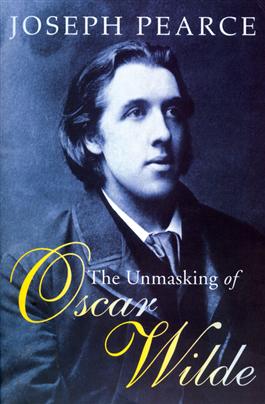
Book Break: The Unmasking of Oscar Wilde

A little more than a year ago, I wrote a brief review of Oscar Wilde’s play, The Importance of Being Earnest. I was quite disappointed in it, given how much I loved his novel The Picture of Dorian Gray when I read it in 2009, and I said so.

My bride’s soon-to-be sister-in-law — who is as smart and well-read as they come, and who loves Wilde — suggested that there might be more to the play than I thought. A short while later, I ran across Joseph Pearce’s book The Unmasking of Oscar Wilde. I knew only a hint about Wilde’s life and thought perhaps the finding of the this biography was providential. When I saw that it was published by the Catholic publishing house Ignatius Press, I was still more intrigued and vowed to read it. I started it this summer, and finished it last week. It is a thought-provoking, page-turning biography of a fascinating and tragic man.

For someone who knew only a little of Wilde’s purported life, the book was eye-opening on many levels. Pearce cites primary sources such as personal correspondence, several other Wilde biographies, writings from and about Wilde’s contemporaries, and even excerpts from the literature and criticism Wilde wrote and admired. He makes strong attempts to debunk a few longstanding “facts” about Wilde — e.g., that Wilde ever had syphilus — and delves deeply into the thesis that Wilde’s decadent, and ultimately destructive public persona was a mask covering a deeply moral, and tragically conflicted, core. Wilde’s personal descent from artistic genius and admired husband and father into a world of drinking, drugs, homosexuality, and prostitution is reflected in The Picture of Dorian Gray and other works — but almost without exception, those works ultimately conveyed a traditional moral. The legendary decadent was quite often a very Christian writer

Pearce makes his case for the mask analogy well, beginning with Wilde’s mother’s own tendency to cultivate little fictions about herself and to morph with the times, and Wilde’s early and frequent attraction to the romance and arresting beauty of Catholicism, which was viewed unfavorably by his father — and continuing through his apparent long-delayed conversion as he lay dying, broke and lonely.Through each period of Wilde’s life, Pearce draws upon biographical events, historical circumstances, and the often obvious conflict between Wilde’s running criticism of art and society and the deeply moral and religious poetry, fiction, and plays he created alongside it.

Pearce almost makes his case too well for my taste, in fact, building the biography upon Wilde’s love of Dante, as a long descent into Hell, followed by a climb through Purgatory toward an eleventh-hour conversion and (God willing) Paradise. Each chapter fits the construct neatly, and Pearce moves so freely between Wilde’s words and those of his contemporaries, that an inattentive reader can easily lose track of what is actually Wilde in his own words, and what is Pearce positing a reasonable theory about Wilde using the words of others, but that could be mistaken.

Upon reflection, however, I found myself convinced by Pearce’s premise and understanding of Wilde, but wishing that in each chapter he had quit hammering once the nail was driven. I suspect the flourishes that bothered me will delight many other readers.

Learning about Wilde’s life did not make me love The Importance of Being Earnest as a story or play — though it makes the origins and intentions behind the play more interesting to contemplate. Wilde’s own words in the edition I own describe the play as follows: “The play is exquisitely trivial, a delicate bubble of fancy, and it has its philosophy…That we should treat all the trivial things of life seriously, and all the serious things of life with a sincere and studied triviality.” This is the voice of Wilde’s public persona: the irreverent, boundary-breaking, drawing-room wit that made him as legendary and popular as his carnal weaknesses made him infamous. The back cover  of my copy claims that Earnest embodies more than any other play, Wilde’s “decency and warmth” by which I think it means it was lighter fare and not in danger of being attacked as indecent, as some of his more explicitly decadent and overtly moral books, like Gray, were.

So why this shift to something lighter — simultaneously less decadent and controversial, and less moral and moving? Pearce isn’t explicit about his views. But it is interesting that Wilde wrote this play during a break in the self-destructive relationship with another man, Alfred Douglas, that brought about his downfall. He hadn’t worked in some time, was deeply in debt, and had few friends upon whom he could rely for help — and he wrote a satire that, unlike his other works, appears purposely to be an exercise in style over substance, mocking conventional morality instead of leveraging immorality to drive home a moral.

It was a triumph at the box office. Perhaps necessity is the mother of invention?

Camp Lebanon Scripture Reflection

Blogger’s Note: This past Sunday I was blessed to offer a brief morning scripture reflection at Camp Lebanon 2015, the summer outing parish families have undertaken for the past several years. This is a write-up of roughly what I think I said.

Since yesterday was the Solemnity of the Assumption, I want to focus on a small portion of that gospel reading. The passage is called the Canticle of Mary, her song of joy to God. I want to share this because this is something I often struggle with: being a joy-filled Christian. I get caught up in all the problems of this world — the persecution of Christians around the world, the whole abortion scandal in the news right now, the decline of our culture, the upcoming election — and I become a very somber Christian. I get wrapped around the axle about all these things that I can’t do anything about (except pray), and I lose the joy of our Blessed Mother. Continue reading

LIFT Links for Late Summer

We’re headed into August, and summer is, for better or worse, winding down. If you’re like us, in the flurry of summer and back-to-school activities, it can be hard to find quality time to spend with God, or even with the entire family. To that end, here are a few ideas for a late summer day or weekend:

  • Lakeside Fellowship. Camp Lebanon is coming quickly, but if your summer isn’t plum full already, consider joining other St. Michael and St. Albert families the weekend of Aug. 14-16 for great food, fellowship, and lakeside fun. Details can be found here, and the registration form is here — we still need families in order to hold the entire camp for our two parishes!
  • Family Movie Night. A few years back I watched and recommend the beautiful animated movie, The Secret of Kells. Both Kells and a newer movie in the same style (which I haven’t seen), Song of the Sea, are available for unlimited streaming on Amazon Prime. Ignatius Press recently published this review of Song of the Sea — should be well worth watching. We will definitely be checking it out! (The Secret of Kells is also available on Netflix.)
  • Silent Retreat. Christ the King Retreat Center in Buffalo is hosting a men’s and women’s silent retreat in late August entitled “Sowing Seeds of Mercy.” The retreat is Aug. 21-23 at King’s House, with a suggested donation of $160. More details and registration information can be found here.
  • Spaghetti Dinner. Sometimes just having a family meal together that you don’t have to cook is the ticket to reconnecting with family. If so, you can eat for a great cause at the upcoming Kunzman Spaghetti Dinner fundraiser hosted by Knights of Columbus Council 4174 at the St. Albert Parish Center. The dinner is Sunday, Aug. 23, from 4:30 to 8 p.m., with free-will offerings to support Brother Knight Erich Kunzman and family. Erich has suffered some complications due to a significant surgery and could use our prayers and support!
Have a great rest of your summer!

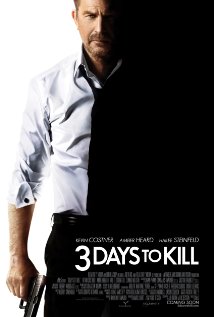
Movie Break: Three Days to Kill

Last night, I watched the recent Kevin Costner flick, Three Days to Kill. It’s the story of a CIA lifer with a broken family who may be dying of cancer, but can earn a chance to try an experimental cure for the proverbial one last job.

I’ve never been a Costner hater, and in fact, I’ve enjoyed him in a number of roles over the years, though he does bring a solidly predictable Costner vibe to most every character he plays. I guess that’s what motivated me to write a post on this movie. It’s not great by any means, and I flat didn’t like a few of aspects of it — but I really enjoyed Costner’s world-weary, worn-out spy. Early in the movie, his diagnosis is delivered matter-of-factly, punctuated flatly with, “You should get your affairs in order. The CIA thanks you for your service.” Now that he’s out of time, he realizes how much he’s lost being away from his wife and daughter doing awful work for an organization that is ready to move on, and his gruff Pittsburgh persona is endearing as he tries to relate to his family again.

Objections? The movie is an oddall mix of violence, humor, and emotion, and it certainly stretches credulity that the perpetually coughing assassin could shift gears from sickbed to superman and back and still be virtually unstoppable. The agent in  charge of this final job (three days to find and eliminate a terrorist and his henchmen in Paris, hence the title) is a young woman who inexplicably goes from a somewhat bookish professional in the opening scene to a bleach-blonde (and later raven-haired), chain-smoking (that’s just mean, given Costner’s condition) femme fatale, raising questions about her allegiances, motivations, and the contents of the mystery drug she’s giving him as a possible cure. The drug accelerates his heart rate (bad in his line of work) and causes mild hallucinations (worse) — but thankfully, alcohol will take the edge off (keeps getting better). To make things weirder, the gal insists upon dressing provocatively and meeting him in strangely lit rooms where dancers gyrate and smoke swirls…the better to provoke hallucinations and suspicions, I guess. His daughter’s boyfriend, too, is called into question, but in several cases, these were just red herrings. (The actual plot twist did take me by surprise, however — not so the reviewer on Roger Ebert’s site, but I tend to shut down my analytics until after the popcorn-muncher is over.) 

It’s the family scenes, plus a great opening gunfight, an intense melee in a deli, and an ingenious car-jacking, that make this movie worth seeing. In retrospect, it reminds me a bit of Clint Eastwood’s Unforgiven — a formerly icy killer who just wants to be left alone with his family and live up to his wife’s expectations in an environment that brings out the worst of what he’s best at. (It’s interesting that so many action movies these days involve secret agents who want to be left alone: the Bourne movies, the Taken movies, even the most recent Bond movies have this sense of world-weariness…wonder what this says about our mentality these days?)
I would say this movie is a hard PG-13 due to language, violence, seminudity and general weirdness. It could probably have been R.