Book Break: In the Beginning: A Catholic Understanding of the Story of Creation and the Fall

One of the many things I meant to do in the past year was to explore and review several books on the Catholic view of creation and evolution, in order to help parish parents and grandparents answer their questions on the topic and those of their children. My hope was to find a book or two that might be helpful to inquiring minds of all ages.

As usual, I bit off more than I could possibly chew and have completed only one such book. On a positive note, it was excellent.

‘In the Beginning…’ A Catholic Understanding of the Story of Creation and the Fall is an edited compilation of four Lenten homilies given by Pope Benedict XVI in 1981, when he was still Joseph Ratzinger, archbishop of Munich and Freising. His goal was to develop a catechesis of Creation for adults. The four homilies build, one upon the other, to present a clear case for what the Genesis accounts of Creation and the Fall mean and why they continue to matter:

  • The first homily, “God the Creator,” lays out the so-called conflict between the Creation account(s) and science, and discusses how and why we interpret scripture the way we do: in the context of Jesus, to whom the entirety of scripture, written over the course of centuries, points.
  • The second homily, “The Meaning of the Biblical Creation Accounts,” addresses the Creation story specifically, the reasonableness of belief in Creation, the ways in which science points to Creation, the sabbath structure and rhythm of Creation — and the emergence of the view that humanity is at conflict with nature.
  • In the third homily, “The Creation of the Human Being,” Pope Benedict focuses on the heart of the matter for many modern Catholics: where humans come from. He explains that Genesis has more to do with who we are (imago Dei, or image of God) than how we got here, then tackles evolutionary theory directly — what it can explain about our existence, and what it can’t.
  • In the fourth homily, “Sin and Salvation,” Pope Benedict discusses the Fall of Adam and Eve, and the plan for salvation, with Christ as the new Adam. In perhaps the most profound explanation for me personally, he clearly lays out why, because we are creatures created by God, obedience to God’s law is not a restriction of freedom (like we often perceive it) — we are made for this, and thrive under God’s law because it’s in our nature!
The entire book is exactly 100 pages, including the Appendix, entitled “The Consequences of Faith in Creation, which reads like a fifth homily on how we got to the point that, since the Renaissance, understanding of and belief in Creation theology has diminished to the point that it is rarely spoken of in modern Catholicism, and why our fundamental “creatureliness” is essential to our future. Pope Benedict’s style is straightforward and clear; he is obviously well-read and -researched on this topic, but makes it accessible to (though not always easy for) the patient reader. The book is less specifically about evolution that I imagined, but rewarding and worth the time. It’s fun to imagine these as homilies, sitting in the pews, wishing someone was writing all this down.

These Least Brothers of Mine…

My brothers and sisters, show no partiality as you adhere to the faith in our glorious Lord Jesus Christ. For if a man with gold rings and fine clothes comes into your assembly, and a poor person in shabby clothes also comes in, and you pay attention to the one wearing the fine clothes and say, “Sit here, please,” while you say to the poor one, “Stand there,” or “Sit at my feet,” have you not made distinctions among yourselves and become judges with evil designs? — James 2:1-4 

Last night Jodi, Brendan, and I joined a friends of Brendan’s and his parents at Fogo de Chão Brazilian Steakhouse in downtown Minneapolis to celebrate their senior year, their acceptance into the college(s) of their choice, and a backlog of birthdays. Fogo is a carnivore’s paradise, with such an abundance and variety of fire-roasted meats that I kept thinking of Scripture’s forgiving father ordering the slaughter of the fatted calf to celebrate the prodigal son’s return. Server after server stopped by our table with skewer after skewer of beef, pork, chicken, and lamb, carving portions for us until we flipped our green coasters to red to signal, “No mas!” (or “não mais,” I supposed, in Portuguese).

We had a great time with the boys, and ate a delicious meal the likes of which we are unlikely to enjoy again any time soon, given the price. All the way home, however, and all through last night and today, I’ve been haunted by a man I do not know. I saw him only in passing as we looked for a place to park, but the impression he made is indelible.

We drove past the restaurant on Hennepin, and three or four blocks up, turned left to loop around and look for parking garage. As Jodi turned the corner, I saw what I thought was a youth seated on a skateboard, leaning against a building. As we drew nearer and went past, I beheld a man. In those brief seconds as we passed, this is how he appeared to me.

Ecce homo: Click to view full-size sketch.

He was legless, in a grubby t-shirt and dark pants cut short and sewn shut or folded under. His face was of no obvious age, but worn and creased with hard living, and his thin hair stood up in patches from his scalp. I saw that his left hand was on the sidewalk to stabilize and propel himself. His other arm was raised as though gesturing — it ended abruptly in a rounded, red stump several inches short of where his right hand should be.

Brendan saw him, too. We discussed briefly how hard it must be to live in the city, presumably on the streets, in such a condition. Then, determined not to spoil the boys’ celebration, I dropped the subject. We turned left again, backtracked a few blocks, parked, and went in to feast.

As we ate, surrounded by such abundance, I thought of him. As we paid for our decadent meal, I thought of him. As we left Minneapolis in a rush of cars, under the yellow glare of a thousand street lights, I thought of him.

Today it occurred to me that maybe some sense of injustice over the pleasures we enjoyed at dinner exaggerated his state in my memory — but I believe that was the Devil trying to lull me back to complacency. When I showed the sketch above to Brendan, he said it’s what he recalls, too. A few moments on Google turned up this brief newspaper article: apparently he’s been downtown at least since this spring.

Perhaps he is a homeless vet our country has forgotten. Perhaps he is a junkie. Regardless, no man deserves to live with their last good limb pressed to pavement, unable to see above the hoods of the stopped cars as he crosses the busy streets. How will he stand to move about the city in winter, when the salt and road grime stings his fingers and the wind bites his cheeks? Does he take the bus? Who helps him get aboard? How does he keep his skateboard with him, use the restroom, avoid those who would cause him harm? How will he survive?

Had we been walking past, not driving, I’m not sure what I would have done for him. How could I have helped? Given money? To what end? Traded shirts with him? Perhaps, on the feast day of Blessed Teresa of Calcutta, I would have stopped, hunkered down, and acknowledged him, eye to eye, man to man.

Or perhaps I would have avoided eye contact and kept walking, then muttered a guilt-ridden Hail Mary under my breath.

On the way to church this morning, I urged the kids to try offing the Mass for someone in particular, to see if that helped them focus their prayers and remain present the entire time. I committed myself to offering the Mass for this man, whom we drove past and may never see again, but who has cracked my stony heart. I had not previewed the readings for this Sunday; now that I’ve heard them, I am convinced the Lord is working on me. While it is not sinful to enjoy in moderation the pleasures of earthly life — food and drink and friendship — we must not be blind or unkind to those who seem unlovable. If we prefer the company of others to the company of those in need, we fail to follow Christ.

Lord Jesus Christ, you teach us, “Whatever you did for one of these least brothers of mine, you did for me” (Matthew 25:40). Help me, Lord, to hear the cries of the poor and to show kindness and mercy in word and deed. Forgive those times I have failed to love those you love, and strengthen me to do the hard work of charity among these “least brothers” of yours. Help me to step outside my comfort zone and serve and comfort them in prayer, word, and deed. Amen.

Blessed Mother Teresa, pray for us.

The Family That Prays Together…

Education in the faith by the parents should begin in the child’s earliest years. This already happens when family members help one another to grow in faith by the witness of a Christian life in keeping with the Gospel. Family catechesis precedes, accompanies, and enriches other forms of instruction in the faith. 

— Catechism of the Catholic Church, paragraph 2226

Seven years ago our parish switched from weekly CCD to a monthly family faith formation model we called LIFT, or Learning In Faith Together. The reason was solid: children whose parents model Catholic living and make faith and the sacraments a priority are more likely to hold onto the faith themselves. Children first experience God’s love through their parents—and the best way to keep kids Catholic is for parents to teach them by their own words and example!

Our program has changed, but our original goal—to gather as a community to help parents share their faith with their children—has not. How will this play out in our LIFT and sacrament classes this year? By emphasizing three ways we can encounter Christ in our day-to-day lives:

  • In Our Family. This year, LIFT families—adults and high-schoolers, middle- and grade-schoolers—will be covering the same monthly topics at an age-appropriate level, so that the faith-building activities for each month can be a family affair.
  • In Our Community. If the Church is the Body of Christ, then we can encounter Jesus in each other. To that end, LIFT will feature shorter lessons and more practical small-group discussions, monthly personal witnesses or speakers from the parish, and a bigger emphasis on service activities and ways of living our Catholic faith outside of the church walls.
  • In the Holy Eucharist and the Sacraments. The teens on our new LIFT Crew offered a profound, yet simple, insight. “Get people in front of the Blessed Sacrament,” they said, “and let Jesus do the work.” So this year, we will be emphasizing the essential importance of Mass and the Holy Eucharist, as well as Confession and the other sacraments, for adults and young people alike.

I often hear parents say that children learn more attending weekly religion classes. While they may learn more of the content of the faith, without the habits of regular prayer, Mass attendance, and confession, and without discussing and living their faith outside of church, that content doesn’t stick. We often speak of planting seeds, but only when good ground is properly prepared can the seeds germinate.

To that end, we are encouraging all parish families, including those in the parish school, to attend LIFT. For families who have children preparing for First Communion and Confirmation, LIFT is required except in three cases: if the children attend the parish school and have regular religion and sacrament instruction; if the children are a part of our parish home-school group and have regular religion and sacrament instruction; or if the family has no children younger than ninth grade.

We are asking for a commitment—but it’s no more than the commitment we’ve already made as baptized Catholics and disciples of Christ.

We know that the cost of LIFT can be an obstacle for families. LIFT and sacrament fees help to cover the costs of staff, materials, speakers, and retreats, but no one is ever turned away from LIFT or the sacraments due to money. Please don’t let the cost stop you from registering and attending!

If it’s a matter of time, consider this: what better investment of two hours a month can you make? Two hours a month to help lead our young people to Christ by personal example—to make disciples, who are “doers of the word, and not hearers only” (James 1:22).

We cannot save time—we only spend it. What greater gift can we spend it on than salvation?

Blogger’s Note: This article appears in the Sunday, Sept. 6, parish bulletin.

The Outcasts Among Us

This parish has a wonderful reputation in the archdiocese. We have good and holy priests, deep roots, a beautiful church filled with Catholic families, and numerous vocations to the priesthood and religious life. When I tell practicing Catholics outside “the Bubble” of St. Michael where I work and worship, they know this place and tell me I am blessed.

Many of you have had the same experience—so a few facts may come as a surprise. For example, did you know that any given fall, only about half of the parish’s school-age youth are enrolled in either the LIFT program or the Catholic school? Or that each year we see a spike in LIFT enrollment among families with children in the sacrament grades—second grade for First Holy Communion; ninth and tenth grade for Confirmation—followed by a drop of about 50 percent after First Holy Communion, and nearly 100 percent after Confirmation? This tells us two things: first, the number of St. Michael youth enrolled in religious education on a regular, year-after-year basis is probably closer to 40 percent, and second, many of the Catholic families in our parish come for the sacraments but form no abiding relationship with Jesus, the Catholic Church, or the Body of Christ—the community of the faithful—present here.

Something is missing, even here in this beautiful, life-giving parish.

I was blessed to make a silent retreat to Demontreville a couple weeks ago. During one of the meals, we listened to Fr. Greg Boyle recount his work among gang members in Los Angeles, and I was struck that these young men were searching for what we all want: a place to belong. That got me thinking: who are the outcasts among us here in St. Michael? Who, in our parish, is just looking for a place to belong?

Perhaps it’s the broken family who struggles to make connections because the kids are only here every other week. Perhaps it’s the single mom who can’t attend MOMs Group because she works long hours—and wouldn’t know what to talk to the other moms about anyway. Perhaps it’s the immigrant family who finds themselves awash in a sea of white, worshiping in a way that is as solemn and foreign to them as they may appear to many of us.

Or perhaps it’s the young family that’s just settling in: Mom’s a cradle Catholic; Dad is coming around—with two young kids and an infant, juggling work and family and faith, swept along in the rush of baseball games and birthday parties. They told the priest five years ago they would raised their children Catholic, but honestly, they don’t know where to start. Mass is a struggle. They’d like to get involved, but maybe they’ll wait until First Communion. Hopefully things will settle down by then.

Those of us who feel at home here are deeply blessed, but we can sometimes forget where we started. At one time—perhaps as children, perhaps as adults—we had basic questions about the faith we were afraid to ask. At one time, someone—a priest, a friend, a stranger—took an interest and nudged us toward God. At one time, we were all on the fringes of faith and could have tipped either way. To our great benefit we fell into the open arms of Jesus.

So let’s benefit others in the same way, recognizing that the best way to deepen our own faith is to follow Christ in spreading the gospel and making disciples. Let us look for the outcasts among us, invite them in, and walk with them up the narrow path to the Cross, and our salvation.

Blogger’s Note: This article appears in the Sunday, August 23, parish bulletin.

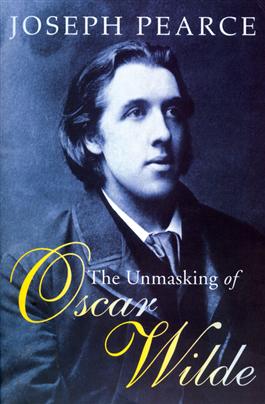
Book Break: The Unmasking of Oscar Wilde

A little more than a year ago, I wrote a brief review of Oscar Wilde’s play, The Importance of Being Earnest. I was quite disappointed in it, given how much I loved his novel The Picture of Dorian Gray when I read it in 2009, and I said so.

My bride’s soon-to-be sister-in-law — who is as smart and well-read as they come, and who loves Wilde — suggested that there might be more to the play than I thought. A short while later, I ran across Joseph Pearce’s book The Unmasking of Oscar Wilde. I knew only a hint about Wilde’s life and thought perhaps the finding of the this biography was providential. When I saw that it was published by the Catholic publishing house Ignatius Press, I was still more intrigued and vowed to read it. I started it this summer, and finished it last week. It is a thought-provoking, page-turning biography of a fascinating and tragic man.

For someone who knew only a little of Wilde’s purported life, the book was eye-opening on many levels. Pearce cites primary sources such as personal correspondence, several other Wilde biographies, writings from and about Wilde’s contemporaries, and even excerpts from the literature and criticism Wilde wrote and admired. He makes strong attempts to debunk a few longstanding “facts” about Wilde — e.g., that Wilde ever had syphilus — and delves deeply into the thesis that Wilde’s decadent, and ultimately destructive public persona was a mask covering a deeply moral, and tragically conflicted, core. Wilde’s personal descent from artistic genius and admired husband and father into a world of drinking, drugs, homosexuality, and prostitution is reflected in The Picture of Dorian Gray and other works — but almost without exception, those works ultimately conveyed a traditional moral. The legendary decadent was quite often a very Christian writer

Pearce makes his case for the mask analogy well, beginning with Wilde’s mother’s own tendency to cultivate little fictions about herself and to morph with the times, and Wilde’s early and frequent attraction to the romance and arresting beauty of Catholicism, which was viewed unfavorably by his father — and continuing through his apparent long-delayed conversion as he lay dying, broke and lonely.Through each period of Wilde’s life, Pearce draws upon biographical events, historical circumstances, and the often obvious conflict between Wilde’s running criticism of art and society and the deeply moral and religious poetry, fiction, and plays he created alongside it.

Pearce almost makes his case too well for my taste, in fact, building the biography upon Wilde’s love of Dante, as a long descent into Hell, followed by a climb through Purgatory toward an eleventh-hour conversion and (God willing) Paradise. Each chapter fits the construct neatly, and Pearce moves so freely between Wilde’s words and those of his contemporaries, that an inattentive reader can easily lose track of what is actually Wilde in his own words, and what is Pearce positing a reasonable theory about Wilde using the words of others, but that could be mistaken.

Upon reflection, however, I found myself convinced by Pearce’s premise and understanding of Wilde, but wishing that in each chapter he had quit hammering once the nail was driven. I suspect the flourishes that bothered me will delight many other readers.

Learning about Wilde’s life did not make me love The Importance of Being Earnest as a story or play — though it makes the origins and intentions behind the play more interesting to contemplate. Wilde’s own words in the edition I own describe the play as follows: “The play is exquisitely trivial, a delicate bubble of fancy, and it has its philosophy…That we should treat all the trivial things of life seriously, and all the serious things of life with a sincere and studied triviality.” This is the voice of Wilde’s public persona: the irreverent, boundary-breaking, drawing-room wit that made him as legendary and popular as his carnal weaknesses made him infamous. The back cover  of my copy claims that Earnest embodies more than any other play, Wilde’s “decency and warmth” by which I think it means it was lighter fare and not in danger of being attacked as indecent, as some of his more explicitly decadent and overtly moral books, like Gray, were.

So why this shift to something lighter — simultaneously less decadent and controversial, and less moral and moving? Pearce isn’t explicit about his views. But it is interesting that Wilde wrote this play during a break in the self-destructive relationship with another man, Alfred Douglas, that brought about his downfall. He hadn’t worked in some time, was deeply in debt, and had few friends upon whom he could rely for help — and he wrote a satire that, unlike his other works, appears purposely to be an exercise in style over substance, mocking conventional morality instead of leveraging immorality to drive home a moral.

It was a triumph at the box office. Perhaps necessity is the mother of invention?