Book Break: Holy Week by Jerzy Andrzejewski

Somewhere along the line these past few years I picked up an English translation of the short novel Holy Week by Polish author Jerzy Andrzejewski. I bought it knowing almost nothing about the book or the author, because I used to study Polish in college, as a tribute to my maternal roots, and because Polish literature can be hard to come by. Andrzejewski is perhaps best know for his novel Ashes and Diamonds, which was turned into a well-known Polish film of the same name by Andrzej Wajda, who has also made a film version of Holy Week. I saw the movie version of Ashes and Diamonds in college and liked it, so I took a chance on the book.

The novel tells the story on the Warsaw Ghetto Uprising and the tragic burning of the ghetto and elimination of Warsaw’s Jews during the days leading up to Easter of 1943 — from the perspective of a handful of Poles whose lives are variously entangled with each other’s and with a young Jewish woman trying to evade the Nazis and their Polish informers.

It has stood on my shelf for a at least two Holy Weeks now, until this past Tuesday, when I took it up on a whim. It is a short novel — just 125 pages — with four chapters covering each day from Tuesday to Good Friday. I took this as a sign and read it a chapter a day, finishing the book’s final chapter this morning.

This is a provocative book that reads a bit like watching a play. The Polish characters reflect the range of Polish responses to the uprising and “liquidation” of the Jewish inhabitants. Most display some level of antisemitism, ranging from mealy-mouthed rationalization of the it’s-complicated variety to thankfulness that the hated Nazis are nevertheless solving the Poles’ “Jewish problem” for them. Only three adult characters avoid being painted with this brush: 
  • Devout Catholic wife and expecting mother Anna, whose unquestioning morality enables her to help her husband’s Jewish friend even as her faith in God and her husband begins to waver;
  • Idealistic and aggressive Julek, who insists upon doing what he little he can to aid the Jewish uprising and points out others’ equivocations: “I know perfectly well what it means to suit one’s anti-Semitism to one’s tastes. We merely find the so-called methods distasteful. The point is there shouldn’t be any methods in the first place!”; and
  • Well-to-do landlord Zamojski, who at least avoids aiding the the anti-Semites, but who may himself be concealing his Jewish heritage.
The juxtaposition of Irena’s struggle to survive and the ever-present cloud of smoke and sounds of gunfire and explosions from the ghetto against the backdrop of Polish Christians enjoying spring and preparing for the Easter holiday as best they can lends the novel an almost surreal atmosphere. The story was written and published quickly and courageously in 1945, and was not popular among Poles, whose nerves were too raw and wounds were too fresh, and who found the various expressions of racism and nationalism rang uncomfortably true. Even today, this book pricks the conscience, making the reader reevaluate how he or she perceives others and wishes to be perceived — and what circumstances might limit their charity on behalf of a neighbor who is unlike themselves.
The book reads like an English translation from the original Polish — certain expressions do not ring true to American ears, but make sense in the Polish context — and the story will end too abruptly (and without sufficient resolution) for some tastes. Still, it is a quick and thought-provoking read. If you are interested, it is available through the Great River Regional Library in St. Michael, or you can borrow my copy.

Book Break: Saint John Paul the Great: His Five Loves

This past Christmas, our church gave to all parish and visiting families a copy of Jason Evert’s book Saint John Paul the Great: His Five Loves. I finished it this past week while recuperating, and it seems only right that on this tenth anniversary of the great man’s passing, I offer a brief review and encourage family and friends to read it.

First, let me encourage you to read the Foreword and Introduction, as both share personal anecdotes that share what sort of man Pope John Paul II was, The first half of the book, then, is a condensed and easy-to-follow biography of Karol Wojytla from his boyhood in Poland to his death at the Vatican at age 85. Some years ago, on a long solo road trip, I had the pleasure of listening to an audiobook version of George Weigel’s JPII biography, Witness to Hope — Evert’s book uses Weigel as one of several sources, and provides a great overview of the events and circumstances that shaped young Karol into Father Wotyla, then bishop, archbishop, pope, and saint. When I hear these stories, I can’t help but be proud to be (half) Polish and Catholic.

The second half of the the book uses additional sources and anecdotes to outlines the “five loves” that inspired and sustained Pope John Paul II in his priestly ministry and personal holiness:

  • Young People: From his earliest priesthood, he was drawn to youth and young adults, recognizing early on that they were the church’s best hope for the future, and that a watered-down morality would not satisfy their idealism and thirst for the challenge of living full and Godly lives.
  • Human Love: He saw, in human love and sexuality, and image of the Holy Trinity’s loving and life-giving communion, and went to extraordinary lengths to explain the unity of love, sex, marriage,and procreation and to elevate these topics to the realm of the sacred.
  • The Blessed Sacrament: His love for the Holy Eucharist and experience of the Real Presence of Jesus was so deep and strong that he spent hours in adoration and conversation with God, and more than once, located the Blessed Sacrament in hidden chapels and unknown places by his love for and sense of the Divine alone. 
  • The Virgin Mary: After the loss of his mother, and ultimately his brother and father as well, he embraced Mary, the Mother of God, as his own and never ceased his devotion to her guidance and intercession — he knew that she always leads us to Christ.
  • The Cross: He saw the dignity in the elderly, the disabled, the sick, and the suffering, and showed it to them, first by articulating the ways in which human suffering can be used to benefit others, and finally, by living his own painful and debilitating struggles in the public eye, serving the Church until his death.
Last I looked, we still had a few copies of this book in the Gathering Space. If you didn’t get one, let me know. It’s a quick and enlightening read that is almost sure to inspire!

Undset, or Three Things to Love About the Kristin Lavransdatter Trilogy


Blogger’s Note: Several years ago, I agreed to my friend Jacqui’s challenge to read 15 Classics in 15 Weeks. I continue to press forward, this being number 12 of 15, and at this point 15 Classics in 15 Years seems quite doable…

Last week I finally finished Kristin Lavransdatter trilogy. This series came highly recommended by two trusted friends; the author, Sigrid Undset, was the daughter of Norwegian atheists, a Catholic convert, and a Nobel Prize winner. The books are tremendous, insightful, and often achingly beautiful.


However, these are not easy reads. Although written in the 20th century, my translation, at least, has a voice and vocabulary hearkening to the Middle Ages, with both Norwegian and Latin scattered throughout. The author’s knowledge and love of her country’s geography and culture shines throughout the books, but could overwhelm or disorient the reader.

It can also be challenging for a man to characterize or recommend these books to others — the covers of the edition I have (pictured above) do not inspire masculine interest, nor do the titles or cover summaries:

  • “Volume I, The Bridal Wreath, describes young Kristin’s stormy romance with the dashing Erlend Nikulasson, a young man perhaps overly fond of women, of whom her father strongly disapproves.”
  • “Volume II, The Mistress of Husaby, tells of Kristin’s troubled and eventful married life on the great estate of Husaby, to which her husband has taken her.”
  • “Volume III, The Cross, shows Kristin still indomitable, reconstructing her world after the devastation of the Black Death and the loss of almost everything that she has loved.”

That said, within the past month, The Catholic Gentleman website posted an article entitled, “Kristin Lavransdatter and Your Nordic Catholic Medieval Heart,” which makes a solid (if hyperbolic) case for why every Catholic man, at least, should read these books.* Men, take this as a challenge!

Now, without further ado, Three Things to Love about the Kristin Lavransdatter trilogy:

  • Everyday Catholicism: This series is as Catholic as the day is long, although Catholicism is not what it’s “about.” I’ve never read a book in which Catholic prayers and blessings, sin and penance, were so effortlessly present and pervasive, reflecting the daily lives of the characters. If you want a glimpse into the everyday lives of the faithful during the Middle Ages, this is your ticket — this is what Christendom looked like.
  • Historical Fantasy: Although painstakingly researched and historically accurate, the style and storytelling recall great fairy tales and epic fantasy stories like The Lord of the Rings. High mountains and dark forests. Fertile valleys and fortified cities. Stories and visions of elves and trolls. Swordcraft and witchcraft. It’s all there for those brave enough to venture forth.
  • The Challenge of Marriage and Family: This, to me, is the real wealth of these tales. The story is told primarily, but not exclusively, through Kristin’s eyes, providing deep insight into love, marriage, masculinity, and motherhood from a woman’s perspective — but every character is richly drawn and complex, living with each other as best they can given their individual virtues and flaws, assumptions and knowledge. Even among those we love, there is so much we don’t know — which makes true love not as fleeting as feeling, but, ultimately, an act of the will.
I’ve got three more slots in my seemingly interminable quest to read 15 classics, and it has taken so long that my interests have changed. I think my final three books will be Dante’s Divine Comedy, Flannery O’Connor’s Collected Works, and Tolstoy’s Anna Karenina. Not sure on the order yet — I’m reading something else in the interim!

* * * * *

The comments below the post also suggest that translations other than the one pictured, by Archer and Scott, may be better or easier reads.

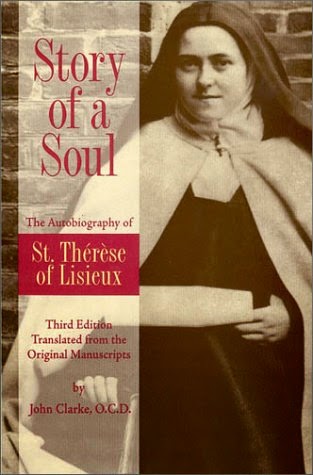
Book Break: Story of a Soul

One of the great blessings of surgery has been time to read; as a result, I’ve now finished three books that lay on my nightstand, long overdue. The first was the the autobiography of St. Therese of Lisieux, Story of a Soul. The Little Flower had been much on my mind and had shown up time and again in my prayers and study this past winter, so much so that I decided she must be trying to tell me something. I found her biography in our parish lending library, and finished in late last week.

Autobiographies, especially those that weren’t expressly written for publication, can be challenging to read, and this is no exception. St. Therese is writing out of obedience, fulfilling requests of three different prioresses to record the memories of her life. Her style is emotional, sentimental, somewhat meandering, and acutely self-aware — in fact, she acknowledges throughout the book, with good humor, that she has drifted far from the main point, but that she is writing because she was asked to, and if her work is found lacking and destroyed, it will be of no great loss to her.

It does not take long to realize this is the story of an exceptional soul from an exceptional family. From her earliest days in 19th-century France, the Martin family’s life revolved around their Catholic faith, prayer, and the sacraments. The first thing that struck me (and I believe this was one thing the little saint wished to tell me) was that in her childhood, preparation for receiving Jesus in the Holy Eucharist for the first time was the most important and most exciting thing that could happen. She understood the mystery of the Real Presence early on and longed for the sacrament with her whole being; her entire family — parents, sisters, aunts, uncles, everyone — helped her to prepare, encouraging and instructing her, helping her to make a mature first Confession, even sending this little girl on retreat to prayerfully prepare for her first Communion. We fall far short of this today, and that must change!

From an early age, St. Therese longed for the religious life of a Carmelite sister. The persistence of her vocation also struck me: she prayed long and hard on this beginning in childhood and was so strongly minded that, on a pilgrimage to Rome, she pulled rank on her local priests and bishop and cried to the Pope to let her honor him by entering Carmel at age 15. He told her she would enter if God willed it, and a short time later, the local church authorities relented.

The religious life was not without struggles for St. Therese, and it was there that she perfected her “Little Way,” which has made her so beloved the world over. She wanted to do great things for God, but was confined to a convent, young and of poor health. She could not be a priest, and would not be a missionary or a martyr. She was just a little flower on the forest floor — but the little things she did, she could do with great love. As a result she began to bite her tongue when accused or  provoked, to seek out the sisters who were avoided by others and look for ways to serve them, and to seek the good for others in every situation, regardless of the cost to herself. She began to love as God loves.

St. Therese was extraordinary, but blazed a trail that ordinary Catholics can follow, perhaps, more easily than that of the spiritual powerhouses of the Church. And I think that was another thing she wanted to tell me. This is a beautiful story of a great soul, and while it’s not a traditional page-turner, I highly recommend it.

On a related note: during the same time period as I was reading this book, a colleague gave me a booklet called “40 Days of Preparation for First Communion with St.Therese of the Child Jesus.” It is a booklet of very short daily prayers and exercises for children, based on the prayers and exercises St. Therese undertook as a girl under her family’s guidance. Unbeknownst to me, my colleague Kathy was given the same booklet by one of our priests to consider for use with this year’s First Communicants. It’s a baby step toward what our First Communion preparation ought to be. St. Therese of the Child Jesus and the Holy Face, pray for us!

Full of Grace

Annunciation by Paolo de Matteis (1712)

Yesterday was a rare treat: a three-sacrament day. I went to work, then to Confession at lunch time, received a pre-surgery Anointing of the Sick late in the afternoon, then went to evening Mass to receive the Eucharist. Never have I felt so full of grace — and today is the Feast of the Annunciation. Providential?

Then I came home — late, because I was tying up loose ends to be out of the office for awhile. The family had already eaten supper, but we still managed to spend some quality time together before bed. They’ve got Dad’s back with prayers today, as do countless other friends and family members, and a few acquaintances I just barely know. I’m a little embarrassed by the support, but I will never refuse prayers. We are blessed to have such love in our home, in our parish, and in our extended families.

Hernia surgery is supposed to be a pretty routine thing, for the surgeons, at least. Less so for me. I’ve never had any sort of surgery, except the removal of my wisdom teeth before I left for college. That involved local anesthesia and laughing gas; I remember begin vaguely fascinated by the industrial crunching and grinding noises emanating from my own mouth. This is different, and I don’t think I’ll care to know what’s going on as it’s happening.

I’m not a great patient, either. Oh, I’m generally alright (perhaps a little talkative) with doctors and nurses…but on the homefront, I’m more of a Man-Cold kind of guy. My bride, who works from home, is so looking forward to the next few days.

But you know what? This is actually a penitential season, in which we strive to enter more fully into Jesus’s suffering for us. This is an opportunity for me to grow in this regard — to be still, to pray, to suck it up a bit in solidarity with the One who took nails for us.

Ask Jodi at Easter if I manage to pull it off. Much love and many blessings to you this Holy Week and Easter!