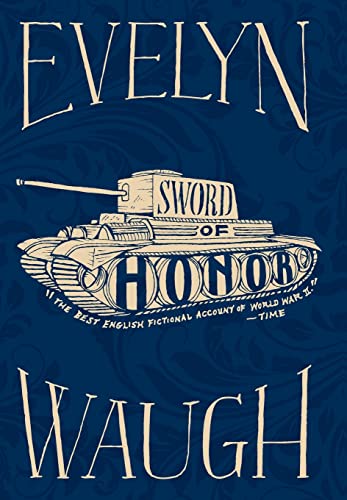
Book Break: Sword of Honor

Last month, I drove to Michigan and back on consecutive weekends. Roadtripping comes easily for me, especially with a good audiobook. During the winter, I saw an article on the Imaginative Conservative website about Evelyn Waugh’s Sword of Honor trilogy, and since I haven’t read anything by Waugh since Brideshead Revisited in 2011, it seemed like a solid choice.

In case you don’t know (I didn’t): Arthur Evelyn St. John Waugh is a British man; an author, journalist, and book reviewer; a World War II veteran; and a twice-married convert to Catholicism. Sword of Honor comprises three separate novels published in chronological order: Men at Arms (1952), Officers and Gentlemen (1955), and Unconditional Surrender (1961).

The books trace the wartime story of Guy Crouchback, the only surviving son of a once well-to-do Catholic family in England, who is floundering after his beautiful but promiscuous wife leaves him for another man (and another, and another) in the early days of World War II. Despite being older than most recruits, he joins the Army to escape his loneliness and reassert himself as a man—God willing, to do something meaningful with his life.

Continue reading
Movie Break: Super 8

Since we first saw ads for it circa 2010, I’ve been wanting to watch the 2011 Spielberg/Abrams sci-fi/suspense movie Super 8. Eleven years later, it’s on our youngest son Trevor’s list of movies to watch this summer, so we made it our Father’s Day, too-hot-to-be-outside choice today.

That was a good call.

The trailer is no lie: This movie evokes movies like E.T. and The Goonies, but with a more menacing edge. Think Iron Giant crossed with A Quiet Place: sweet, nostalgic, suspenseful, and genuinely scary, with enough blood and expletives to earn its PG-13 rating, but not enough to make you change the channel if watching it with your older kids.

Continue reading

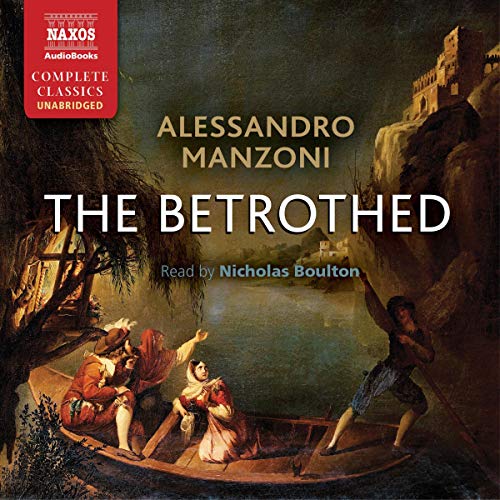
Book Break: The Betrothed by Alessandro Manzoni

I recently finished an English audio version of the 1828 Italian novel The Betrothed by Alessandro Manzoni on Audible. I first learned of this book—apparently the most famous and widely read novel in the Italian language—from a post by Joseph Pearce on the Imaginative Conservative website with the provocative title, “The Betrothed: The Greatest Novel Ever Written?” That caught my eye, because, as a somewhat educated person, I had never heard of it.

I also share all this information to distinguish this book from a much more recent young adult romance novel and two-book series of the same name by Kiera Cass. This is NOT that.

Instead, this is a wonderful historical novel set in the 1600s in Lombardy, Italy (pictured above), telling the story of two young, relatively poor, and essentially good villagers preparing for their much-desired marriage, and a cowardly priest who refuses them the sacrament after a tyrannous local lord threatens his life if he should join them. The fearful parish priest is balanced by two heroic clergy, a Franciscan friar who serves as a father and spiritual director to the pair, and the real-life Cardinal Federigo Borromeo, the heroic and holy archbishop of Milan, whose pastoral efforts bring about novel’s conclusion.

What struck me most about this novel is how timeless great literature actually is. The book is about many things, each as relatable today as in the time it was set and the time it was written, including:

Continue reading

Growing Younger

This post appeared in the Sunday, September 25, 2021, issue of the St. Michael Catholic Church bulletin.

I don’t know if this is typical for adult Christians as they try to follow Jesus more and more closely—but I often feel as though I am regressing spiritually.

It is certainly true that I don’t struggle with the more serious or habitual sins I did as a younger man, before my reversion to the faith—that is real progress. But most of sins I bring to Confession today are things any child or teen might share: short-temperedness, impatience, ingratitude, laziness, vulgarity, jealousy—smaller things deeply rooted in my heart and habits. I struggle to confess these sins, either because they are so frequent and reflexive as to defy counting, or so subtle and ingrained that I don’t perceive them at all without careful hindsight.

Many of these sins are rooted in vanity and insecurity: I become preoccupied with myself and my own needs at the expense of those around me. As a result, I am also a slave to sins of omission (good things not done), another category of wrongs it can be difficult count.

So I’ve been praying to God for an influx of charity—a stretching of my heart—so that I might better see and respond to the needs of others, when and where they exist.

Guess what? God is obliging…and it hurts.

Continue reading

Book Break: The Seven Storey Mountain

MertonAutobioCoverLast night I finished Thomas Merton’s autobiography, The Seven Storey Mountain, which Venerable Fulton Sheen described as “a Twentieth Century form of the Confessions of St. Augustine” and which has entered my list of favorite books, perhaps in the top ten. Unlike some religious autobiographies written under inspiration or strictly under obedience, The Seven Storey Mountain is written by a writer, a craftsman and a poet. It is beautiful—honest and heartbreaking, profound and inspiring. It also provides a window into “enlightened” American culture between the world wars, providing a strong and particularly Catholic rationale as to how we got to this point.

Merton’s answer? In a word, sin. His, mine and yours. Continue reading