Wednesday Witness: Checking the ‘Charity’ Box

Tomorrow is Thanksgiving already, and this Sunday, Advent kicks off. Christmas, it seems, is right around the corner, and the world is already in a rush.

It’s easy this time of year to get caught up in the holiday hustle and forget those around us who don’t have basic necessities, let alone comforts and niceties. It’s easy to mean well—to intend to give to charity, then run out time and money between now and New Year’s Eve and resolve to do better next time. And with so many gift trees, food drives, and red-kettle bell-ringers, it’s easy to give little something in passing and feel good that we “did our part.”

Continue reading
Wednesday Witness: Wanting What You Have

There’s a saying I ran across somewhere:

Contentment isn’t having what you want but wanting what you have.

At the time it seemed like wisdom, and there is a grain of truth in it: The more stuff we accumulate, the more we tend to want, so getting everything you want not only doesn’t lead to contentment, but creates a self-defeating cycle of desire for bigger, better, and just MORE things.

Mostly I have made peace with not having the best of everything, and I’ve reached a point in my life at which I am trying to detach and downsize. However, as I attempt to rid myself of so much stuff, I find that I do want what I have. I want it a great deal.

For example, I have accumulated a lot of books over the years. The ones I’ve read and kept are wonderful, and although I could get them at the library if I wanted to read them again, I love my collection and struggle to decide which volumes to part with. The books I haven’t read, I keep in the earnest if foolish hope that I will find time to read them one day soon. Then, I tell myself, if I am unlikely to reread them, I can get rid of them. Why should I get rid of them now?

Continue reading

Wednesday Witness: All the Time in the World

This column is the first in a new, weekly series on what the Lord is doing in my heart, specifically encouraging me to simplify my own life in order practice the virtue of charity and the Corporal and Spiritual Works of Mercy more and more. Come back each Wednesday to read the latest!

In last Sunday’s gospel, blind Bartimaeus cries out to Jesus, who is passing by with His disciples and a large crowd. The detail that stuck out to me is that, when this beggar calls to the Lord, “Son of David, have pity on me!” many in the crowd rebuke him. These are people like you and me, who have found in Jesus someone we want to follow, maybe even dedicate our lives to. They have heard the Lord preach, seen Him work miracles, and shared in His ministry…and instead of lifting this poor man up and inviting him in, they tell him to pipe down, intending to pass him by.

But not Jesus. He has all the time in the world. He tells His followers to bring the man they have just rejected to Him. Bartimaeus doesn’t need their help, but springs to his feet—a bold move for a blind man—and rushes to the Lord. Jesus asks him what he wants, and he doesn’t ask for food or spare change. He asks BIG: “Master, I want to see.” 

And the Lord delivers even bigger: Not only does Bartimaeus see, but Jesus tells him, “Your faith has saved you.” God’s plan for Bartimaeus is bigger and more generous than even he can dream.

Continue reading

Strong and Wrong or Weak and Wise?


This post appeared as a column in the Sunday, November 19, edition of the St. Michael Catholic Church bulletin.

Last Wednesday’s gospel challenged me. Jesus starts and ends with strong, provocative language—”If anyone comes to me without hating his father and mother, wife and children, brothers and sisters, and even his own life, he cannot be my disciple” (Luke 14:26) and “In the same way, every one of you who does not renounce all his possessions cannot be my disciple” (Luke 14:33).

In between, he offers two examples for our reflection. In the first, He asks who would undertake to build a tower without first calculating whether or not he could finish it; in the second, he calls to mind a king assessing the strength of an advancing army to determine whether he could successfully oppose them.

In both examples, the concern is clear: Will I be able to persevere and succeed with the resources I have at hand? But the actions and outcomes are subtly different. In the first, the builder does not take the time to calculate, and his inability to complete his tower leads to failure and ridicule. In the second, however, the king does take the time, and upon realizing he cannot win, seeks peace before the battle ever begins.

Continue reading

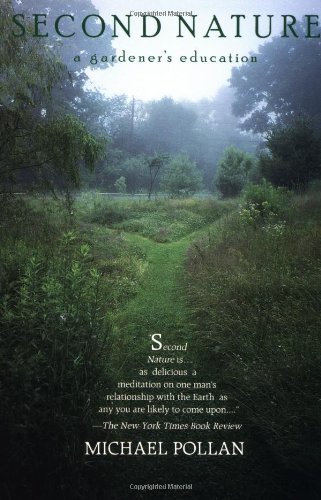
Book Break: Second Nature

I received a somewhat uneven education at Yale University, primarily because I was a 17-year-old kid when I arrived, and given a smorgasbord of courses and little guidance. Yale’s approach was to require a certain number of courses from each of four groupings, plus the prerequisites for your degree. With that as my framework and anthropology as my major, I had plenty of room in my schedule to take whatever caught my eye, from Herpetology to Polish to The History of Jazz.

The history course catalog, in particular, lured me down a rabbit hole: I took two History of the American West courses back to back, essentially two semesters following the colonial frontier westward over the history of Europeans on this continent, then a course called North American Environmental History, which traced our peculiarly American views and impacts on land, nature, and the environment over that same period.

That’s a long preamble to a book review.

Continue reading