20 Years a Fool: A Resurrection Story

One of the things I gave up for Lent this year was the last word. It might seem an odd thing from which to fast, but on the home front I crave the last word, savor it, seek it with such reckless abandon that I scatter piles of lesser words about the house until at last I have it. In the past I have recognized this fault in myself: that I want to be right, or at very least, heard and understood, in all things. I manage to tamp down this tendency in public, but in private, in flourishes.

Jodi knew of my sacrifice, and just prior to Holy Week, I asked for her honest assessment as to how much progress I had made. She hesitated a long moment, so I said, “It’s alright — I need you to be straight with me.”

She said, “Honestly, I haven’t noticed much of a difference.”

Just as I thought. I knew I hadn’t done well in this regard — and considering the number of times I know I bit my tongue or choked down one last pointed comment, I now knew how gluttonous my appetite for the last word had truly been.

Lent was not a complete loss, however. For one thing, my self-conscious failures led me to look for little things I could do to make up for being a jackass: simple acts of love and kindness like making the bed, which I have rarely if ever done of my own accord. For another, after this sobering conversation with my bride came Holy Week, and the sacrament of Penance, and the Triduum.

Like so many of the faithful, Holy Week crept up on me with alarming quickness and stealth. Once I realized time was short, I redoubled my efforts to hold my tongue, with at least some renewed success. On Tuesday, Jodi and I went to Confession at Mary Queen of Peace, to a young priest who cut us both to the quick, condensing a plethora of sins to a single, focused flaw, then concocting a penance to match.

In my case, he said something like this: “A simple definition of love is giving of yourself to another. A simple definition of pride is claiming for yourself what isn’t yours. All yours sins seem related to this tendency to take things for yourself: wanting to look better than you are to those around you, wanting recognition for what you do, even taking on more responsibility for what’s happening at work or in the world than belongs to you.”

For my penance, he asked me to find three people or causes to which I could give of myself before the end of Holy Week. And it helped.

After work on Holy Thursday, I shut off my computer and phone until after the Easter Vigil. It’s remarkable how peaceful it can be to escape the endless barrage of email and social media “news,” especially in an election year. Nevertheless, in the wee hours of the morning on Good Friday I found myself unable to sleep, and finally rose around 4:30 a.m. to pray and journal.

I sat near the front window with a cup of black coffee in the foreground and choral music in the back; two candles providing a flickering light so as not to deaden the dawn when it arose. My mind wandered across the years of marriage and family life, and I thought of St. Joseph, who is never quoted but ever present in the early life of Jesus in the gospels — the epitome of the “strong, silent type”; the carpenter, whose rough hands and faithful heart made dead wood bloom. Here was a model of a husband and father: quiet, hard-working, life-giving.

Life-giving…

For nearly 20 years of marriage, I have accepted the truth that I married well: a woman of beauty, faith, and virtue who was meant to guide me to Christ. For those same 20 years, I have acknowledged her as life-giver, and myself as a sponge, simply soaking up the love she pours forth.

While all of these things are true, for 20 years I’ve used them as a crutch — something to lean on in my weakness. It sounds so sweet and humble to say, “I’m not worthy,” but when did that become good enough? Should I not strive to become worthy?

For the past several years Jodi and I have helped with engaged couple retreats at our parish. Many times over those years we’ve helped to share this analogy between marriage and the Holy Trinity: God the Father loves God the Son; the Son receives that love and reflects it back to Father; and that love between them is God the Holy Spirit, “the Lord, the Giver of Life.” Similarly, a husband loves his wife; the wife receives that love and reflects it back to her husband; and the love between them becomes so tangible that it gives life — sometimes literally, resulting in a third person.

For years I’ve helped share this message without directly applying it to my role in our marriage. The husband is the life-giver. The husband initiates. His bride receives what he gives, transforms it, and gives it back — but I’m meant to the source. Not a sponge, but a spigot.

I sat, dumbfounded, as dawn arose. All these years of “wearing the pants” in this family, and Jodi has been trying to do both our jobs. When the sun finally rose, I felt like a new man. Or rather, a man rising to new life.

Dust that we are, a day later I was struggling to recall these revelations and was again longing for a sign from God to guide me — like those whom Jesus fed with a few loaves and fishes, who, the very next day, asked Him, “What can you do?

So I resolved to write them down and share them. May they be my own little resurrection story: after 20 years, a fool became more the man he is called to be. Amen.
O Death, Where Is Your Sting?

At long last, we celebrate Easter, and the resurrection of our Savior, Jesus Christ! Perhaps you’ve been steadfast in prayer, heartbroken and sincere in penance, and generous in alms-giving. Or perhaps you feel you’ve done too little, too late, for our Lord — perhaps you’ve slipped in your Lenten commitments or find that Easter has crept up on you almost unawares.
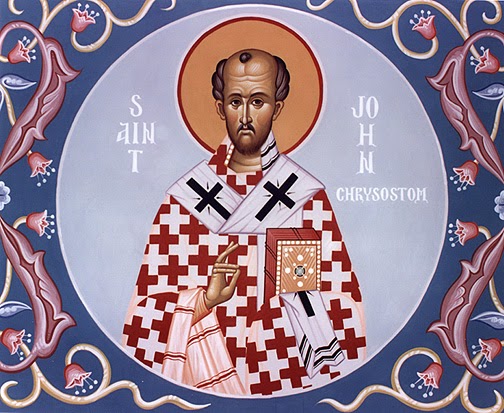
Either way, take comfort in the Easter homily below from St. John Chrysostom. Drawing on the gospel of Matthew, chapter 20, he reminds us that we never come too late to God and always receive full payment!

Easter Homily by St. John Chrysostom

Let all pious men and all lovers of God rejoice in the splendor of this feast; let the wise servants blissfully enter into the joy of their Lord; let those who have borne the burden of Lent now receive their pay, and those who have toiled since the first hour, let them now receive their due reward; let any who came after the third hour be grateful to join in the feast, and those who may have come after the sixth, let them not be afraid of being too late; for the Lord is gracious and He receives the last even as the first. He gives rest to him who comes on the eleventh hour as well as to him who has toiled since the first: yes, He has pity on the last and He serves the first; He rewards the one and praises the effort.

Come you all: enter into the joy of your Lord. You the first and you the last, receive alike your reward; you rich and you poor, dance together; you sober and you weaklings, celebrate the day; you who have kept the fast and you who have not, rejoice today. The table is richly loaded: enjoy its royal banquet. The calf is a fatted one: let no one go away hungry. All of you enjoy the banquet of faith; all of you receive the riches of his goodness. Let no one grieve over his poverty, for the universal kingdom has been revealed; let no one weep over his sins, for pardon has shone from the grave; let no one fear death, for the death of our Saviour has set us free: He has destroyed it by enduring it, He has despoiled Hades by going down into its kingdom, He has angered it by allowing it to taste of his flesh.

When Isaias foresaw all this, he cried out: “O Hades, you have been angered by encountering Him in the nether world.” Hades is angered because frustrated, it is angered because it has been mocked, it is angered because it has been destroyed, it is angered because it has been reduced to naught, it is angered because it is now captive. It seized a body, and, lo! it encountered heaven; it seized the visible, and was overcome by the invisible.

O death, where is your sting? O Hades, where is your victory? Christ is risen and you are abolished. Christ is risen and the demons are cast down. Christ is risen and the angels rejoice. Christ is risen and life is freed. Christ is risen and the tomb is emptied of the dead: for Christ, being risen from the dead, has become the Leader and Reviver of those who had fallen asleep. To Him be glory and power for ever and ever. Amen.

He is risen, indeed — let us feast and rejoice this day like no other! Alleluia!

Book Break: Holy Week by Jerzy Andrzejewski

Somewhere along the line these past few years I picked up an English translation of the short novel Holy Week by Polish author Jerzy Andrzejewski. I bought it knowing almost nothing about the book or the author, because I used to study Polish in college, as a tribute to my maternal roots, and because Polish literature can be hard to come by. Andrzejewski is perhaps best know for his novel Ashes and Diamonds, which was turned into a well-known Polish film of the same name by Andrzej Wajda, who has also made a film version of Holy Week. I saw the movie version of Ashes and Diamonds in college and liked it, so I took a chance on the book.

The novel tells the story on the Warsaw Ghetto Uprising and the tragic burning of the ghetto and elimination of Warsaw’s Jews during the days leading up to Easter of 1943 — from the perspective of a handful of Poles whose lives are variously entangled with each other’s and with a young Jewish woman trying to evade the Nazis and their Polish informers.

It has stood on my shelf for a at least two Holy Weeks now, until this past Tuesday, when I took it up on a whim. It is a short novel — just 125 pages — with four chapters covering each day from Tuesday to Good Friday. I took this as a sign and read it a chapter a day, finishing the book’s final chapter this morning.

This is a provocative book that reads a bit like watching a play. The Polish characters reflect the range of Polish responses to the uprising and “liquidation” of the Jewish inhabitants. Most display some level of antisemitism, ranging from mealy-mouthed rationalization of the it’s-complicated variety to thankfulness that the hated Nazis are nevertheless solving the Poles’ “Jewish problem” for them. Only three adult characters avoid being painted with this brush: 
  • Devout Catholic wife and expecting mother Anna, whose unquestioning morality enables her to help her husband’s Jewish friend even as her faith in God and her husband begins to waver;
  • Idealistic and aggressive Julek, who insists upon doing what he little he can to aid the Jewish uprising and points out others’ equivocations: “I know perfectly well what it means to suit one’s anti-Semitism to one’s tastes. We merely find the so-called methods distasteful. The point is there shouldn’t be any methods in the first place!”; and
  • Well-to-do landlord Zamojski, who at least avoids aiding the the anti-Semites, but who may himself be concealing his Jewish heritage.
The juxtaposition of Irena’s struggle to survive and the ever-present cloud of smoke and sounds of gunfire and explosions from the ghetto against the backdrop of Polish Christians enjoying spring and preparing for the Easter holiday as best they can lends the novel an almost surreal atmosphere. The story was written and published quickly and courageously in 1945, and was not popular among Poles, whose nerves were too raw and wounds were too fresh, and who found the various expressions of racism and nationalism rang uncomfortably true. Even today, this book pricks the conscience, making the reader reevaluate how he or she perceives others and wishes to be perceived — and what circumstances might limit their charity on behalf of a neighbor who is unlike themselves.
The book reads like an English translation from the original Polish — certain expressions do not ring true to American ears, but make sense in the Polish context — and the story will end too abruptly (and without sufficient resolution) for some tastes. Still, it is a quick and thought-provoking read. If you are interested, it is available through the Great River Regional Library in St. Michael, or you can borrow my copy.

Full of Grace

Annunciation by Paolo de Matteis (1712)

Yesterday was a rare treat: a three-sacrament day. I went to work, then to Confession at lunch time, received a pre-surgery Anointing of the Sick late in the afternoon, then went to evening Mass to receive the Eucharist. Never have I felt so full of grace — and today is the Feast of the Annunciation. Providential?

Then I came home — late, because I was tying up loose ends to be out of the office for awhile. The family had already eaten supper, but we still managed to spend some quality time together before bed. They’ve got Dad’s back with prayers today, as do countless other friends and family members, and a few acquaintances I just barely know. I’m a little embarrassed by the support, but I will never refuse prayers. We are blessed to have such love in our home, in our parish, and in our extended families.

Hernia surgery is supposed to be a pretty routine thing, for the surgeons, at least. Less so for me. I’ve never had any sort of surgery, except the removal of my wisdom teeth before I left for college. That involved local anesthesia and laughing gas; I remember begin vaguely fascinated by the industrial crunching and grinding noises emanating from my own mouth. This is different, and I don’t think I’ll care to know what’s going on as it’s happening.

I’m not a great patient, either. Oh, I’m generally alright (perhaps a little talkative) with doctors and nurses…but on the homefront, I’m more of a Man-Cold kind of guy. My bride, who works from home, is so looking forward to the next few days.

But you know what? This is actually a penitential season, in which we strive to enter more fully into Jesus’s suffering for us. This is an opportunity for me to grow in this regard — to be still, to pray, to suck it up a bit in solidarity with the One who took nails for us.

Ask Jodi at Easter if I manage to pull it off. Much love and many blessings to you this Holy Week and Easter!

LIFT Links: Holy Week and Easter Traditions

Icons of Holy Week: Palm Sunday, Holy Thursday, Good Friday, and Easter

I’ve been a little lax on LIFT Links lately (that’s a lot of Ls) — and now, as we’re headed into Holy Week and the Easter Season, I need to make up for lost time.

First, the basics. Until I met and married Jodi, I was vaguely aware that Palm Sunday was the Sunday before Easter, the Good Friday was the Friday before, and Easter was a pretty big deal–right up there with Christmas. At some point early in our relationship, my bride informed me that her family attended Mass at least three (and sometimes four or more) times during Holy Week, the week between Palm Sunday and Easter Sunday. As I’ve said more than once, they went to church on days I didn’t know church was open!

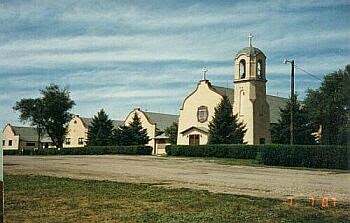
St. Liborius Catholic Church, Polo, SD

Jodi’s family, and many of the other parishioners at St. Liborius Catholic Church in Polo, SD, went to church at every opportunity during the Holy Triduum: Holy Thursday, Good Friday, the Easter Vigil on Holy Saturday, and morning Mass on Easter Sunday. Today, our family goes on Holy Thursday, Good Friday, and either Holy Saturday or Easter Sunday. It’s a beautiful way to enter into that period of uncertainty and darkness, then light and joy, that Jesus’s disciples experienced between the Last Supper and Christ’s Resurrection.

One more thing before I share some links: attending Mass on every Sunday and all Holy Days of Obligation is one of the five Precepts of the Catholic Church — the minimum requirements to be a practicing Catholic. Receiving Holy Communion is not required every Sunday, however, receiving Holy Communion at least once during the Easter season (which is Easter Sunday through Pentecost Sunday) is required. Receiving the sacrament of Reconciliation once a year is also one of the precepts — and since being cleansed of all serious sins is required to receive Our Lord worthily, Lent is a great time of year to get to Confession so you can receive Holy Communion at Easter.

Now, some links:

Have a blessed Holy Week and Easter, friends!