Book Break: The Spiritual Combat

Dom Lorenzo Scupoli’s The Spiritual Combat was recommended to me by a friend many years ago, when I was first looking into my patron saint Francis de Sales’s spiritual classic An Introduction to the Devout Life. First published in 1589, Fr. Scupoli’s book was required reading for those whom St. Francis de Sales advised, and he reportedly carried in his pocket a copy given to him by Fr. Scupoli himself.

Over the past several months, I’ve been reading and reflecting on The Spiritual Combatduring adoration. I will warn you up front: It is not an easy read. The language and structure are archaic and complex at times, and Fr. Scupoli takes sin, Satan, and the possibility of Hell uncomfortably seriously (as we should, too). Take your time; read a section and reflect on it. Re-read if necessary. This is a book the rewards patience and prayer.

I believe it will reward repeated reading, as well. Each “chapter” reads like a short reflection building upon the previous. I have read all of these reflections now, but find that, in my own spiritual life, I’m still focused on the first few reflections. Early in the book, Fr. Scupoli insists that in the battle for souls, we must fight or die—but victory can only come from recognizing our own spiritual weakness and putting no trust in ourselves and our own abilities. We must recognize our overwhelming tendency to fall and put all our confidence in a loving and merciful God, without whom we can do no good, but with whom we cannot fail.

I don’t live like that. Most days I still try to get by on my own steam and get frustrated when I stumble or fail. So in terms of spiritual combat, most days I’m still reminding myself of my weakness and striving to distrust me and trust Him instead. When this becomes habitual, it may be time to read this book again!

My edition ends with a shorter work also attributed to Fr. Scupoli, A Treatise on Peace in the Soul. This is another old fashioned, hard-hitting, and practical work, much shorter than The Spiritual Combat, and for me, much easier to apply as a whole to my day-to-day life. The overarching theme is the importance of maintaining peace in the soul and responding immediately to worries, anxieties, and fears that disturb us, recognizing that these are tools the Enemy uses to separate us from God. I read this part in about two sittings and found myself much refreshed and with much to think about and apply, even as a raw recruit to the spiritual combat.

* * * * *

Blogger’s Note: The cover on my edition is the one pictured. As a former wrestler and father of wrestlers, this image of Jacob wrestling the angel alone is worth the price of the book! Also: toward the end of the post at the following link is my brief reflection on Introduction to the Devout Life, another great spiritual book.
It’s the Little Things

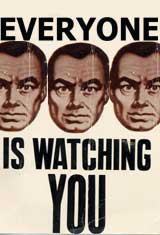
I often worry about what my wife and children, family and friends, and even those of you I don’t know, think of me. Am I doing good work? Setting a good example? Who sees me at the grocery store—and what do they see? Who walks down my street and hears me thundering away at my poor children? Am I letting them down? Am I letting you down?

You know the old song: You’re so vain/you probably think this song is about you/you’re so vain. Yeah. I tend to think the song is about me. Like all of you don’t have better things to do than watch for me to stumble. I used to think, At least I’m not prideful—I’m worried I’m going to let people down!But now I see what twisted pride convinces a guy that everyone is looking at, paying attention to, and judging him.

I bring this up because Lent is on the horizon. In Fr. Mike Schmitz’s video reflection, Preparing for Lent, he cites three common mistakes people make in their approach to Lenten sacrifice:

  • Take on a very easy sacrifice that will have no spiritual impact whatsoever
  • Take on a very hard sacrifice just to see if they can do it
  • Take on a two-fer–use Lent as a reason to fix a broken resolution or to do something you should have been doing all along

I have done made all three of these mistakes over the years: trying to break old habits during Lent, but for myself, not for God, or piling on the sacrifices and prayer practices until I couldn’t help failing, then cutting back and simplifying to the point that I became an unprofitable servant, only giving to God the minimum due. And all the while, I’ve wondered: Who’s watching? Who’s judging

Who cares? The point of prayer, fasting, and almsgiving Lent is to draw nearer to God and to detach from things that keep us bound to our earthly lives. We should ask, What in this world is keeping me from Christ? What can I do to more closely follow Him? —and listen to the answer.

Jodi and I used to tell our youth group in Michigan that if they thought of a sacrifice and had a sinking feeling in their hearts because they didn’t want to give that up, it might be the right thing. It doesn’t have to be earth-shattering. In fact, once I started thinking in terms of the little things, I realized that this is where the real work is. I’m no longer a slave to those big, serious, mortal sins that used to weigh me down, but I have countless little attachments and anxieties that crowd God out of my life.

Do you, too? Pick one, and let it go this Lent. Replace it with a simply prayer practice (maybe genuflecting more slowly and reverently before the tabernacle or monstrance, as though the King of the Universe is present—because He is!) and self-giving (how about a loving compliment to each person we interact with?).

Uh, oh. I’ve got that sinking feeling…

Note: Lent begins on Wednesday, March 1, with Ash Wednesday. Watch Fr. Mike Schmitz “Preparing for Lentand collect bonus points for watching “4 Reasons for Fasting“…

Hammer and Tongs

It feels to me as though God is hammering me into something harder and more useful than I have been thus far in life. And that can only be a good thing. But in this moment, I can feel the tongs, the fire, the hammer, and cannot see the pattern.* I don’t know what He hopes to forge or even the shape He desires. I can only stay malleable and submit, trusting the Craftsman’s vision is keener than my own.

That is not easy for me. Which is likely why it must be done this way.

—–

*Please regard this as a metaphor and a sentiment I wanted to capture; nothing more. My current anxieties are minor in the big scheme of things. I just wish sometimes I could see what He sees…

We Are a Pilgrim People

“I’ll be home for Christmas, if only in my dreams.”
 
We are on the home stretch: a week out from the blessed Feast of the Nativity, Christmas, when we celebrate the birth of our Savior, Jesus Christ. Many of us, however, feel as though Christmas has been upon us for weeks now, an immense burden of gifts, lights, music, and cheer under which we labor to breathe—like a lone elf struggling to load the loot of the world into a glossy red sleigh.
 
The first Christmas was uncomfortable for a different set of reasons. In the days prior, a newly-married couple traveled from Nazareth to Bethlehem with a few essentials and a donkey. They traveled not by choice, but by order of the emperor in Rome. They arrived not to familiar faces, food, and comfort, but to a town crowded with distant kin and strangers, and the crudest of accommodations: a dugout-stable-turned-makeshift-nursery where the woman would give birth to a son.

It turned into celebration of sorts, I suppose, as angels summoned shepherds from the hills to the town to greet the newborn as they were, dirt-poor and smelling of sheep. A star, too, beckoned Magi from the East, strange and majestic, in rich robes and bearing gifts too generous for the circumstances. (I wonder if Joseph might have gripped his staff a little tighter, wondering how he, his wife, and son would make it back across the dangerous country alive while carrying gold, frankincense, and myrrh.)
 
Imagine a Christmas celebration in which only your third and fourth cousins showed up, along with the local indigent population and three fabulously wealthy foreigners—and then you had a baby the basement. Perhaps the stresses of this Christmas are more manageable from this perspective.

Mary and Joseph were displaced—from Nazareth to Bethlehem for the census; from Bethlehem to Jerusalem for the presentation of Jesus at the Temple; and in exile to Egypt, to protect their son from the murderous intent of Herod. Even as a baby, “the Son of Man has nowhere to rest his head” (Matthew 8:20).
 
In LIFT this month, we are completing our study of the Mass. As an introduction to the adult and teen lesson, we are watching a short video from elementsofthecatholicmass.com on the role of parishioners in the Mass. As the video explains, the word parishioner comes from the Greek work paraoikos, meaning pilgrim—it’s the same Greek word that gives us the English word pariah, which means outcast.
 
We don’t belong here. We, like the Holy Family, are a pilgrim people, en route to our true home with God in heaven. The Church is the ship that carries us: the ark which preserves God’s people from the storms and waves that batter and drown the rest of the world.* Let us take refuge here from the maelstrom—the dizzying spin the world has put on Christmas—and draw near, instead, to Mary, Joseph, and the newborn king of kings.
 
* * * * *
*In fact, the area of the church worship space where we sit, which we commonly call the sanctuary, is technically called the nave—which comes from the Latin word for ship.

Who Reigns In Your Heart?

Put no trust in princes, in children of Adam powerless to save. 
Who breathing his last, returns to the earth; that day all his planning comes to nothing. – Psalms 146:3-4

This Sunday is the Feast of Christ the King, celebrating the authority and lordship of Jesus over all of creation and marking the end of the liturgical year. Falling just before the all-consuming holiday season and the secular New Year, this feast provides us with an opportunity to reflect on what holds mastery over our hearts before the avalanche of turkey and tinsel. And since it specifically celebrates Chris’s kingship, it takes on special relevance in the aftermath of a contentious election.

Who is this Jesus who rules over all? We are blessed to have an immense icon of Christ the King in the dome of our church. This image, called Pantocrator or “ruler of all,” depicts our glorified Lord looking down from heaven, holding the Book of Life by which we are judged (God’s justice) but with His right hand raised in blessing (God’s mercy). The three-rayed halo behind His head and Greek letters in the image identify Him simultaneously as Jesus Christ (IC XC) and as “I Am Who Am” (WON), or God Himself.

This God-man is the same Jesus who was born in a stable; who grew up a carpenter’s son; who ate with sinners and challenged authorities; who said to His followers, “This is my Body; take and eat;” who suffered humiliation and torture to die on a cross; who rose from the dead and ascended to heaven; and who sent the Holy Spirit to guide the Church in these latter years. This is the same Jesus about whom Nathanael asked, “Can anything good come from Nazareth?” (John 1:46) and Thomas said, “My Lord and My God!” (John 20:28).

We have a second icon of Christ behind the altar and tabernacle, depicted in the womb of the Blessed Virgin. Though within His mother, He does not appear as an infant or as any child we have likely ever seen. His high forehead and discerning eyes convey wisdom and judgment beyond His years. This is the same Jesus that St. Augustine calls, “ever ancient, ever new” and that dwells in the tabernacle, in the Eucharist. He is the very Word of God referenced in John’s Gospel:

In the beginning was the Word, and the Word was with God, and the Word was God. He was in the beginning with God. All things came to be through him, and without him nothing came to be. What came to be through him was life, and this life was the light of the human race; the light shines in the darkness, and the darkness has not overcome it. – John 1:1-5
What joy, what hope, what light we have when He who is the very source of all blessing sits upon the throne of our hearts—and what sorrow, what despair, what darkness we experience when we yield His seat to idols: to fallen persons or passing things that will not—cannot—sustain us.

Advent begins next weekend: four weeks of penance and preparation Christmas. As the Church year ends and we prepare to welcome the newborn King of Kings, let us ask ourselves in whom we have placed our hope and trust. What or whom have we set upon the throne of our hearts? The time is now to elevate Christ to His proper place, that all else may fall into place and peace may prevail.