faith
Book Break: The Great Divorce
I mentioned in an earlier post that I had a profound Good Friday, but that was only half the story. The other half of the story is that, early that Friday morning, I sought out some spiritual reading for the day, and wound up with a new top-five favorite book: C.S. Lewis’s The Great Divorce.
Of course, when reading spiritually, the Bible is always a good place to start, and I’m also making slow but steady progress through Dante’s Divine Comedy a canto or two a day. But I wanted something fresh, something I could possibly read in a day, and something related to the penitential character of Good Friday and the great saving act of our Lord.
On a hunch, I took C.S, Lewis’s The Great Divorce from the bookshelf. I have great regard for Lewis as a writer and had heard good things about the book, particularly from my good friend Angie at Take Time for Him.
BLAKE WROTE the Marriage of Heaven and Hell. If I have written of their Divorce, this is not because I think myself a fit antagonist for so great a genius, nor even because I feel at all sure that I know what he meant. But in some sense or other the attempt to make that marriage is perennial. The attempt is based on the belief that reality never presents us with an absolutely unavoidable “either-or”; that, granted skill and patience and (above all) time enough, some way of embracing both alternatives can always be found; that mere development or adjustment or refinement will somehow turn evil into good without our being called on for a final and total rejection of anything we should like to retain.
The book begins with our narrator in line at a bus stop in a grey and gloomy town, surrounded by people he doesn’t know and wouldn’t want to — unsure of where he is or where he’s going. It unfolds like Dante’s Divine Comedy in modern miniature: a pilgrim’s journey from hell to the edge of heaven in just 128 pages. I’m reading Dante now, too, canto by canto, and it is powerful in its way, but this held my attention from the preface to the end, with every word relevant to this sinner and this sinful time. Lewis articulates with poetic beauty and unflinching honesty the glory of God and his angels and saints, the pain of detaching from this world, and the stubbornness, the grasping, the pride and distrust that keep even “good” people from choosing God and reaching Heaven.
The book challenges the reader particularly on the Greatest Commandment: “You must love the Lord your God with all your heart, with all your soul, and with all your mind” (Matthew 22:37). On this point, Dante provides an unintended summary (being some seven centuries older) which, as providence would have it, I read over lunch on Easter Monday. In Purgatorio, Canto IX, Lines 127-132, he writes the words of the angel guarding the gates of Purgatory proper:
“I hold these keys from Peter, who advised‘Admit to many, rather than too few,if they but cast themselves before your feet.'”
Then pushing back the portal’s holy door,“Enter,” he said to us, “but first be warned;to look back means to go back out again.”
We sin when we put anything — even the blessings of life on this good Earth — ahead of loving and seeking God. Pilgrim after pilgrim turns his or her back on Heaven because the cost of entry is too high: the cost of admitting that they are mere creatures and of letting go of their earthly pleasures, passions, and prejudices. They want Heaven on their own terms and choose Hell to feel like they have some say in the matter. They cannot stand the humiliation of grace as an unmerited gift.
It is a powerful book: perhaps tied at this moment with Steinbeck’s East of Eden as my favorite of all time (although Tolkein’s The Lord of the Rings (which I still need to review as an adult) and Sigrid Unset’s Kristin Lavransdatter trilogy are right up there, too!) It paints a stark and revealing picture of how far so many of us have to go to be purged of all sin. So I will end this post with Lewis’s words from the Preface, on a hopeful note:
I do not think that all who choose wrong roads perish; but their rescue consists in being put back on the right road. A wrong sum can be put right: but only by going back till you find the error and working it afresh from that point, never by simply going on. Evil can be undone, but it cannot “develop” into good. Time does not heal it. The spell must be unwound, bit by bit, “with backward mutters of dissevering power”– or else not. It is still “either-or.” If we insist on keeping Hell (or even earth) we shall not see Heaven: if we accept Heaven we shall not be able to retain even the smallest and most intimate souvenirs of Hell. I believe, to be sure, that any man who reaches Heaven will find that what he abandoned (even in plucking out his right eye) was precisely nothing: that the kernel of what he was really seeking even in his most depraved wishes will be there, beyond expectation, waiting for him in “the High Countries.”
The Great Divorce. Find it. Read it.
20 Years a Fool: A Resurrection Story
One of the things I gave up for Lent this year was the last word. It might seem an odd thing from which to fast, but on the home front I crave the last word, savor it, seek it with such reckless abandon that I scatter piles of lesser words about the house until at last I have it. In the past I have recognized this fault in myself: that I want to be right, or at very least, heard and understood, in all things. I manage to tamp down this tendency in public, but in private, in flourishes.
Jodi knew of my sacrifice, and just prior to Holy Week, I asked for her honest assessment as to how much progress I had made. She hesitated a long moment, so I said, “It’s alright — I need you to be straight with me.”
She said, “Honestly, I haven’t noticed much of a difference.”
Just as I thought. I knew I hadn’t done well in this regard — and considering the number of times I know I bit my tongue or choked down one last pointed comment, I now knew how gluttonous my appetite for the last word had truly been.
Lent was not a complete loss, however. For one thing, my self-conscious failures led me to look for little things I could do to make up for being a jackass: simple acts of love and kindness like making the bed, which I have rarely if ever done of my own accord. For another, after this sobering conversation with my bride came Holy Week, and the sacrament of Penance, and the Triduum.
Like so many of the faithful, Holy Week crept up on me with alarming quickness and stealth. Once I realized time was short, I redoubled my efforts to hold my tongue, with at least some renewed success. On Tuesday, Jodi and I went to Confession at Mary Queen of Peace, to a young priest who cut us both to the quick, condensing a plethora of sins to a single, focused flaw, then concocting a penance to match.
In my case, he said something like this: “A simple definition of love is giving of yourself to another. A simple definition of pride is claiming for yourself what isn’t yours. All yours sins seem related to this tendency to take things for yourself: wanting to look better than you are to those around you, wanting recognition for what you do, even taking on more responsibility for what’s happening at work or in the world than belongs to you.”
For my penance, he asked me to find three people or causes to which I could give of myself before the end of Holy Week. And it helped.
After work on Holy Thursday, I shut off my computer and phone until after the Easter Vigil. It’s remarkable how peaceful it can be to escape the endless barrage of email and social media “news,” especially in an election year. Nevertheless, in the wee hours of the morning on Good Friday I found myself unable to sleep, and finally rose around 4:30 a.m. to pray and journal.
I sat near the front window with a cup of black coffee in the foreground and choral music in the back; two candles providing a flickering light so as not to deaden the dawn when it arose. My mind wandered across the years of marriage and family life, and I thought of St. Joseph, who is never quoted but ever present in the early life of Jesus in the gospels — the epitome of the “strong, silent type”; the carpenter, whose rough hands and faithful heart made dead wood bloom. Here was a model of a husband and father: quiet, hard-working, life-giving.
Life-giving…
For nearly 20 years of marriage, I have accepted the truth that I married well: a woman of beauty, faith, and virtue who was meant to guide me to Christ. For those same 20 years, I have acknowledged her as life-giver, and myself as a sponge, simply soaking up the love she pours forth.
While all of these things are true, for 20 years I’ve used them as a crutch — something to lean on in my weakness. It sounds so sweet and humble to say, “I’m not worthy,” but when did that become good enough? Should I not strive to become worthy?
For the past several years Jodi and I have helped with engaged couple retreats at our parish. Many times over those years we’ve helped to share this analogy between marriage and the Holy Trinity: God the Father loves God the Son; the Son receives that love and reflects it back to Father; and that love between them is God the Holy Spirit, “the Lord, the Giver of Life.” Similarly, a husband loves his wife; the wife receives that love and reflects it back to her husband; and the love between them becomes so tangible that it gives life — sometimes literally, resulting in a third person.
For years I’ve helped share this message without directly applying it to my role in our marriage. The husband is the life-giver. The husband initiates. His bride receives what he gives, transforms it, and gives it back — but I’m meant to the source. Not a sponge, but a spigot.
I sat, dumbfounded, as dawn arose. All these years of “wearing the pants” in this family, and Jodi has been trying to do both our jobs. When the sun finally rose, I felt like a new man. Or rather, a man rising to new life.
Dust that we are, a day later I was struggling to recall these revelations and was again longing for a sign from God to guide me — like those whom Jesus fed with a few loaves and fishes, who, the very next day, asked Him, “What can you do?
So I resolved to write them down and share them. May they be my own little resurrection story: after 20 years, a fool became more the man he is called to be. Amen.
Eucharist Pep Talk for Parents

[Blogger’s Note: This is roughly the “pep talk”I gave to First Communion parents at the Wednesday, March 16, class — I am posting it here to share it with those who missed.]
The next day, the crowd that remained across the sea saw that there had been only one boat there, and that Jesus had not gone along with his disciples in the boat, but only his disciples had left. Other boats came from Tiberias near the place where they had eaten the bread when the Lord gave thanks. When the crowd saw that neither Jesus nor his disciples were there, they themselves got into boats and came to Capernaum looking for Jesus. And when they found him across the sea they said to him, “Rabbi, when did you get here?” Jesus answered them and said, “Amen, amen, I say to you, you are looking for me not because you saw signs but because you ate the loaves and were filled. Do not work for food that perishes but for the food that endures for eternal life, which the Son of Man will give you. For on him the Father, God, has set his seal.” So they said to him, “What can we do to accomplish the works of God?” Jesus answered and said to them, “This is the work of God, that you believe in the one he sent.” So they said to him, “What sign can you do, that we may see and believe in you? What can you do? Our ancestors ate manna in the desert, as it is written: ‘He gave them bread from heaven to eat.’” So Jesus said to them, “Amen, amen, I say to you, it was not Moses who gave the bread from heaven; my Father gives you the true bread from heaven. For the bread of God is that which comes down from heaven and gives life to the world.” So they said to him, “Sir, give us this bread always.” Jesus said to them, “I am the bread of life; whoever comes to me will never hunger, and whoever believes in me will never thirst. But I told you that although you have seen [me], you do not believe. Everything that the Father gives me will come to me, and I will not reject anyone who comes to me, because I came down from heaven not to do my own will but the will of the one who sent me. And this is the will of the one who sent me, that I should not lose anything of what he gave me, but that I should raise it [on] the last day. For this is the will of my Father, that everyone who sees the Son and believes in him may have eternal life, and I shall raise him [on] the last day.” — John 6:22-40
This passage continues in with the famous Bread of Life discourse, in which Jesus tells the people, “I am the bread of life. Your ancestors ate the manna in the desert, but they died; this is the bread that comes down from heaven so that one may eat it and not die. I am the living bread that came down from heaven; whoever eats this bread will live forever; and the bread that I will give is my flesh for the life of the world” (John 6: 48-51)”
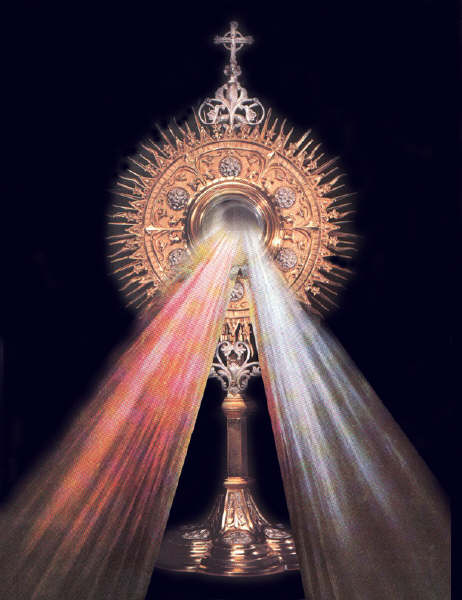
- The first is something I’ve shared with you all before during First Communion classes. Scripture tells us that, “The word of God is living and effective” (Hebrews 4:12). What God says, is. For example, when God says, “Let there be light,” or let there be plants, animals, or people, it happens. And since Jesus is God, and since God is all good and all Truth, when Jesus says, “This is my body; take and eat,” we can trust that it is, in some mysterious way, truly his Body.
- The second is something I noticed as I returned to the church and the sacraments: that what appeared to be a bit of bread and a sip of wine affected me in a way that no other bread and wine outside of the Mass ever did. I eat bread and occasionally drink wine outside of Mass, but never do I experience such a sense of peace and love as I do in the Eucharist.
- The third is something that I began to do self-consciously, as an act of the will: I began to correct my thoughts and words. When I talked or thought about the Eucharist, I began to move myself from referring to the bread and wine, to the consecrated host or the consecrated wine, to the Body and Blood and Jesus. Over time, I began referring to the Eucharist as a person, Jesus, rather than a thing. This made more and more sense to me as I reflected on the fact that we often teach our children not to judge people by their appearances; it’s what’s underneath — what we can’t see — that counts. If the Eucharist is Jesus, it makes sense that the same logic applies: we should not judge the Real Presence by appearance (we see bread and wine) but what is inside and underneath (Jesus’ promise that this is His Body and Blood).
Slaves No More
I can’t possibly afford to be here.
Two years ago, I was working in communications at the University of Minnesota. I had spent six years as the president’s speechwriter and enjoyed a solid salary, stellar benefits, and the respect and friendship of several wonderful colleagues.
Nevertheless I felt adrift. The U hired a new president, and I changed jobs three times in two years—with each one less and less to my liking. I knew I needed to make a change. I thought about working for the Church, but communications positions were few and far between; most other positions required a theology or professional degree I didn’t have, and the pay and benefits couldn’t compete with a large public university.
Plus, like too many couples, Jodi and I were not smart with our money in our younger days. We never had a budget and ran up debt almost without thinking. So when the faith formation job opened up here in our home parish, my first thought was: We can’t afford it.
Unbeknownst to me, wiser minds and more faithful hearts than mine were at work. Friends and family were praying for me. And providentially, Jodi and I had attended Financial Peace University the year before. Jodi’s brother Jason followed Dave Ramsey’s program, and it changed his life—so when new parishioners Jason and Robyn Jones brought Financial Peace University here, we saw it as a sign and joined their first course. It changed our lives, too.
I won’t walk you through the entire program—instead, I’ll share one example. Ramsey insists that a zero-base budget is essential to managing your money. Every dollar you bring in is assigned a specific role. Bills. Groceries. Giving. Savings. Even monthly “blow money,” so you can treat yourself to whatever you want, no questions asked. Each month, you tell every dollar where it goes.
“At the end of the first couple months,” we were told, “you’ll feel like you got a raise.” Why? Because when you don’t assign every dollar to a specific priority, you waste money, without even knowing it.
After living paycheck to paycheck for years, we were skeptical—but sure enough, when we started the zero-base budget, we realized we were blowing an extra $500 to $1,000 a month on…nothing. We had barely covered our bills, and we had no money left and nothing to show for it except a few greasy pizza boxes and empty beverage containers. We started budgeting this way each month and realized we had been living and giving below our potential!
So when opportunity knocked here at St. Michael, we ran the numbers and discovered I could answer the call. The incredible thing is that we have the same bills as before (gas and parking went down; healthcare went up), yet everything is covered, even with less coming in.
When we speak about it, it makes no sense—where does the money come from?—but on paper it’s clear: when we track every dollar, we can see the money was there all along. When we couldn’t see it, we didn’t realize it was missing.
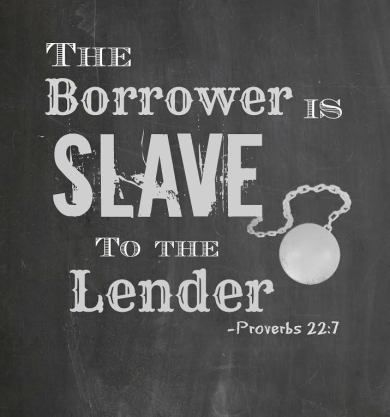
We aren’t debt free yet, but we’re on our way—and just getting on that path gave us the freedom to change, not just jobs, but our whole family dynamic and outlook. We make less money, and yet we are giving more to the church and other charities, enjoying ourselves more, paying off more debt more quickly—and worrying less. Although we still owe, we are no longer slaves to money. And that is a great feeling.