A Baby Catholic’s First Steps

be26f-cover_october_2014_web

Fr. Bill, from an article on Confession
in the Diocese of Grand Rapids magazine Faith.

I have mercy on the brain this month. At LIFT we talked about the sacrament of Confession, and several parishioners shared powerful stories of how God’s mercy had strengthened their faith. Then, in recognition of the Pope’s Year of Mercy, our parish retreat focused on God’s message of Divine Mercy. Fr. Alar’s presentations were both consoling and challenging—showing me clearly the great ocean of mercy that stretches before us and how slow we are to tap into it for ourselves, much less for others.

I made my first Communion around age 10, during a brief period in which my mom returned to the church with my sister and me. As a young husband, I attended Mass with Jodi, out of respect for tradition and curiosity more than anything else. When I became a father, I began to open up to the possibility of becoming a practicing Catholic, but I had many questions and was deeply enmeshed in many of the typical sins of young men. I hid those sins under a thick blanket of pride, convinced that I knew better about right and wrong—but Jodi’s solid, peaceful faith played on my curiosity. So one evening, I sat down in the rectory to talk with our priest.

I told Fr. Bill I wasn’t sure it was possible to know if God exists. I told him I disagreed with the Church’s teaching on birth control. I told him I didn’t understand the Church’s teachings on the real presence of Jesus in the consecrated bread and wine at Mass. I told him I couldn’t believe that a merciful God could condemn good men to Hell for not believing in Him.

Fr. Bill addressed my issues calmly and thoughtfully. He told me I had a good head on my shoulders, and God gave it to me to use. He told me not to be afraid of my doubts or questions—that even priests struggle with the same and need faith to follow God.

“But you’re not going to find the answers to these questions by holding your faith at arm’s length,” he said. “My advice is to go to Confession and begin receiving Communion again, and ask your questions from inside the Church.”

I thanked him, and he said, “I could hear your confession now, if you want.” I protested that it had been many years and I didn’t remember how, and he said, “Don’t worry—I will help you.”

So right there, in the living room of the rectory, I made the first Confession of the rest of my life—my first face-to-face Confession—with the priest who first showed me the depths of God’s mercy. I began receiving Holy Communion again the following Sunday, was Confirmed in the Church a few years later, and began a lifelong march to Calvary and Christ, because Fr. Bill saw my dignity as a son of God under layers of pride and years of sin.

Here’s the kicker: I know now that my Confession that evening wasn’t technically valid. The sins I was struggling with come in buckets; I confessed most of them that night, but not all, because some I didn’t agree were sins and had no intention of changing. But I made the best Confession I could in my ignorance and was sincerely contrite—as sorry as I could be in that moment of faltering pride and budding faith. Fr. Bill started me on a road I may not have taken otherwise. Had I waited a week, that spark may have gone out, and had he said, “Good effort…but come back when you’re ready to confess everything else I suspect you’re doing,” I may never have come back.

I need to remember that my first steps on the path to an adult faith were baby steps, small and unsteady, and that Fr. Bill saw enough in me to invite me back to communion with God. We need to see each other as he saw me—as Jesus sees every sinner—and encourage those first faltering steps.
Same Guy, Different Year

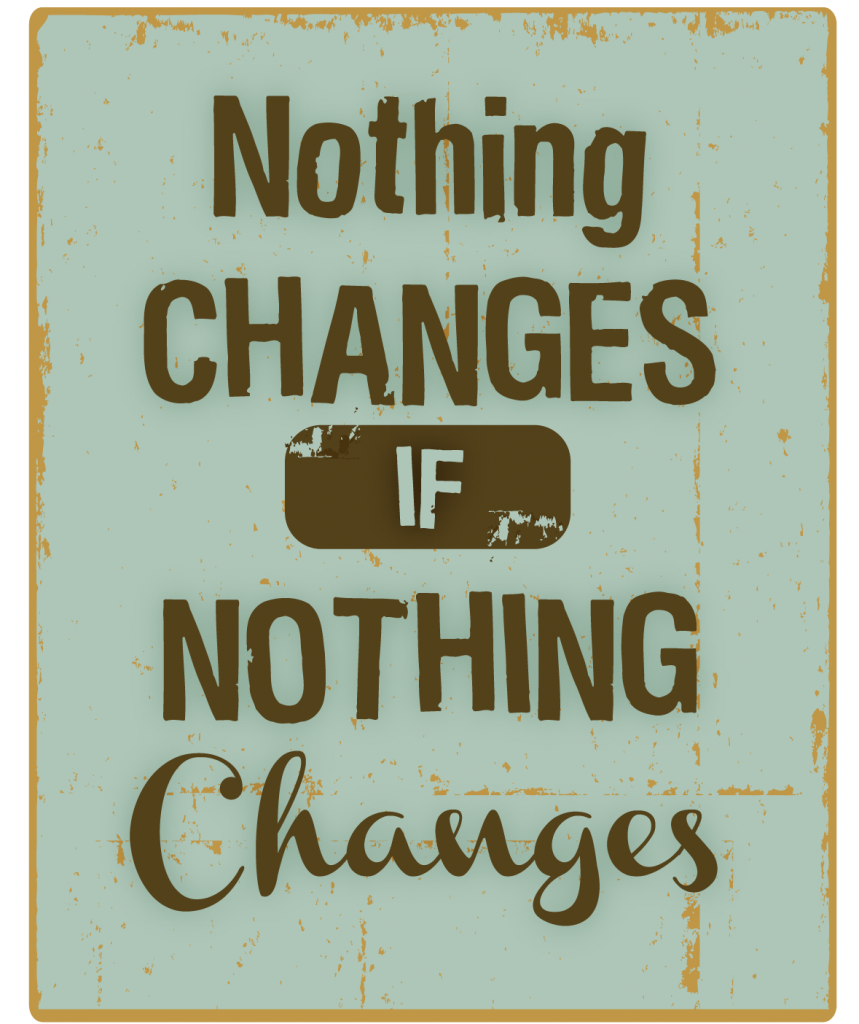
I don’t know about you, but 2016 caught me off guard. The new year leapt from behind our Christmas tree in the early morning darkness to find me unprepared and unresolved, the same shuffling sinner as last year, stumbling to the kitchen, rubbing my eyes and searching for coffee.

And now I notice Lent and Easter creeping up. Ash Wednesday, February 10, is less than three weeks away. In past years I would have broken multiple resolutions by this point and would be tempted to use Lent to get back on the horse—fasting, for example, in order to lose weight rather than gain perspective.

Since I’ve made no resolutions, however, I’m headed toward Lent with no agenda other than the humbling realization that this year’s Jim is much the same as last year’s. And in recent weeks I’ve noticed two sins within myself that, in the past, I have failed to confront and that need to be uprooted.

The first, I learned just last weekend, is a form of vanity. I worry, overmuch, about what people think of me. Not simply in terms of appearance, though if I’m honest, that’s a part of it. I worry that I’m making a bad impression, that I’m being misunderstood, that I’m coming off as a judgmental know-it-all or a sentimental fool. As a result, I want to do good work, but not always for God’s sake or even for your sake. I want to do it for my sake, so I can feel good about me.

This is hard to admit, as it’s not a particularly manly sin. All of us have the need for affirmation—but I get affirmation from so many of you and from God in prayer. Worrying about every misstep and stewing over every sideways glance or offhand comment to the point that I forget the Father smiling down on me is an evil that must be uprooted.

The second, I fear, is more humbling than the first. Between my work life and our home life, I am as busy as I have ever been, and yet I feel God pulling me toward other things He wants me to do. And I’m resisting, because Lord, I don’t have time—something’s got to give!

Then it occurs to me: perhaps I’m that something. Perhaps God wants more of me.

And then the panicky flutter starts up in my chest, like a moth realizing too late that he’s inside the shade and that beautiful Light burns. I can’t do this, I think. I’ve got to get out of here!

Yes, you can, says God. Stay with me.

I realize one of two things must be true: either I don’t truly believe God can help me, or I don’t believe He will. The first I recognize as rubbish immediately: He’s God; He can do whatever He sets His mind to.

The second is equally rubbish: He is Love and always wills the good of His people. I know this. I do.

But do I trust Him?

I’ve got a long Lent ahead of me. May your sacrifices be fruitful, drawing you nearer to Christ!

The Seed Is…Me?

I’ve had a handful of conversations lately about our faith formation programs at St. Michael: what we’ve done differently this year, what’s working and what’s not, and what more I wish we’d done. I am tempted to sudden actions and grand gestures at times, and midway through the faith formation year is no exception: I am tempted to blow up what we’re doing in our parish and start over. So many people need to know that God is real, that Christ is present in the church…and I’m stewing over videos, Powerpoints, and the Catechism.
Then a good friend shares this with me, from something he is reading these days. He knows where my head has been lately, and thinks this might be helpful. He’s right.

“Commenting on the Church’s evangelizing efforts, Pope Benedict XVI warned that Catholics today must resist what he calls ‘the temptation of impatience,’ that is, the temptation to insist on ‘immediately finding great success’ and ‘large numbers.’  He says that immediate, massive growth is not God’s way.  ‘For the Kingdom of  God as well as for evangelization, the instrument and vehicle of the Kingdom of God, the parable of the grain of mustard seed, is always valid.’  He goes on to say the new phase of the Church’s evangelizing mission to the secular world will not be ‘immediately attracting the large masses that have distanced themselves from the Church by using new and more refined methods.’  Rather, it will mean ‘to dare, once again and with the humility of the small grain, to leave up to God the when and how it will grow.’”

The quotes from Pope Benedict are from “The New Evangelization:  Building a Civilization of Love,” his address to catechists and religion teachers, Jubilee of Catechists, December 12, 2000.
We talk often of planting seeds in others, not knowing where, when, or whether they will germinate. But Pope Benedict calls me to the humility of the small grain. 
What does that mean?

A seed perseveres through inclement conditions. It bides its time, then when the time and place are right, it germinates: puts roots down and sends visible growth up.
So far so good, I think.
As conditions are favorable, it continues to grow, and God willing, to put forth fruit. The plant itself has little impact on how much fruit results year to year or what becomes of the fruit once it ripens and drops. But it continues to produce, year after year, as long as it is able. 
The seed is me? That’s a thought I hadn’t thought before…

Detachment

Lord, you call us to new life, to rebirth in the Spirit. How can I be holy for You unless I am wholly for You?

“If anyone remembers my name

If I’m ever known for anything
Let it be I ran into the night
Running with a firelight, firelight
Cause I don’t wanna stroll the streets of gold
While there’s still a soul to love
Let me run into the night
Running with a firelight, firelight
Burning with a firelight, firelight”

Don’t Lose Your Sense of Wonder

I sometimes think of life as a high sledding hill with God at the top, giving us a push. It’s left to us to steer, but like any good father, He knows our tendencies to close our eyes or overcorrect better than we do, and so He can see every curve we’ll negotiate, every bump that will bounce us airborne, every tree we’ll hit. He sees the trajectories of other sledders and knows their tendencies, as well—He knows whose paths we’ll cross, for good or for ill, and when we’ll be blindsided. He alone has the long view, the Big Picture. We must persist with less—a glimpse of heaven through the treetops as we slip away, faster, faster…


I remember, as a boy, waiting breathlessly for Christmas. Christmas Eve was sweet agony—tossing and turning, knowing I had to fall asleep so Santa would come and yet straining my ears for the jingle of bells and the chance at a glimpse of that jolly, saintly man. I couldn’t wait for presents, of course, but I knew they would be great because I knew HE was great! And although we were not, for the most part, a church-going family, still we had a beautiful Nativity, and I knew the story of birth of Jesus. I knew, at least, that He too was a great man and a great gift to us. In these two stories, magic, hope, anticipation, and gratitude combined into one overwhelming sensation for my young heart: wonder!

Wonder seems harder to come by these days. Our science and technology have helped us explain the Heaven out of the world around us. And we have so much on our plates. In Mary’s day, she and Joseph were very much concerned with their daily bread, with doing God’s will, and with deliverance from evil. Now we have countless other worries, from careers to car repairs, birthday parties to ballgames. Beneath it all we hear the steady drumbeat to, as one retailer put it this year, “Win the Holidays.”  We seem so short of time, and the pressure on our heart squeezes it empty. Too many of us feel a hollow ache between our lungs as Christmas approaches, instead of joy and wonder.

The good news is that it’s not too late. Christmas is not a day so much as a season, which begins with the Feast of the Nativity on December 25th and continues for a dozen days: a celebration that “God so loved the world that he gave his only Son, so that everyone who believes in him might not perish but might have eternal life (John 3:16).” The good news is that Santa is ephemeral, while Christ is eternal. The good news is the Good News: that Jesus is God made flesh, that He came to live with us and suffer and die for us, that He rose again from dead, and that He saves us from our sins.

It is no wonder we sometimes feel blue at Christmas. We celebrate a joy we will not experience this side of heaven. No matter how blessed we are in this life, the gulf between what we have and what our heart yearns for in Heaven is so deep and so wide we cannot clearly see the other side or hope to cross it on our own. But Jesus came to show us the way; He gives us His Body and Blood to strengthen us, and His own Spirit to lead us.

The road that stretches before the feet of a man is a challenge to his heart long before it tests the strength of his legs. Our destiny is to run to the edge of the world and beyond, off into the darkness: sure for all our blindness, secure for all our helplessness, strong for all our weakness, gaily in love for all the pressure on our hearts.

– My Way of Life, a simplified Summa Theologica

May God bless you and yours with peace and love throughout this season and beyond. Merry Christmas!

Blogger’s Note: This article appears in the Sunday, Dec. 27, parish bulletin.