Blogger’s Note: For those few of you who still follow this blog and don’t attend St. Michael Catholic Church, the article below was published in the Sunday, Aug. 24, church bulletin at our pastor’s request as a the first of a regular monthly faith formation column.
It’s been an eventful last few weeks. Early in the month, I survived my first-ever Vacation Bible School, a sort of faith formation director boot camp, helping to wrangle 175 children, age four through sixth grade. I want to thank Kathy Pope for all her work to plan and staff the week’s activities, and the countless adult and teen teachers who worked so hard to make VBS a success. God bless you!
Almost immediately, my family and I headed north to Camp Lebanon, where I was greeted by a throng of green-shirted, high-fiving VBSers who knew me by name (Mr. Thorp, in most cases) and expected me to know them, as well. The weekend was a whirlwind of typical camp activities – water sports and zip line; family meals and fellowship; evening rosaries, confession, and mass—mixed with conversations with a number of parishioners about what to expect from LIFT and other faith formation offerings in the coming years. I am grateful for the opportunity to hear how the parish can better help you and your families grow in faith, and these conversations reinforced a growing feeling I’ve had since beginning in this position: people in this community are hungry for a deeper relationship with Christ.
I left Camp Lebanon for two nights of solitude at the Franciscan retreat center Pacem In Terris, in the hermitage of St. Dominic—a simple, comfortable cabin looking out on a green patch of woods vibrant with the beauty of God’s creation. After more than a week of steady noise and activity, this silent retreat was a welcome opportunity to spend time alone with God and ask Him, With all of the good ideas and works we could undertake here at St. Michael, what would you have me do?
The answer came in the words of Isaiah and John the Baptist: “Make straight the way of the Lord.” Over and over again, the message rang in my heart: Let them come. Help them come.
To that end, although family catechesis will continue to be our model going forward and LIFT this year will be a culmination of what we started last year, we hope to emphasize the importance of relationship: between parents and children, between parishioners and their neighbors, and most importantly, between each of us and Jesus. We hope to be more flexible and do a better job of meeting you where you are and encouraging you and your families toward a deeper relationship with Christ—in prayer, in the sacraments, and in His body, the Church. We hope to find the right balance between the individual path each of us walks with the Lord and the fact that we are called to journey together in truth and charity. We can’t reach God alone—not only because we are fallen and in need of God’s grace, but also because God calls us to communion with him and with each other.
People are hungry for God. Whether we realize it or not, the longing we feel for something more in this life is our desire for a personal relationship with our Lord and Creator—and it’s meant to be satisfied. I look forward to undertaking this journey with you, hungry but hopeful, toward heaven. See you this fall!
faith
Book Break: God’s Doorkeepers
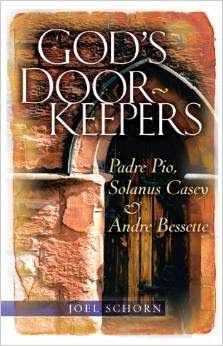
Ordinarily when I do one of these mini-reviews, I try to summarize the book as I offer my reflections on it. In the case of Joel Schorn’s wonderful little book God’s Doorkeepers, which presents the parallel biographies of three 20th century saints (though only two have been canonized to date), I’ll let the summary on the back of the book explain the work for me:
I look on my whole life as giving, and I want to give and give until there is nothing left to give. – Solanus Casey
Padre Pio and Andre Bessette would have readily agreed with Solanus Casey even though, on the surface, none of the three had much to give. All grew up in humble circumstances, each suffered poor health, and none achieved academic distinction or prominent positions in their religious orders. They were, to all appearances, the sort of people others overlook.
Yet in their lifetimes, untold numbers found physical and interior healing through their ministries, and since their deaths their fame has grown enormously. Their secret was the secret of every successful Christian life: In complete humility, they abandoned themselves to the will of God.
Bessette and Casey literally answered the door at their monasteries, and Pio was something of a spiritual doorkeeper in the confessional. God’s Doorkeepers reveals how these miracle-workers, in spite of their lowly circumstances, inspired and continue to inspire those who seek a healing encounter with God.
By way of commentary, I’ll offer this observation: I am sometimes guilty of reading Scripture or accounts of the incredible accomplishments of the ancient saints and silently wondering, “Where is God today? Why does He not show his power and love today as he’s done in the past?” I admit that I sometimes long for a sign (a parted sea, the lame walking, the dead raised) and when I don’t witness these things…I don’t lose faith, per se, but I wonder…
A New Calling
Blogger’s Note: For those few of you who still follow this blog and don’t attend St. Michael Catholic Church, the article below was published at our pastor’s request as a self-introduction to the community in last weekend’s parish bulletin.
As of this week, I have been your new faith formation director for one month. The transition feels fresher than that, and I feel just as green, in many ways, as on the first day in the office. As I’ve said more than once, it’s like I’m a first-time parent again: like I have been entrusted with something precious and fragile and sent home with lots of advice and no clear idea of what to expect next.
Okay, it’s not as bad as all that. My wife Jodi and I have been parishioners here for 11 years now; two of our children (Trevor and Lily) have been born and baptized here, and our older kids (Brendan, Gabe, and Emma) have been altar servers and active in the youth group and other activities. Jodi and I were youth leaders at our previous parish—St. Michael’s in Remus, Michigan—and have been LIFT catechists, liturgical ministers, Natural Family Planning and God’s Plan For a Joy-Filled Marriage witnesses, and CRHP witnesses here. I also served on the Faith Formation Advisory Committee during the transition to LIFT, so I understand what we’re trying to accomplish and know how hard Carol and Kathy have worked over the years to build our core program.
Nevertheless, this is a big shift for me. I was baptized in the Faith but not raised in it, and I became a husband and father before I became a confirmed and practicing Catholic. Until last month, I had spent my entire professional career in journalism and communications. Jodi and I have talked for several years about the possibility of me working for the Church someday, but never imagined the call would come this soon. And it is a call. This past Monday’s reading from the prophet Hosea described the Lord leading His people to a desert place and speaking to their heart—and professionally, this past year was desolate and lonely, until former colleagues, friends, and family all began to urge me to pray and to think about what I was being called to do.
I prayed. I did my best to listen. And I’m here…now what?
We visited some of our former youth group “kids” in Michigan earlier this month, one of whom was recently featured in the Diocese of Grand Rapids magazine for her beautiful pro-life witness. In the article, Natalie jokes about how much she could accomplish if God would just give her a clear to-do list. Instead she—and we—are called into a relationship and an ongoing conversation with God, in which we get to know Him day by day, enabling us to better hear, understand, and respond to His desires for us.
That’s where I find myself now. We have a beautiful parish and community, faith-filled priests, strong core programs, devout and dedicated catechists, and a rookie faith-formation director who is on the job, but still praying and listening. We have a firm foundation and so much potential—and I look forward to hearing from and working with you as we continue to become a people living for Christ.
Book Break: The Search for God and Guinness
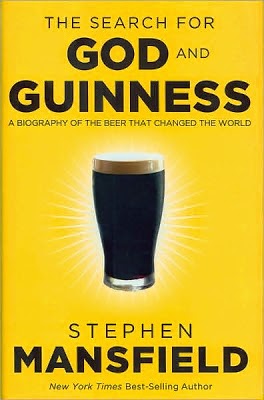
Stephen Mansfield’s book The Search for God and Guinness is a fun read on many levels. It’s a solid biography of a family, a beer, and a brand that are recognized the world over. It tells the story of a man and his sons (and their sons, and their sons…) who obsessed with the quality, production, and distribution of their “extra stout porter” to the point that they pioneered innovations in brewing, packaging, distribution, marketing, and quality control, and who care so much for their workers and their native Ireland that they pioneered onsite healthcare and wellness for employees and their families, as well as education and cultural benefits, housing and childcare, and more.
Most people assume the Guinness family was Catholic, but that is not the case — though they worked hard to benefit their Catholic workers and neighbors. Many, if not most, of the Guinness men either became involved in the brewery or became Protestant ministers — and it’s in the discussion of theology and the tap that the book becomes problematic for me. In writing about the history of beer and brewing, Mansfield credits the Catholic Church and numerous patron saints of brewing, and mentions that abbeys and monasteries throughout Europe produced good ale until the Reformation, at which point many of the abbeys and monasteries closed. However, he then goes on to credit Luther and Calvin for defending the idea that it is not sinful to take pleasure in God’s creation, thus preserving brewing and the enjoyment of beer.
“As Reformation ideas captured hearts and minds throughout Europe, priests and nuns renounced their vows, Roman Catholic cathedrals became Protestant churches, and monasteries closed, thus decreasing the production of beer. While this decline in brewing would not have deterred Martin Luther from his reforming work, he certainly would have grieved the loss of any fine brew, for he was among the great beer lovers of Christian history. … He was German, after all, and he lived at a time when beer was the European drink of choice. Moreover, having been freed from what he considered to be a narrow and life-draining legalism, he stepped into the world ready to enjoy its pleasures to the glory of God. For Luther, beer flowed best in a vibrant Christian life. (Page 28)”
“Like Luther, Calvin worked hard to hammer out a consistently biblical worldview. He wanted all of his life to be submitted to the rulership of Jesus Christ and yet did not want to miss some grace or provision of God because of flawed theology or religious excess. He and Luther had seen too much of that in their pre-Protestant lives. … This robust Reformation theology, which taught enjoying God’s creation and doing all that is not sinful for the glory of God, filtered into the centuries that followed the reformer’s work. (Page 31)”
“Clearly, then, though the Reformation diminished the production of beer temporarily by closing many of the European monasteries where beer was brewed, it also served the cause of beer and alcohol well by declaring them gifts of God and calling for their use in moderation. (Pages 32-33)”
Mansfield’s tone when discussing the Reformation is by and large heroic, to the point that it sounds as if these men were defending beer against the Catholic Church. These excerpts represent the worst of it, but this pro-Protestant tone pervades the text even though it has little to do with the story at hand, making an otherwise enjoyable read strangely slanted. Nor does Mansfield acknowledge the obvious question raised by this assessment — how does this Protestant view of beer differ from the Catholic view that fostered so many medieval abbey ales?
Long story short: If the summary above appeals to you, this is a library read, not one to add to your collection. As a biography of a beer and a brand, I enjoyed it. As religious history, I did not. Interestingly, Mansfield appears to be a bit of an equal-opportunity “faith profiler” of current and historical figures, having wrote 16 books, including The Faith of George W. Bush, The Faith of Barack Obama, Pope Benedict XVI: His Life and Mission, and Lincoln’s Battle with God. I didn’t know this before I embarked on the Guinness book.
Nettles Or Nails?

Some years back I wrote a brief personal essay on “the Jim-in-my-head.” The Jim-in-my-head is intellectually and physically fit, well-spoken and timely, gentlemanly even in revelry. He plays the upright bass and reads to his family. He hunts and fishes, writes and publishes, and still is home for dinner. He’s the idealized me, confident, unhesitating, and prudent.
Also, he does not exist.
I’ve known this all along, of course, but it hasn’t stopped me from chasing this phantom Jim, and stranger still, from feeling in recent years as though he’s slipping away. It should be no surprise, should it, that I am unable to catch a figment? But then, why these feelings of both failure and loss?
Last fall a couple of friends separately recommended to me the little book The Way, by St. Josemaria Escriva. I’ve been reading it little by little since then, waiting for the previous lesson to sink in before moving forward.
Fr. Escriva is no easy master, and his writings are loving, but direct and challenging, to the spiritually soft. One excerpt in particular has continued to influence my thinking on a daily basis:
“Many who would willingly let themselves be nailed to a Cross before the astonished gaze of a thousand onlookers cannot bear with a christian spirit the pinpricks of each day! Think, then, which is the more heroic.”
— The Way, paragraph 204
I have said and written so many times that many people—many males, in particular—desire to be a part of something great and glorious, and our stories are filled with heroic deaths of good men. No man likes to imagine himself shrinking in the face of vice or violence, but perhaps it is easier to steel oneself for a bullet than to suffer a thousand paper cuts? Perhaps today’s nettles are heroic enough for now and serve not to wear us down, but to condition us for nails.
 Archangel Stomp