Slaves No More

I can’t possibly afford to be here.

Two years ago, I was working in communications at the University of Minnesota. I had spent six years as the president’s speechwriter and enjoyed a solid salary, stellar benefits, and the respect and friendship of several wonderful colleagues.

Nevertheless I felt adrift. The U hired a new president, and I changed jobs three times in two years—with each one less and less to my liking. I knew I needed to make a change. I thought about working for the Church, but communications positions were few and far between; most other positions required a theology or professional degree I didn’t have, and the pay and benefits couldn’t compete with a large public university.

Plus, like too many couples, Jodi and I were not smart with our money in our younger days. We never had a budget and ran up debt almost without thinking. So when the faith formation job opened up here in our home parish, my first thought was: We can’t afford it.

Unbeknownst to me, wiser minds and more faithful hearts than mine were at work. Friends and family were praying for me. And providentially, Jodi and I had attended Financial Peace University the year before. Jodi’s brother Jason followed Dave Ramsey’s program, and it changed his life—so when new parishioners Jason and Robyn Jones brought Financial Peace University here, we saw it as a sign and joined their first course. It changed our lives, too.

I won’t walk you through the entire program—instead, I’ll share one example. Ramsey insists that a zero-base budget is essential to managing your money. Every dollar you bring in is assigned a specific role. Bills. Groceries. Giving. Savings. Even monthly “blow money,” so you can treat yourself to whatever you want, no questions asked. Each month, you tell every dollar where it goes.

“At the end of the first couple months,” we were told, “you’ll feel like you got a raise.” Why? Because when you don’t assign every dollar to a specific priority, you waste money, without even knowing it.

After living paycheck to paycheck for years, we were skeptical—but sure enough, when we started the zero-base budget, we realized we were blowing an extra $500 to $1,000 a month on…nothing. We had barely covered our bills, and we had no money left and nothing to show for it except a few greasy pizza boxes and empty beverage containers. We started budgeting this way each month and realized we had been living and giving below our potential!

So when opportunity knocked here at St. Michael, we ran the numbers and discovered I could answer the call. The incredible thing is that we have the same bills as before (gas and parking went down; healthcare went up), yet everything is covered, even with less coming in.

When we speak about it, it makes no sense—where does the money come from?—but on paper it’s clear: when we track every dollar, we can see the money was there all along. When we couldn’t see it, we didn’t realize it was missing.

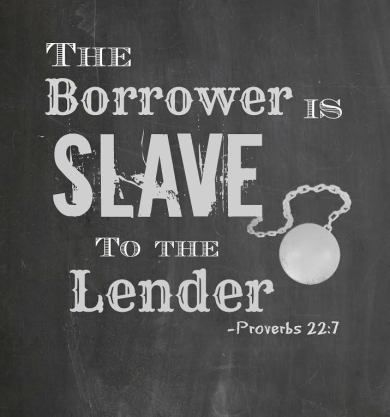
We aren’t debt free yet, but we’re on our way—and just getting on that path gave us the freedom to change, not just jobs, but our whole family dynamic and outlook. We make less money, and yet we are giving more to the church and other charities, enjoying ourselves more, paying off more debt more quickly—and worrying less. Although we still owe, we are no longer slaves to money. And that is a great feeling.
Reliving My Childhood

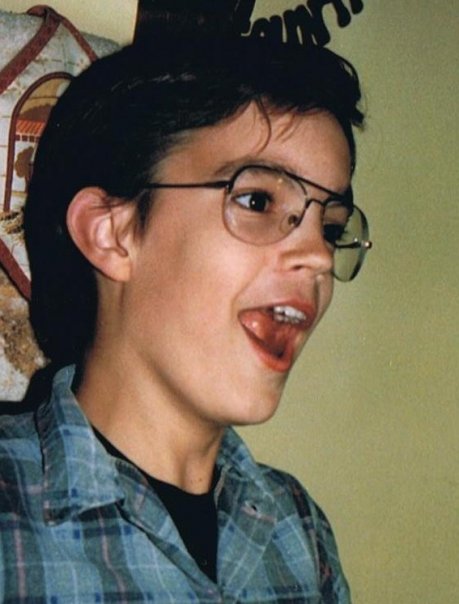
Yeah, that’s the look!

I have a confession to make: I have spent the last few weeks with a goofy grin on my face, reliving my childhood. It began back in November when, for the first time in many year, I finished J.R.R. Tolkien’s The Hobbit and decided against my original intentions to begin The Lord of the Rings trilogy immediately. These were my favorite books as a child and teen, and indeed, I still have the Special Silver Jubilee Edition paperbacks I grew up with — tattered, torn, and taped back together again. I have meant to turn back to them for some time now, considering that the the last time I read and loved them I was less than half the age I am now and neither Catholic nor even Christian in any meaningful way.

Consider this as well: for the past 14 years, the only substantive interaction I’ve had with the peoples and history of Middle Earth has been through the hit movies (and an occasional comment from my older two sons, who have read them in the interim). Truly I underestimated the impact of regular exposure to the films without reading the books. I had forgotten just how wonderful these stories really are!

Somewhat disturbing, but it was all I had!

You see, I had grown up with the Ralph Bakshi animated movies and had not loved them. I daydreamed about what the characters and places would look like in real life. In high school, I ran across a hardcover edition of The Complete Guide to Middle Earth with this image on the cover (the rest of the fellowship shows up on the back), and it fueled those daydreams for many more years.

Loved it, except for Aragorn as a musketeer? And Pippin’s hat…

So when the first of The Lord of the Rings movies was released, my love was deep, fueled by the imagery and fanned by a long absence from the text. As I re-read the stories in recent weeks, I was drawn back in: to the breadth and scope of Middle Earth; to the perils at every stage of the journey to Bree, Rivendell, and Mordor; to the practical concerns of traveling unseen across an unfriendly landscape; to the brutality of war and love of honor, fellowship, and song–and of course a pipe and a pint. I shook my head in disbelief, I grinned, I laughed out loud — I even choked up a time or two!

I also realized how utterly short the movies fall. Not simply because of what was left out or added — but in terms of the overall tone and message of the story.

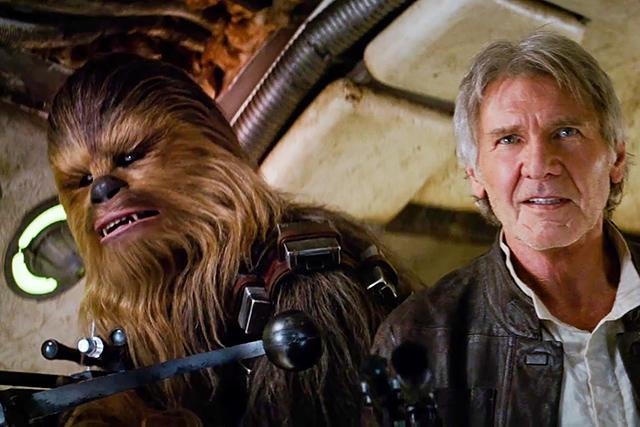
Then on Tuesday I took the older four kids to see Star Wars: The Force Awakens. Star Wars has even deeper roots in my childhood psyche: these are the first movies I remember loving, and those stiff plastic action figures are the first toys I ever craved and collected. Even as a grade-schooler I think I recognized that Star Wars had all the elements of the stories I liked best: aliens and spaceships, swords and sorcery, a “lone ranger” and his native sidekick in a rough-and-tumble desert wasteland. Of course, The Empire Strikes Back was the best of three original movies, and of course, Han Solo was the best character — both for the same reason: I was beginning to realize that life wasn’t all sunshine and daisies, and people aren’t always perfect. From that standpoint, Empire seemed very real to me, and Han Solo gave me hope that even a scoundrel could find a way to rise above.

So imagine my delight the first time this image started circulating the Web:

“Who’s scruffy-looking?”

Much has been made about how the new Star Wars movie is a throwback to originals, with so many iconic images like this one that call to mind the movies I grew up with. But on top of that, I found a sense of wonder and chemistry that the three prequels abandoned in favor of spectacle and special effects. Again, I shook my head in disbelief, I grinned, I laughed out loud — I even choked up a time or two. I was a kid again.

Blogger’s Note: I will likely write a more thorough post on each of these experiences in the near future. In the meantime, let me say that, without a doubt, Han shot first. He always more Clint Eastwood than John Wayne, anyway — more of a Lone anti-Ranger than the Lone Ranger himself. Also, if I can’t be Sam Elliott in my elder years, I’ll be Harrison Ford.

Don’t Lose Your Sense of Wonder

I sometimes think of life as a high sledding hill with God at the top, giving us a push. It’s left to us to steer, but like any good father, He knows our tendencies to close our eyes or overcorrect better than we do, and so He can see every curve we’ll negotiate, every bump that will bounce us airborne, every tree we’ll hit. He sees the trajectories of other sledders and knows their tendencies, as well—He knows whose paths we’ll cross, for good or for ill, and when we’ll be blindsided. He alone has the long view, the Big Picture. We must persist with less—a glimpse of heaven through the treetops as we slip away, faster, faster…


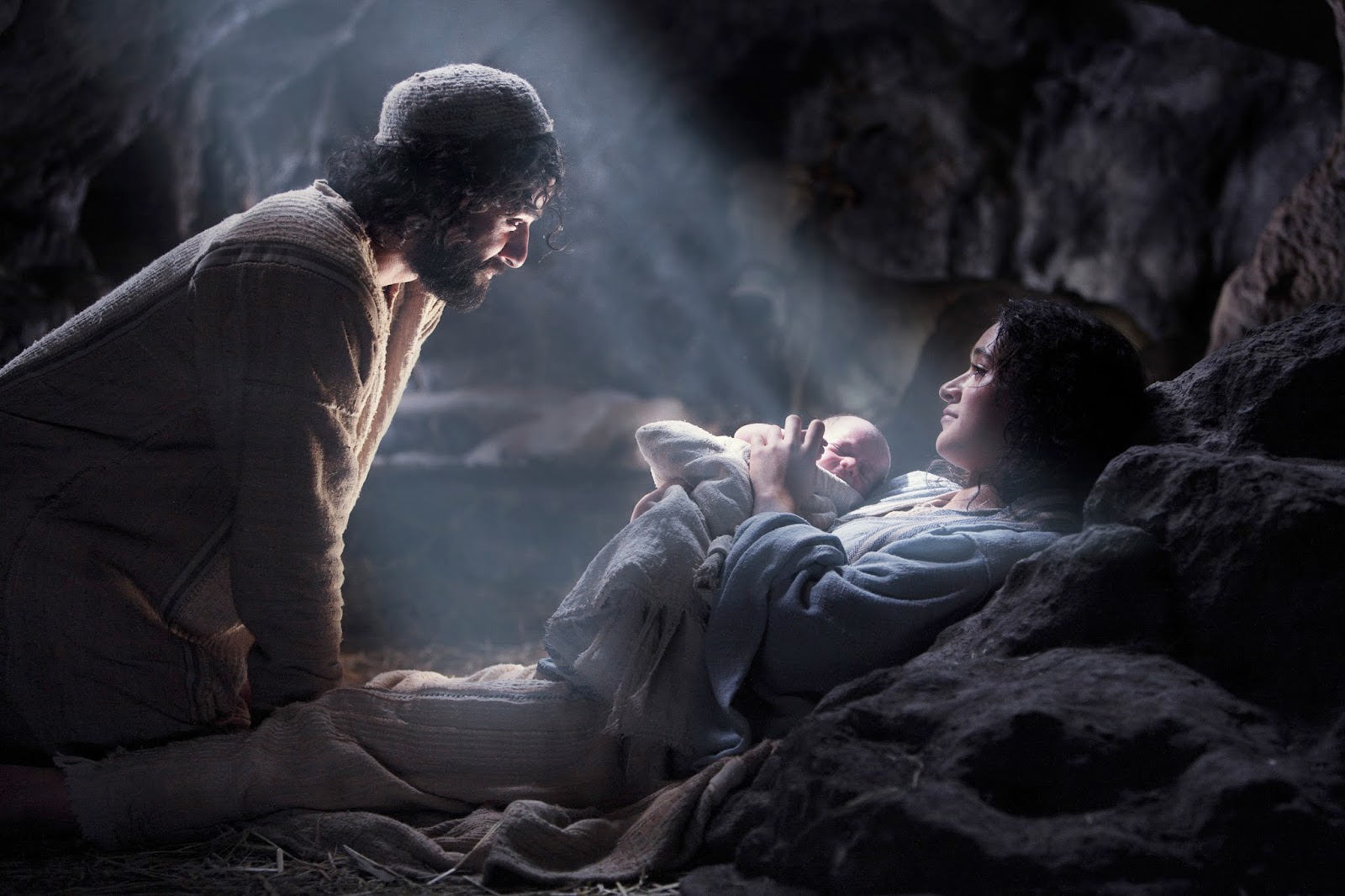
I remember, as a boy, waiting breathlessly for Christmas. Christmas Eve was sweet agony—tossing and turning, knowing I had to fall asleep so Santa would come and yet straining my ears for the jingle of bells and the chance at a glimpse of that jolly, saintly man. I couldn’t wait for presents, of course, but I knew they would be great because I knew HE was great! And although we were not, for the most part, a church-going family, still we had a beautiful Nativity, and I knew the story of birth of Jesus. I knew, at least, that He too was a great man and a great gift to us. In these two stories, magic, hope, anticipation, and gratitude combined into one overwhelming sensation for my young heart: wonder!

Wonder seems harder to come by these days. Our science and technology have helped us explain the Heaven out of the world around us. And we have so much on our plates. In Mary’s day, she and Joseph were very much concerned with their daily bread, with doing God’s will, and with deliverance from evil. Now we have countless other worries, from careers to car repairs, birthday parties to ballgames. Beneath it all we hear the steady drumbeat to, as one retailer put it this year, “Win the Holidays.”  We seem so short of time, and the pressure on our heart squeezes it empty. Too many of us feel a hollow ache between our lungs as Christmas approaches, instead of joy and wonder.

The good news is that it’s not too late. Christmas is not a day so much as a season, which begins with the Feast of the Nativity on December 25th and continues for a dozen days: a celebration that “God so loved the world that he gave his only Son, so that everyone who believes in him might not perish but might have eternal life (John 3:16).” The good news is that Santa is ephemeral, while Christ is eternal. The good news is the Good News: that Jesus is God made flesh, that He came to live with us and suffer and die for us, that He rose again from dead, and that He saves us from our sins.

It is no wonder we sometimes feel blue at Christmas. We celebrate a joy we will not experience this side of heaven. No matter how blessed we are in this life, the gulf between what we have and what our heart yearns for in Heaven is so deep and so wide we cannot clearly see the other side or hope to cross it on our own. But Jesus came to show us the way; He gives us His Body and Blood to strengthen us, and His own Spirit to lead us.

The road that stretches before the feet of a man is a challenge to his heart long before it tests the strength of his legs. Our destiny is to run to the edge of the world and beyond, off into the darkness: sure for all our blindness, secure for all our helplessness, strong for all our weakness, gaily in love for all the pressure on our hearts.

– My Way of Life, a simplified Summa Theologica

May God bless you and yours with peace and love throughout this season and beyond. Merry Christmas!

Blogger’s Note: This article appears in the Sunday, Dec. 27, parish bulletin.

Greetings from the North Pole, Part XIII

Blogger’s Note: For several years now, we have received a Christmas letter from an Elfin correspondent, Siberius Quill. This is the 2015 installment.

Christmas 2015

My dearest children!

Greetings to you—and Sincere Prayers that neither this grey and muddy Winter nor the toppling of your tree as you were decorating has dampened your Christmas Spirit! Though your Father and eldest Brother had a time wrestling the Prickly Thing into a new stand, the old spruce looks Splendid and is holding its needles as well as can be expected given the Strain! Well done!


 Another Christmas has arrived! It has been Quite Some Time since you Elder Children have asked a question about the Old Man—his Appearance and Ways, or How he does What he does. At long last, at the urging of your own old man, lovely Lily-bell has posed a deep question, indeed: “Why is Santa’s nose so weird?” Your Father wisely pressed her on this, thinking perhaps she thought it too Red or too Jolly, but she insisted that the inside of his nose was weird. No more would she say, and I fear that’s little to go on, though not quite Nothing. I shall make an Answer that I hope will satisfy. I have spoken to his personal Physician, Vitali Mendwell, from the elfin Hospital Corps, and verily, the inside of Kris Kringle’s nose is, in fact, strange by Mortal standards: without drip or drainage or unsightly Bogeys. Even here above the Circle, he never runs down, never catches Cold, never has so much as a sniffle—truly!

Why this is nobody knows for certain: Doc Vittles, as we call him, always credits diet; Muggsy and Froth at the Buttery says it’s his daily doses of Cocoa with cayenne and cinnamon in the morning and Peppermint Tea in the evening; and the good Sisters of Perpetual Winter insist that it’s his Jolly Sanctity—the joyous reward of a Life Well-Lived! I tend to side with the Sisters: more often than not they are right, and Sinter Klaas is a Saint, after all!

It is a Joy to watch you all continue to grow in the Virtues—Faith, Hope, and Charity—not to mention height! A towering Bunch you are, like a roving Forest to elfin eyes—and I am Blessed to be able to check in on you Now and Again. Do not forget our Correspondence, and encourage your youngest sibling in All Things Christmas: but especially the Peace that comes from Giving and Serving. Heaven awaits!

A Very Happy Christmas to you all!
Yours Still and Always,

Q

Siberius Quill

A Christmas Poem: Cave of Wonder

From the film The Nativity Story (2006), rated PG
Wrapped in secret, underground
Sleeping infant makes no sound
Bed of straw and stench of beast
Greatest born to family least
 
Rapt in secret, working man
Virgin mother, shepherd band
Wise men from a country far
Worship Him by light of star
 
Wrapped in secret, hunted one
Earthly might fears Godly son
He has come to seek and save
Born below to rise from grave
 
Rapt in secret, angels sing
Glory to the King of kings
Strength made helpless; selfless love
Here below shows God above
 
Wrapped in secret, greatest gift
By our hands of swaddling stripped
Hung upon a lifeless tree
Sacrifice for you and me
 
Rapt in secret, we the poor
Kneel in before Him evermore:
Blest be home and blest be feast
And blest are we, His servants least
 
J. Thorp
December 2015