Strength In Weakness

A few years ago, I briefly joined the kids in studying Chen-style taijiquan — the original “tai chi,” an ancient Chinese grappling art rarely taught in the West. During a “push hands” class, I was partnered with a diminutive older woman. We stood toe-to-toe, our right hands extended and connected, back-of-wrist to back-of-wrist; I would shift my weight forward (toward her) and rotate my hand to push her hand toward her; when she could shift no further backward, she would redirect my push in a circular fashion, rotate her own wrist, and push back into me in the same fashion. We did this continuously, until our quads were burning and droplets of sweat ran down our forearms, and the longer we went on, the faster her redirect, until it felt (to me) barely controlled. I shrugged inwardly — she was a more experienced student than I — and tried to maintain a slow and steady pace.

Our instructor, Jose, approached and watched us a moment, then gently reminded her to move in a more deliberate and controlled manner. “I’m trying,” she replied, “but he’s pushing like hell!”

Jose shifted his knowing gaze to me and smiled. “I paired you with someone of a different size on purpose,” he explained. “One of the most difficult parts of taiji for men — especially large men — is learning to sense the other person and knowing their own strength, learning to be gentle. Anyone can be hard, but it’s often difficult for men to be soft.”

Jodi had told me for years that that I didn’t know my own strength and that I should be more careful when “handling” her or the kids — but this lesson drove it home. We resumed the exercise, and I tried to empty myself. I could barely feel that we were connected, which made it difficult to respond to my parter’s movements. I found I needed to be infinitely more attentive to my partner. Jose was right: It was hard to be soft.

A week or so later, I was partnered with a man closer to my own size and build, in a similar exercise, except this time the circular hand motions were more vertical in orientation, and the one whose hands were beneath the other’s was supposed to bear the weight of the other’s arms. This requires the other person to empty himself and let his weight (or at least, the weight of his arms) be carried — another act that does not come naturally to men. Both of us tested the other by periodically stopped our circles and watching the “empty” person continue to circle on their own, a sure sign that he was not truly “empty.” This time we were forced to be more attentive to ourselves.

It is easy to find the power in our strengths — to rely on our size or our natural aptitudes and bulldoze our way through the problems that confront us. This past Sunday, Fr. Mark of Our Lady of the Black Hills Catholic Church preached on the topic of meekness, in part using the definition “strength under control,” and indeed, the New Testament of the Bible is rife with the apparent paradox that we are strong in our weakness.

I’ve struggled with this concept myself and, in the past, have made my peace with it in the sense of Clint Eastwood’s line (above): “A man’s got to know his limiations.” But a few weeks back, our associate pastor at St. Michael Catholic Church, Fr. Meyers, helped my understanding in a profound new way. In a three-minute homily at a Saturday morning Mass, he said that each of us has a tendency toward one of the seven deadly sins — I believe he referred to this as our primary fault — which can also be the means of our salvation. (I’m certain I’m oversimplifying and not doing this topic justice.)

This resonated with me. I know that I struggled, early in my marriage, with lustfulness and learning to better love my bride, and I know that coming to terms with the Church’s teachings on married sexuality has transformed my marriage, my faith and family, my entire life. Despite a number of strengths as a husband, father, and man, I had a basic weakness and misunderstanding that kept me from being all I could be in all three of these areas. Not only did I come to understand my limitations, but my weakness was turned to strength.

St. Paul, in his second letter to the Corinthians (Chapter 12, verses 7-12), says:

Therefore, that I might not become too elated, 3 a thorn in the flesh was given to me, an angel of Satan, to beat me, to keep me from being too elated. Three times I begged the Lord about this, that it might leave me, but he said to me, 6 “My grace is sufficient for you, for power is made perfect in weakness.” I will rather boast most gladly of my weaknesses, in order that the power of Christ may dwell with me. Therefore, I am content with weaknesses, insults, hardships, persecutions, and constraints, for the sake of Christ; for when I am weak, then I am strong.

May we all be blessed with such a thorn, and find the strength in our weaknesses.
The Second Third, Week 33: Taking It All In

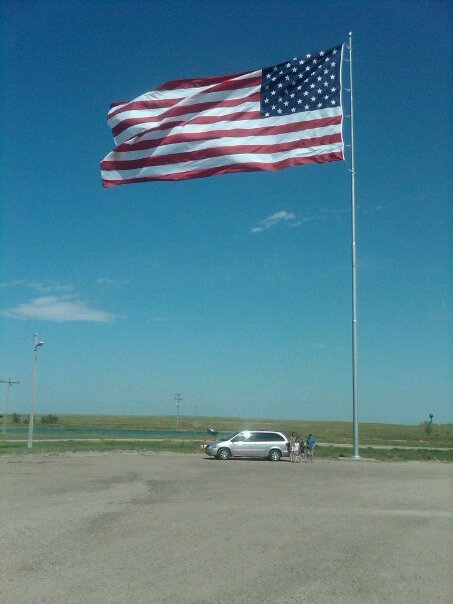
Blogger’s Note: Sorry so late. On the road in South Dakota.

In many ways, , our fifth child is a second chance of sorts for me. It’s been seven years since Jodi’s been pregnant. I was involved in the past: I attended doctor’s appointments when I could, encouraged my bride and cut the cord, helped with the older kids and the baby when practical, and generally tried to be a good dad. But even with Trevor — even though we thought we might be done having children — I never thought of it as over or that I’d miss anything.

But I did miss it. My wife is beautiful always, but uniquely so when pregnant, and the miracle of new life has not lost its wonder. So in my Second Third — since this may or may not ever happen again — I’m taking it all in: every appointment and ultrasound, the anticipation, the excitement of our children…and in December, God willing, every moment and change in our new growing baby. I cannot wait. Best. Christmas. Ever.

The Good Life

Jodi and I were talking the other day about making peace with what we have. She’s wanted a bigger house in a nicer neighborhood with more children the age of ours; I would like a bigger vehicle (like a Suburban) and think an Airstream like my sister’s would be great fun. Instead, this winter we’ll shoehorn a fifth child into a three-bedroom, mid-80s split-level and well-used Chrysler minivan…and when we want to camp, we’ll break out the tent.

Have we settled? In some sense, I suppose – but this new baby was a mutual decision and something the entire family wants more than a new house or car. Materially, we are fine with what we have.

Some folks want the best of everything, and in a free country, they are free to pursue it. As for me personally: I want to be left alone, to pursue my own version of happiness. I want a close, loving family; a good community; the freedom to worship God in the way we see fit. I want to hunt and fish when I can, to brew beer and to bake sourdough and to accidentally blow up my garage or make myself sick in the process. And I don’t need anyone to guarantee my medical care. I don’t need state-of-the-art treatment or extraordinary measures – I need a doctor I can trust and the ability to say “when.”

On this Independence Day, it occurs to me how blessed we are. It’s a wonderful thing to live in a country where all of these things are still possible: where Jodi and I can raise a Catholic family; choose a fifth child and not care about the gender; and do what we want with our money, our free time, and our health. It seems as though these things are at risk; that, like General Motors and AIG, our government has become both dysfunctional and “too big to fail” – and that regular folks are rapidly becoming, not the end, but the means. So today, let’s thank God that we live where we do, but recommit ourselves to the safeguarding the freedoms we celebrate – not state-run stability (which seems laughable during the current budget stalemate) but the risk and reward of happiness defined, pursued, and attained by we the people, as we see fit.

The Second Third, Week 32: Growing Up Dad

“Our similarities are different.”
– Dale Berra, son of Yogi

In my most recent Second Third post, I insisted I was becoming (rather effortlessly) more and more like my father. The interesting part, to me at least, is that the more I become like him, the starker our differences seem. Eventually we’ll be identical, and nothing alike at all!

It makes sense in a strange way. Part of Dad’s charm – and, I believe, a big part of why he looms so large in the lives of so many – is that he is thoroughly an individual. He looks how he looks, believes what he believes, and lives how he lives – and is completely unapologetic about it. You can take him or leave him, and he might prefer the latter.

I am not so thoroughly individualized. I still work in a collaborative and political environment in which one must be flexible and take alternative views (many, and often somewhat obscure, alternative views) into account. Dad is oak, not willow: straight, tall, deeply rooted, and hard; inspiring, hot-burning, and impervious to shifting winds.

We also have different aptitudes. Dad didn’t enjoy school, and wasn’t a voracious reader until later in life. He’s always been gifted with mechanical ability, spatial intelligence, and will power. In these ways I am his opposite—but (thankfully), I did inherit both his and my Mom’s persistence. Given time, I’ll make it work, make it happen, make it come out alright.

Nevertheless, I am growing into him. He is not a man of faith, but of deep conviction; my Catholic faith has led me to a similar place, in which the grays of young manhood are reconstituting into their constituent blacks and whites. His full beard and Amish-meets-mountain-man appearance have emerged in me as an unruly mop of hair and pincushion goatee, and jeans and western boots at work. His politics and inclination to be left alone are manifest in my politics and inclination to be left alone, and his willingness to be firm with his children and die for them in a heartbeat shape me more every day.

My sense of humor and involuntary tendency to play word games are his, too. One standard eye-roller for our kids: when someone says, “I’m too tired,” I ask, “Like a bicycle?” I also make up random lyrics to old songs, and spontaneously invert the first letters or sounds of word pairs…and then rhyme them to make new pairs. For example, Dad will call my mother “peety swie” and their dog, Maggie, “duppy pog” or a family favorite, “mirthless what.” (Don’t concentrate on the words; flip the first letters and sound it out…) An example from our house: I took to calling Emma Rose “Rosebud,” then “Boserud” – then ultimately “Nosecrud” if I want to get her goat. Should you find that cruel, consider that I was referred to as Dogbreath for much of my formative years. We played these games all the time when we were younger. Dad loved “runny babbit” well before I’d ever heard of the Shel Silverstein book.

I’ve been told I look more like him, sound more like him, move more like him. In my Second Third, I hope we will become just the same. Only different.