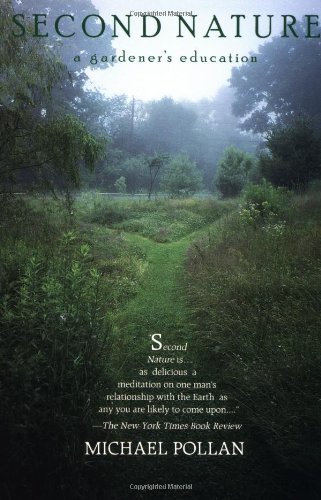
Book Break: Second Nature

I received a somewhat uneven education at Yale University, primarily because I was a 17-year-old kid when I arrived, and given a smorgasbord of courses and little guidance. Yale’s approach was to require a certain number of courses from each of four groupings, plus the prerequisites for your degree. With that as my framework and anthropology as my major, I had plenty of room in my schedule to take whatever caught my eye, from Herpetology to Polish to The History of Jazz.

The history course catalog, in particular, lured me down a rabbit hole: I took two History of the American West courses back to back, essentially two semesters following the colonial frontier westward over the history of Europeans on this continent, then a course called North American Environmental History, which traced our peculiarly American views and impacts on land, nature, and the environment over that same period.

That’s a long preamble to a book review.

Continue reading
A Life Well-Remembered

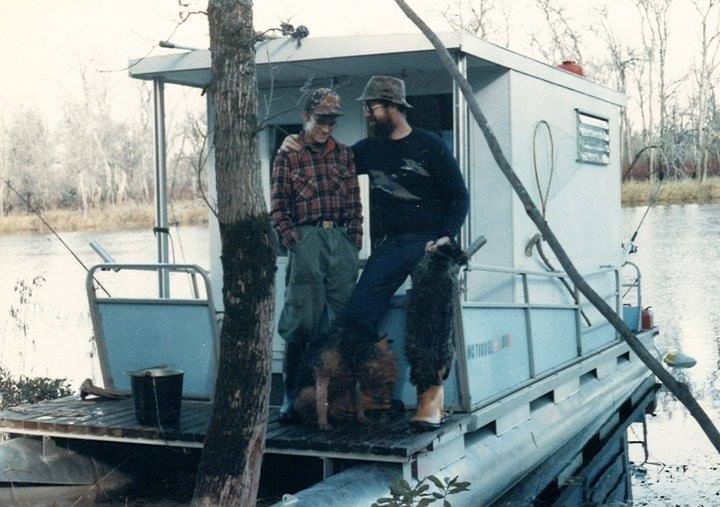
I remember, many years ago, sitting with Dad in a homemade ice-shanty-turned-deer-shack on the Lofgren farm in Michigan, where we used to hunt. It was muzzleloader deer season, snowy and cold, and we had a little porcelain-coated gas heater to keep us warm while we watched and waited. Dad was slicing an apple with his pocketknife and placing the slices on the top of the heater, where they hissed, filling the shack with the smell of the roasting fruit.

We ate them once they were soft and warm, and talked quietly together. My father is not a religious man; that day he told me he didn’t believe in an afterlife, but that heaven and hell are how people remember you. To his way of thinking, if you were a good person and took care of your family and your neighbors, you would be loved, missed, and remembered well. You would live on in the hearts of others, and that would be heaven.

If you didn’t, you would not be missed, and your memory would fade—or worse, you would be despised in retrospect. That would be hell.

I don’t share this view personally. I believe in a real and eternal afterlife, and I trust in our merciful God to see the goodness and beauty my father has brought into this world. But in the meantime, I want to give Dad something he can use here and now: a glimpse of his “heaven” as it stands today.

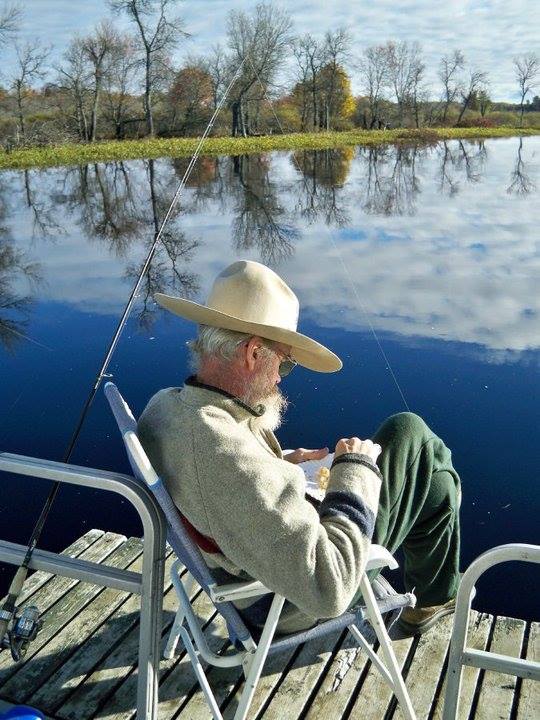
Most of our family and close friends know by now that my dad has both Parkinson’s Disease and dementia. If you hadn’t heard, please know that we didn’t intend to keep you in the dark. It’s not the easiest subject to broach, especially for our emotional clan. Parkinson’s and the resulting effects on his hands and mobility have been problems for several years now. The dementia diagnosis is a newer thing. Over the past few years, Dad’s short-term memory has declined and sequential thinking has become more challenging. More recently he has begun to imagine things.

Continue reading

Peaceful, Prayerful, & Public

This post appeared in the Sunday, June 19, bulletin of St. Michael Catholic Church.

This weekend we celebrate the Solemnity of the Most Holy Body and Blood of Christ, or Corpus Christi. If you are reading this before noon on Sunday, you are not too late to join us for our annual Corpus Christi procession. Weather permitting, we will process with the Blessed Sacrament held high to bless our community in all four directions, with Scripture, incense, and Adoration, at four outdoor altars. In case of rain, a much shorter procession moves around the worship space.

The May 2020 issue of DISCIPLE shared the history of such processions in our community:

Continue reading

Life In Abundance

This post appeared as a column in the Sunday, May 15, bulletin for St. Michael Catholic Church.

Last weekend, we saw all of our children and grandchildren, not to mention my mother and several friends, due to our youngest son Trevor’s star turns as St. Thomas More in the play, A Man for All Seasons. We had representatives of four generations of Thorps under our roof. We saw moving performances, illustrating a 500-year-old life that remains compelling and relevant today. We celebrated Good Shepherd Sunday and the May Crowning of Mary and Mother’s Day at the 9:00 AM Mass, with Father Park and Bishop Williams and two deacons. We received Jesus in Word and Sacrament—and my mom benefitted deeply from 10 minutes with two of our parish’s wonderful prayer ministers after Mass. We ate and drank and made merry. It was a both-and kind of weekend, a time of spiritual superabundance.

Early Monday morning, after Mom departed for the airport, I read the daily gospel reading, which continues St. John’s Good Shepherd discourse. The last line of the reading struck me hardest:

“A thief comes only to steal and slaughter and destroy; I came so that they might have life and have it more abundantly.”

John 10:10

I recognize the thief and his works—I see them daily in the world—and I know that, at times like last weekend, we are experiencing God’s abundant life firsthand. The Enemy divides, distorts, and destroys; he is wreaking havoc in the world right now. But Jesus brings hope, courage, joy, and peace—not to mention the perseverance to live in the Spirit despite the Enemy and those who serve him.

Continue reading

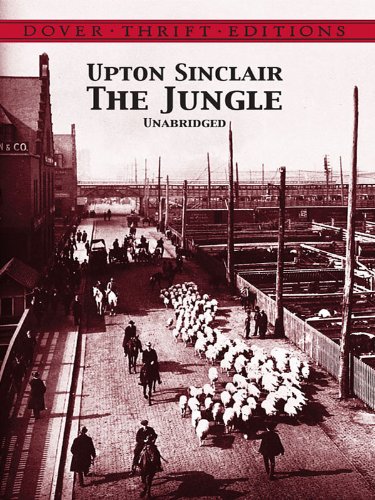
Book Break: The Jungle

A few weeks ago, I attended a day-long training to become a home visitor for our local conference of the Society of St. Vincent de Paul. The most compelling part of the training was the section on what poverty looks like, from the perspective of the person living through it. This segment of the training was led by a man who was born and raised in some of the roughest areas of Chicago and Minneapolis, who was hired by the Society of St. Vincent de Paul as a teen and loved and accompanied for years, through numerous trials and triumphs. Today he is a college-educated husband and father, a successful manager and talented speaker on the state and national level, and a Vincentian for life.

The training was thought-provoking and convicting; it, along with learning more about my own ancestors’ struggles with poverty before I was born, led me to want to dig deeper—which in turn led me to another unread book on my shelf: The Jungle by Upton Sinclair.

Sinclair was an influential muckraking journalist, author, activist, and political candidate at the turn of the 20th century. The Jungle is his fictional but detailed and realistic account of power, corruption, and poverty during this time, particularly in the stockyard district of Chicago. The book follows one immigrant family from Lithuania, who moves to America on the promise of plentiful work for good wages, and finds a corrupt system of capitalists and politicians of every stripe, at every level, keeping prices high and wages low, controlling everything from housing and food supplies in the neighboring slums to law enforcement, inspections, and elections—and driving workers to desperate measures to avoid death by illness, exposure, or starvation.

Continue reading