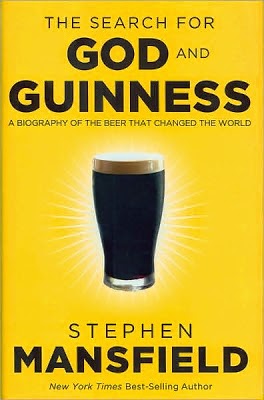
Book Break: The Search for God and Guinness

Stephen Mansfield’s book The Search for God and Guinness is a fun read on many levels. It’s a solid biography of a family, a beer, and a brand that are recognized the world over. It tells the story of a man and his sons (and their sons, and their sons…) who obsessed with the quality, production, and distribution of their “extra stout porter” to the point that they pioneered innovations in brewing, packaging, distribution, marketing, and quality control, and who care so much for their workers and their native Ireland that they pioneered onsite healthcare and wellness for employees and their families, as well as education and cultural benefits, housing and childcare, and more.

Most people assume the Guinness family was Catholic, but that is not the case — though they worked hard to benefit their Catholic workers and neighbors. Many, if not most, of the Guinness men either became involved in the brewery or became Protestant ministers — and it’s in the discussion of theology and the tap that the book becomes problematic for me. In writing about the history of beer and brewing, Mansfield credits the Catholic Church and numerous patron saints of brewing, and mentions that abbeys and monasteries throughout Europe produced good ale until the Reformation, at which point many of the abbeys and monasteries closed. However, he then goes on to credit Luther and Calvin for defending the idea that it is not sinful to take pleasure in God’s creation, thus preserving brewing and the enjoyment of beer.

“As Reformation ideas captured hearts and minds throughout Europe, priests and nuns renounced their vows, Roman Catholic cathedrals became Protestant churches, and monasteries closed, thus decreasing the production of beer. While this decline in brewing would not have deterred Martin Luther from his reforming work, he certainly would have grieved the loss of any fine brew, for he was among the great beer lovers of Christian history. … He was German, after all, and he lived at a time when beer was the European drink of choice. Moreover, having been freed from what he considered to be a narrow and life-draining legalism, he stepped into the world ready to enjoy its pleasures to the glory of God. For Luther, beer flowed best in a vibrant Christian life. (Page 28)”

“Like Luther, Calvin worked hard to hammer out a consistently biblical worldview. He wanted all of his life to be submitted to the rulership of Jesus Christ and yet did not want to miss some grace or provision of God because of flawed theology or religious excess. He and Luther had seen too much of that in their pre-Protestant lives. … This robust Reformation theology, which taught enjoying God’s creation and doing all that is not sinful for the glory of God, filtered into the centuries that followed the reformer’s work. (Page 31)”

“Clearly, then, though the Reformation diminished the production of beer temporarily by closing many of the European monasteries where beer was brewed, it also served the cause of beer and alcohol well by declaring them gifts of God and calling for their use in moderation. (Pages 32-33)”

Mansfield’s tone when discussing the Reformation is by and large heroic, to the point that it sounds as if these men were defending beer against the Catholic Church. These excerpts represent the worst of it, but this pro-Protestant tone pervades the text even though it has little to do with the story at hand, making an otherwise enjoyable read strangely slanted. Nor does Mansfield acknowledge the obvious question raised by this assessment — how does this Protestant view of beer differ from the Catholic view that fostered so many medieval abbey ales?

Long story short: If the summary above appeals to you, this is a library read, not one to add to your collection. As a biography of a beer and a brand, I enjoyed it. As religious history, I did not. Interestingly, Mansfield appears to be a bit of an equal-opportunity “faith profiler” of current and historical figures, having wrote 16 books, including The Faith of George W. Bush, The Faith of Barack Obama, Pope Benedict XVI: His Life and Mission, and Lincoln’s Battle with God. I didn’t know this before I embarked on the Guinness book.

More Friends and Good People

I’ve added a few new sites to my Friends and Good People blogroll (to the right and below) — take a minute and check them out!

  • The Art of Manliness. Fr. Tyler at Prairie Father introduced me to The Art of Manliness site some years ago. Whatever you’d like to delve into among the masculine and gentlemanly arts, it’s here — from grooming and dressing, to proper tool use and survival skills, to sandwich recipes and a killer series on the history of manly honor. Do yourself a favor, men — check it out, then bookmark it for your sons.
  • House Unseen. Two blogging friends (Laura the Crazy Mama and Andrea at Reconciling Remus and Rome) shared a brilliant post on Natural Family Planning from Dwija at House Unseen (which I myself passed on a few weeks back). I went there, and read this: “We bought a house in rural Michigan sight-unseen off the internet. My husband quit his job in California and we moved our kids across the country. Dogs. Goats. Chickens. Homeschooling. Crazy. I like my sacraments Catholic and my beer cold.” I think we could be friends.
  • Practical Catholic Junto. An orthodox Catholic take on Benjamin Franklin’s club, dedicated to solving practical problems in the community. The blog has more of a political and current events flavor, with occasional, more substantial articles about applied Catholic teaching and Catholic living
  • The Imaginative Conservative. If you’ve begun to despair that folks have forgotten there is such as thing as a conservative intellectual tradition, go here. They’ll make you want to read, write, and think again.
Hope to see you around the neighborhood — if you visit these sites, let me know what you think!

Servant of the Servants

My daily commute has been a blessing of late: relatively smooth and expeditious, with just enough windshield time to pray a morning rosary, then listen, think, and free associate to my heart’s content. This morning’s mental ramble started as I got into the car and backed from the driveway, already reciting the Creed. I made my way slowly through our neighborhood, announcing my morning intentions as I went (the conclave to select the new pope first and foremost today) and turned toward the freeway. As I rumbled over the railroad tracks, I recalled it was Tuesday, and thus, the Sorrowful Mysteries. I thought of that humble title of the Holy Father: the Servant of the Servants of God. I thought of Pope Emeritus Benedict XVI, and Blessed John Paul the Great before him — each a suffering servant and an image of Christ. I thought of the college of cardinals contemplating, voting, perhaps praying that theirs was not the name called. Heavy is the head that wears the crown…

* * * * *

Last night on the way to Brendan’s wrestling banquet, Bren, Gabe, and I were discussing the presidency.

“Did you know,” said Gabe, “that calling the president ‘Mr. President’ isn’t something you have to do? It’s just what George Washington asked to be called, and now everyone else does it, but it’s not a rule or a law.* So a president could ask to be called whatever he wanted. Wouldn’t it be funny if the president said he wanted to be called King?”

“It would be even funnier if he wanted to be called King George,” said Bren.

“Did you know,” I said, “that people supposedly wanted George Washington to be king after the Revolution, but he refused? The story is that he didn’t want to win independence from one king just to install another.”

* * * * *

Also on my commutes, especially in the evenings, I’m listening to an audiobook version of The City of God by St. Augustine. It’s a wonderful recording, not least of all because the reader is an older British man with a wise, witty, and kindly voice, who occasionally runs out of wind on Augustine’s longer rants, adding a touch of saintly exasperation to the reading.

The language and writing style are poetic and complex, but the book, thus far, is full of insight and contemporary relevance. For instance, after describing the folly and decline of Rome from many different angles, citing as evidence the descent of morality and the rise of materialism, celebrity, and indecent entertainment, St. Augustine ties the fall of the empire specifically to the fall of liberty and the rise of domination as the fundamental value of Rome.

This makes sense to me, then and now. Liberty recognizes the value of the individual; it can be defended, or in peaceful times, it can be content to live and let live. Domination, on the other hand, is aggressive and discontented by nature; it consolidates power and values the state. Augustine asks if a person might be considered more blessed who had modest wealth, sufficient resources for survival, and peace, compared to one who has untold riches and power and constant fear of war, assassination, or overthrow. So, too, a superpower? At what point did we aspire to be the greatest nation on earth, and what has that cost us?

* * * * *

86884-hemingwayIn November of 1935, Ernest Hemingway wrote a commentary for Esquire magazine called “The Malady of Power: A Second Serious Letter.” Hemingway was a great observer of the nature of men, and of war, and he knew another great war was coming to Europe. He closed the piece with the following:
Whoever heads the nation will have a chance to be the greatest man in the world for a short time — and the nation can hold the sack once the excitement is over. For the next ten years we need a man without ambition, a man who hates war and knows that no good ever comes of it, and a man who has proved his beliefs by adhering to them. All candidates will need to be measured against these requirements.

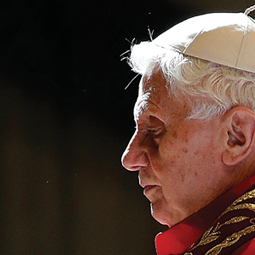
What makes our previous two popes such powerful witnesses? Both were humble servants who led a flock of millions with steadfast conviction and the utmost humility — Blessed John Paul II, in his willingness to be diminished by illness and age on the world stage for the edification of the world, and Benedict XVI, in his willingness to diminish himself and exit that stage for good of the Universal Church. As we wait for white smoke, and the cry Habemus papem in Rome, I am longing for a Servant of the Servants of Liberty here at home.

*According to Wikipedia, our first president was originally addressed as, “His High Mightiness, the President of the United States and Protector of their Liberties,” but critics thought it “smacked of monarchy.”


Book Break: A History of Corruption

As I mentioned last summer, I’ve been reading a number of diverse books as research for a novel that I hope to complete in 2012. These have included three books on the Irish mob in the U.S. which, together, paint a sobering picture of corruption extending back to the earliest days of our republic.

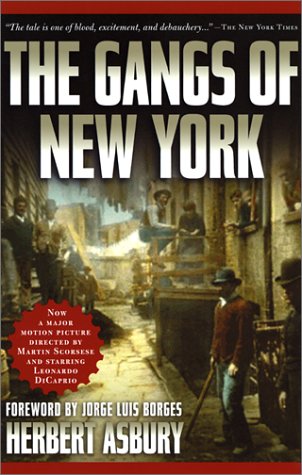
The Gangs of New York: An Informal History of the Underworld

Written by journalist Herbert Asbury and published in 1927, this book provided much of the fodder for the Scorcese film Gangs of New York, if not the actual storyline. It paints a picture of unimaginable squalor, poverty, violence, racism, and political corruption beginning in post-colonial New York City and continuing through Prohibition. Filled with colorful characters and a mix of historical facts and gangster lore and legend, it is a darkly engaging read that makes the reader question how close our animal instincts may lurk beneath our human surface. The propensity for grotesque violence among those with no hope and nothing to lose stands in sharp contrast to our usual views of American ideals and opportunity at the time of our nation’s founding. I will see the film soon, but I don’t expect to enjoy it much…

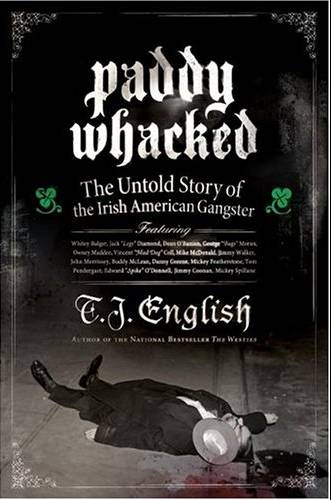
Paddy Whacked: The Untold Story of the Irish American Gangster
This 2006 volume by T.J. English draws on the Asbury book as a source, but digs deeper, extending beyond New York City to Chicago, New Orleans, Kansas City, and Boston, and including the mid- and late-20th century. The book is more explicit about the relationships between Irish mobsters and hoods and the Italian Mafia, organized labor, corporate strikebreakers, and politicians on both sides of the aisle. (It also paints a less romantic picture of the Kennedy family and suggests multiple strong motives for the assassination of President Kennedy.) It appears to be well researched and is also an engaging, if disturbing, read. Whereas The Gangs of New York made me question human nature, Paddy Whacked made me question the nature of our democracy.

Black Mass: The Irish Mob, the FBI, and a Devil’s Deal
This 2001 book by Boston Globe journalists Dick Lehr and Gerald O’Neill tells the story of the legendary South Boston crime boss Whitey Bulger: his rise to power and secret status as a federal informant whose corrupt FBI handlers protected him and his men from prosecution for years. The recent Scorcese film The Departed may have been a remake of the Hong Kong crime thriller Infernal Affairs (in some cases shot-for-shot), but the South Boston setting and the Jack Nicholson character are inspired by this true tale, and Bulger’s capture this past summer after 16 years on the lam does little to fend off the disquieting feeling that we cannot know who the bad guys are or how far their reach extends. A parallel history of Bulger’s brother, formerly a prominent state senator and president of the University of Massachuesetts, adds to that feeling…

Taken together, these books provide a sobering look at the seamy underbelly of “truth, justice, and the American way.” Strong language and violence abound, and these books won’t leave you feeling warm and fuzzy about the world, but they are good, solid reads.

The Man Who Fed the World

Norman who? How is that an American wins the Nobel Peace Prize, the Presidential Medal of Freedom, and the Congressional Gold Medal (a feat only accomplished by four other people in history: Martin Luther King Jr., Mother Teresa, Elie Wiesel, and Nelson Mandela) and throws a National Medal of Science in to boot, and most people don’t know who he is?

How is it that an Iowa farm boy and wrestler comes to the University of Minnesota, almost isn’t admitted, and accomplishes these things? How is it that this man is credited with saving as many as a billion lives and is a household name in certain developing countries, and people here are talking about Brett Favre?

I wouldn’t know him either, except that I work at the University and wrote about him once, so I read his biography. Check out this story, then this great commentary from a few years back, then consider picking up the book, The Man Who Fed the World.

Borlaug not only worked to develop strains of food crops that would grow in areas of the world facing famine, but he taught the people to raise those crops and to continue his scientific work on their own. Not only did he bring new technologies and fertilizers to these areas to boost production, but he advocated for laws and public policies that helped farmers and the hungry.

And when people criticized him for advocating inorganic methods of increasing yields, his response was to invite them to join him in working among the world’s hungry, and then talk. He didn’t oppose organic farming; he simply knew these regions couldn’t grow enough food quickly enough that way to feed those who needed it and was unwilling to choose who would starve.

He didn’t give fish; he taught fishing. He may be the most remarkable man you’ve never heard of.