This post appeared in the Sunday, July 21, 2024, edition of the St. Michael Catholic Church bulletin.
A couple weeks ago, I shared a short reflection on the Healing the Whole Person study I was blessed to be a part of in June. (Another one is starting up next week; see the bulletin or Father’s weekly email for details.) The gist of that column was the freedom I received to look squarely at my past and admit that everything wasn’t sunshine and daisies, then to seek the Lord’s healing for even the little ways in which I have been wounded.
Healing is not only important for our own sake. The Lord desires joy, not just for us, but for all those we encounter—and as the old saying goes, “Hurt people hurt people.”
Throughout the study, Dr. Bob Schuchts and Sister Miriam James Heidland, SOLT, reiterate that suffering that is not transformed is transmitted. The desire to avoid suffering ourselves is so strong that, when we encounter past or present pain, we instinctively pass it on—through blame and bitterness, anger and control, habitual sin, you name it.
But, if we are thoughtful and intentional, we can learn to confront pain and choose to bring it to the Lord instead of dumping it on our spouses or kids, family or friends. This is redemptive suffering—suffering in the right way, self-sacrificially, like Jesus.
I have long understood redemptive suffering in concept, but, to be honest, that understanding didn’t seem to help much:
- St. Paul tells us, “Now I rejoice in my sufferings for your sake, and in my flesh I am filling up what is lacking in the afflictions of Christ on behalf of his body, which is the church” (Colossians 1:24).
- What is lacking in the suffering of Jesus? Nothing, of course—His sacrifice was complete and perfect, once for all.
- Jesus does not need our help, but He desires our cooperation. As St. John Paul II wrote, “Those who share in the sufferings of Christ preserve in their own sufferings a very special particle of the infinite treasure of the world’s Redemption, and can share this treasure with others” (Salvifici Doloris, 27).
- This is a beautiful idea, but suffering well is hard work, and, really, I’d rather not.
But the idea of not passing my suffering on to those I love really struck me. Hard work is easier to do when you understand the why of it. Here’s how I break it down:
- Suffering is a result of sin and the Fall. Jesus redeems us by taking the sins and suffering of the world, past, present, and future. His sacrifice lacks nothing, and through it, God’s perfect love and perfect justice are both sustained.
- If Jesus takes on all the sin and suffering, then he takes on my sin and suffering, as well as that of my bride. Nothing I can do can add to or subtract from His saving act. And yet…
- If I choose to avoid suffering and pass it on to Jodi, she suffers. In a sense, I haven’t increased the suffering in the world—I’ve just passed it on. But in another sense, I have increased the suffering, at least, for Jodi.
- Jesus has already handled all of it—praise God! But I can also choose to say, “My suffering ends with me.” I can resist the urge to avoid the pain and pass it on. I can, like Jesus, carry my own cross and love sacrificially so Jodi (or my kids, neighbors, or enemies) don’t suffer in my stead. Now redemptive suffering makes sense!
I shared this line of thinking with my confessor, and he added an important caveat: Jesus didn’t bear His burden alone. He offered His sacrifice to His heavenly Father, leaning on the Father for strength and guidance. If we say, “My suffering stops with me,” but then hold on to it and let it accumulate, sooner or later it will become too much to bear.
Redemptive suffering, it seems to me, is suffering transformed by love—the loving act each of us performs by not passing our pain on to others and the healing love of God who turns every sacrifice to grace, joy, and peace. Let us pray, today and always, to carry our own crosses with God’s help, so that those we love may know His sacrificial love through us. Amen.
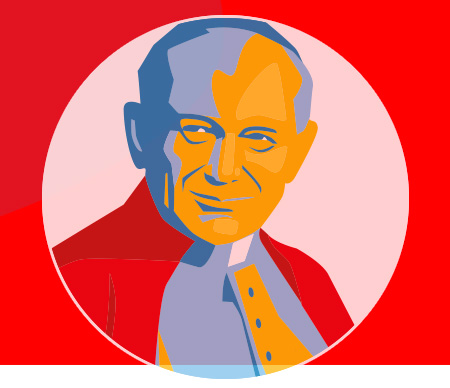 Born Karol Wojtyła in Wadowice, Poland, in 1920. Suffered the loss of his family, freedom, and country by the time he was 21 years old; risked his life under the Nazi regime to promote Polish cultural resistance and study for the priesthood. Recognized as a gifted theologian, pastor, and bishop; elected pope in 1978 and brought the Good News to 129 countries. Instrumental in the fall of dictatorships and Communism; wounded critically in an assassination attempt in 1981; credited Our Lady for preserving his life and met with and forgave the assassin. Served as pope until his death in 2005, despite declining health due to Parkinson’s and old age. One of the most recognized figures of the 20th century.
 Archangel Stomp