Slaves No More

I can’t possibly afford to be here.

Two years ago, I was working in communications at the University of Minnesota. I had spent six years as the president’s speechwriter and enjoyed a solid salary, stellar benefits, and the respect and friendship of several wonderful colleagues.

Nevertheless I felt adrift. The U hired a new president, and I changed jobs three times in two years—with each one less and less to my liking. I knew I needed to make a change. I thought about working for the Church, but communications positions were few and far between; most other positions required a theology or professional degree I didn’t have, and the pay and benefits couldn’t compete with a large public university.

Plus, like too many couples, Jodi and I were not smart with our money in our younger days. We never had a budget and ran up debt almost without thinking. So when the faith formation job opened up here in our home parish, my first thought was: We can’t afford it.

Unbeknownst to me, wiser minds and more faithful hearts than mine were at work. Friends and family were praying for me. And providentially, Jodi and I had attended Financial Peace University the year before. Jodi’s brother Jason followed Dave Ramsey’s program, and it changed his life—so when new parishioners Jason and Robyn Jones brought Financial Peace University here, we saw it as a sign and joined their first course. It changed our lives, too.

I won’t walk you through the entire program—instead, I’ll share one example. Ramsey insists that a zero-base budget is essential to managing your money. Every dollar you bring in is assigned a specific role. Bills. Groceries. Giving. Savings. Even monthly “blow money,” so you can treat yourself to whatever you want, no questions asked. Each month, you tell every dollar where it goes.

“At the end of the first couple months,” we were told, “you’ll feel like you got a raise.” Why? Because when you don’t assign every dollar to a specific priority, you waste money, without even knowing it.

After living paycheck to paycheck for years, we were skeptical—but sure enough, when we started the zero-base budget, we realized we were blowing an extra $500 to $1,000 a month on…nothing. We had barely covered our bills, and we had no money left and nothing to show for it except a few greasy pizza boxes and empty beverage containers. We started budgeting this way each month and realized we had been living and giving below our potential!

So when opportunity knocked here at St. Michael, we ran the numbers and discovered I could answer the call. The incredible thing is that we have the same bills as before (gas and parking went down; healthcare went up), yet everything is covered, even with less coming in.

When we speak about it, it makes no sense—where does the money come from?—but on paper it’s clear: when we track every dollar, we can see the money was there all along. When we couldn’t see it, we didn’t realize it was missing.

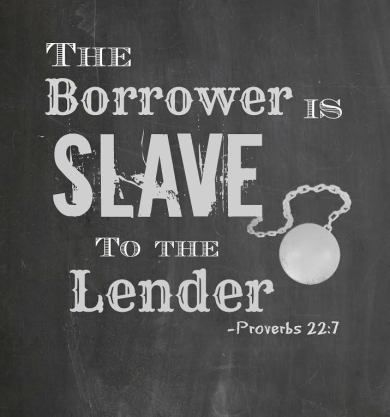
We aren’t debt free yet, but we’re on our way—and just getting on that path gave us the freedom to change, not just jobs, but our whole family dynamic and outlook. We make less money, and yet we are giving more to the church and other charities, enjoying ourselves more, paying off more debt more quickly—and worrying less. Although we still owe, we are no longer slaves to money. And that is a great feeling.

A Baby Catholic’s First Steps

be26f-cover_october_2014_web

Fr. Bill, from an article on Confession
in the Diocese of Grand Rapids magazine Faith.

I have mercy on the brain this month. At LIFT we talked about the sacrament of Confession, and several parishioners shared powerful stories of how God’s mercy had strengthened their faith. Then, in recognition of the Pope’s Year of Mercy, our parish retreat focused on God’s message of Divine Mercy. Fr. Alar’s presentations were both consoling and challenging—showing me clearly the great ocean of mercy that stretches before us and how slow we are to tap into it for ourselves, much less for others.

I made my first Communion around age 10, during a brief period in which my mom returned to the church with my sister and me. As a young husband, I attended Mass with Jodi, out of respect for tradition and curiosity more than anything else. When I became a father, I began to open up to the possibility of becoming a practicing Catholic, but I had many questions and was deeply enmeshed in many of the typical sins of young men. I hid those sins under a thick blanket of pride, convinced that I knew better about right and wrong—but Jodi’s solid, peaceful faith played on my curiosity. So one evening, I sat down in the rectory to talk with our priest.

I told Fr. Bill I wasn’t sure it was possible to know if God exists. I told him I disagreed with the Church’s teaching on birth control. I told him I didn’t understand the Church’s teachings on the real presence of Jesus in the consecrated bread and wine at Mass. I told him I couldn’t believe that a merciful God could condemn good men to Hell for not believing in Him.

Fr. Bill addressed my issues calmly and thoughtfully. He told me I had a good head on my shoulders, and God gave it to me to use. He told me not to be afraid of my doubts or questions—that even priests struggle with the same and need faith to follow God.

“But you’re not going to find the answers to these questions by holding your faith at arm’s length,” he said. “My advice is to go to Confession and begin receiving Communion again, and ask your questions from inside the Church.”

I thanked him, and he said, “I could hear your confession now, if you want.” I protested that it had been many years and I didn’t remember how, and he said, “Don’t worry—I will help you.”

So right there, in the living room of the rectory, I made the first Confession of the rest of my life—my first face-to-face Confession—with the priest who first showed me the depths of God’s mercy. I began receiving Holy Communion again the following Sunday, was Confirmed in the Church a few years later, and began a lifelong march to Calvary and Christ, because Fr. Bill saw my dignity as a son of God under layers of pride and years of sin.

Here’s the kicker: I know now that my Confession that evening wasn’t technically valid. The sins I was struggling with come in buckets; I confessed most of them that night, but not all, because some I didn’t agree were sins and had no intention of changing. But I made the best Confession I could in my ignorance and was sincerely contrite—as sorry as I could be in that moment of faltering pride and budding faith. Fr. Bill started me on a road I may not have taken otherwise. Had I waited a week, that spark may have gone out, and had he said, “Good effort…but come back when you’re ready to confess everything else I suspect you’re doing,” I may never have come back.

I need to remember that my first steps on the path to an adult faith were baby steps, small and unsteady, and that Fr. Bill saw enough in me to invite me back to communion with God. We need to see each other as he saw me—as Jesus sees every sinner—and encourage those first faltering steps.

A God-Size Space

This morning’s thought comes courtesy of St. John of the Cross via Deacon Ralph Poyo, whom our parish staff had the pleasure of following on retreat yesterday, and who never actually mentioned St. John of the Cross by name.

Jesus tells us throughout the Scriptures that we must leave everything behind to follow him. Certain of these passages seem particularly harsh: “Let the dead bury the dead;” “No one who sets his hand to the plow and looks to what is left behind is worthy of the kingdom of God.” I have struggled with these passages over the years, but in the wee hours this morning, lying in the dark, I had a brief moment of clarity.

Dcn. Ralph reminded us that choosing to be a disciple of Christ (in particular, Christ crucified, since Jesus himself tells us that in order to be a disciple we must pick up our cross and follow) is a black-or-white, all-or-nothing choice. He asked us to imagine, on one hand, Jesus suffering on the cross, and on the other hand, a table filled with all these little icons of the people, places, and things of this passing world that matter to us: our spouse, children, family, and friends; our pets, possessions, and pastimes; our worries, anxieties, and sins.

Of the two, we are called to choose Christ—you shall love the Lord your God with all your heart, soul, mind, and strength—but it’s hard to embrace the cross and even harder to carry it any distance. So we are tempted to walk to the foot of the cross and break a chunk off from it, to shape that piece of the cross into another little icon representing our Christianity, and to place it on the table with the rest, our tiny God, lost in a sea of idols.

St. John of the Cross writes of the tremendous longing God has for union with us (and vice versa). He wants to live within us, but before He can enter fully, He needs a God-size space. And since our God is infinite and eternal—the source of being for everything—the only space big enough is complete emptiness. Nothing else fits where God fills.

I have thought about this before in terms of the little pieces of the world we cling to or the tiny sins we allow to continue because “they aren’t so bad.” But early this morning, it occurred to me that even clinging to the good things of this world—my wife and children, my vocation as a husband and father, my job, and the parish that I love—can push God out.

This does not mean I must give these things up, only that I let them go to make space for God. If I can empty myself completely and seek Him alone, He who is the source of all good things will fill me, and like Job, I will regain what seemed lost, and more!

God is indivisible, the ultimate All, and we cannot claim just a piece of Him—“But seek first the kingdom of God and his righteousness, and all these things will be given you besides” (Matthew 6:33).

The Flitter-Flutter of Tiny Wings

“Geronimo!”

For the past several days, we’ve had just two kids at home, Trevor and Lily. The elder three were at Extreme Faith Camp, Brendan as a leader, Gabe as a member of the prayer team, and Rose as a camper. Their return, I think, was bittersweet for the younger ones — although bored and (allegedly) overworked at points, they enjoyed having Mom’s and Dad’s full attention. Lily got in trouble for interrupting far less, because there was far less to interrupt. And Trev got to go to Culver’s and Jurassic World with just Jodi and me.

We parents, on the other hand, missed our teens. It took only a day or so for me to stop and calculate that we are just six years from potentially being a permanent four-person household, and eight years from Lily being alone with us, At some point unmarked in the past, the pitter-patter of tiny feet was drowned out by the flitter-flutter of tiny wings as the fledglings prepare to leave the nest.

This, I’m discovering, is going to be harder for me than the fact that I, too, am aging and yet still feel like I have much to learn — in fact, my own feelings of inexperience in this world only magnify my anxiety for my offspring. Have a taught them what they need to know to survive? Will they thrive? Will they avoid the pitfalls and snares in which Jodi and I have become entangled over the years? Have the courage to be faithful in public? To remain Catholic, with all that entails?

We see encouraging signs from each of them. Bren, now 17 and approaching his senior year, has changed his views on a military career, primarily due to moral concerns. He takes his faith very seriously: donates to Catholic causes, joins his friends for weekday Mass on Wednesdays, joins his girlfriend Olivia in the Adoration Chapel in our church. Gabe, nearly 15 and a coming sophomore, still has his eyes on the priesthood, joins his brother and friends at Wednesday Mass, and just last night asked where he could find the Divine Office that priests commit to praying daily — hinting that he’d like to take it up, but that he’d rather not do it alone. Thirteen-year-old Emma came home from having been deeply impacted by Eucharistic Adoration at camp, trembling with emotion before the Blessed Sacrament and alternating between sorrow and joy (ending on joy) as she prayed.

Yesterday I came home from the church for lunch, and popped in a DVD that would not play in my work computer. The video came up immediately, and featured Fr. Robert Barron tackling common Catholic apologetics questions in short video clips. I began cherry-picking a few that might be interesting, and Trev, who will be 11 in few days, sat down to watch. For more than an hour, we watched and discussed the rational foundations for our Catholic faith. It’s amazing to see what he absorbs in such a short time, and I pray the same has been true for the others.

Lily, of course, is only three. She knows Jesus by sight, likes to pray (the Angelus and petitions, in particular, and especially for her friends and for babies) most evenings, and is at home in our church, if not fully engaged by the Mass yet. As I continue in my job as faith formation director, planning the coming year’s program, I realize how much more we could be doing with our parish youth, and by extension, how much more I could have done with my own children. Lily will benefit from that realization — and yet when I look at her four older siblings, I wonder how much I should do differently. But how can I give anything less than my all for my family when the stakes are so high and the implications, eternal?

The Sacraments Keep Us Catholic

“At last the most wonderful day of my life arrived, and I can remember every tiny detail of those heavenly hours … How lovely it was, that first kiss of Jesus in my heart—it was truly a kiss of love.” – St. Therese of Lisieux, describing her first Holy Communion

Last month I was blessed to witness nearly 140 young people from our parish and school receiving their first Holy Communion. They were, by and large, reverent and excited—and those I spoke with personally understood at least in concept that they were receiving Jesus’s Body and Blood under the appearance of bread and wine. I hope at least a few of them remember the day with the same deep joy and devotion as St. Therese expresses above.  I’m almost certain, unfortunately, that a few have not been back.

Our approach to preparing children for First Confession and First Communion in recent years has increasingly fallen on their parents. In one sense, this is as it should be: the Catechism of the Catholic Church affirms that, through marriage, “parents receive the responsibility and privilege of evangelizing their children” and “should initiate their children at an early age into the mysteries of the faith.”

On the other hand, many parents do not feel equipped to share those mysteries, being uncertain themselves about the Church’s teachings on Reconciliation and the Eucharist. And while we provide families with workbooks to help them teach their children, these are poor substitutes for the level of love and support young Therese had in the months leading up to the sacraments. Her desire to make a good confession and to receive the gift of the Eucharist consumed her completely, and everyone in her family and community fueled her understanding and love for the Lord in whatever way they could.

As a parish, we can certainly do more. Beginning this fall, First Reconciliation and First Communion students will have an extra class or activity (in addition to LIFT) each month dedicated to sacramental preparation and a deeper understanding of the great gifts of Christ’s love and mercy we find on the altar and in the confessional. But this is no substitute for the evangelizing witness of parents leading a sacramental life in which their Catholic faith is a top family priority.

This is true for two reasons. The first is this: because children naturally observe and imitate their parents’ actions and interests, parents don’t have to have all the right answers, but it helps if you do the right things. Secondly, the sacraments are defined as outward signs instituted by Christ to give us grace—in particular, sacramental grace, which strengthens us to live according to our faith and state in life. The sacrament of Matrimony, for example, confers upon the spouses the graces needed to live in union as husband and wife, come what may.

The same applies to the sacraments of Confession and Communion. They strengthen us to resist temptation and seek communion with God, to forgive and seek forgiveness, to love sacrificially—in short, to be holy men and women of God. Each time we receive them, we are changed for the better. And when our children imitate us, so are they. What better way to ensure our kids remain Catholic?

Blogger’s Note: This article appears in the Sunday, May 24, church bulletin.