Time Flies: A Thorp Family Update

The most recent photo of us all, with my folks and
sister’s family thrown in for good measure.

I’ve remarked more times than I can count in the past year: “My age doesn’t bother me; it’s the fact that Brendan is heading to college.” It’s my kids’ ages that get to me — not the the additional salt in my pepper, the aches and pains, the fact that I’m often tired and can rarely sleep.

This past year has flown, and with a grad party and a trip to Poland for World Youth Day, the summer promises to be even faster. So I thought I’d offer you all an update on our family before we blink and the leaves fall again.
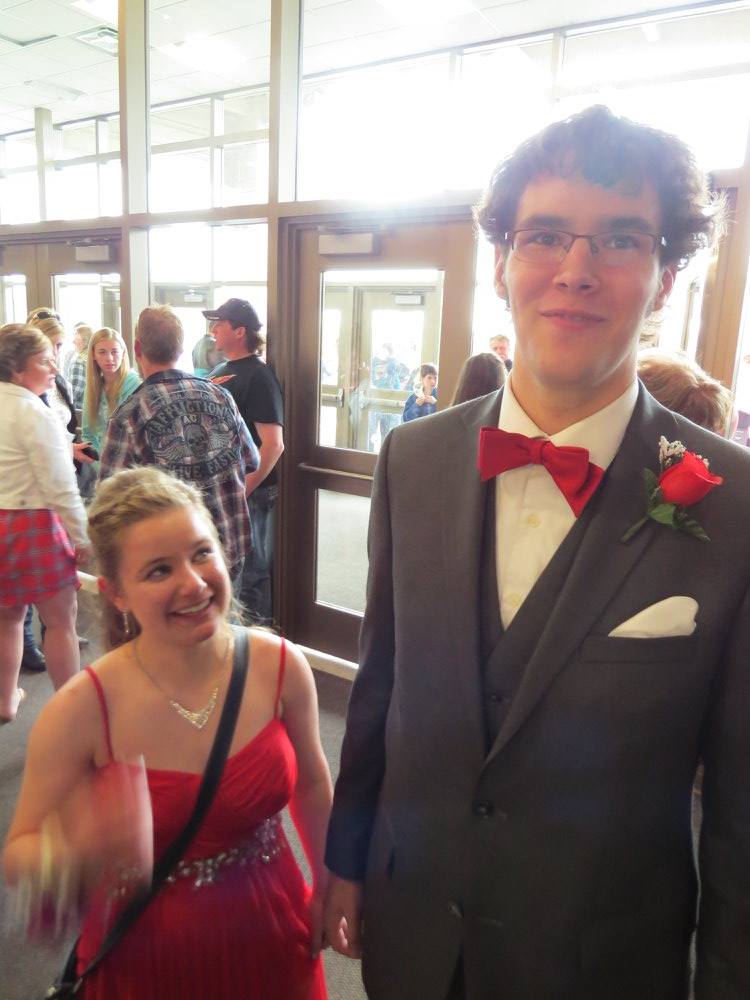
Prom-goers: Brendan and Olivia

Brendan, as you may have heard, is headed to UMary in the fall. He will graduate early in June in the top 10 in his class, with a varsity letter in wrestling and local scholarships from Knights of Columbus Council 4174 (of which he is one of the newest members), the American Legion, and the Hanover Athletic Association. He loves Ultimate Frisbee (actually all four of our teens/tweens do), dabbles in swing-dancing, and is still happily dating Olivia. (Last night’s consisted of Adoration and ice cream.) He is still working at the hardware store, and just starting a second job with a local electrical contractor for the summer. He loves his bass and his music (Foo Fighters is his current favorite band), and yesterday, he bought an acoustic guitar for song writing and kicks. And he has a pipe, which he smokes on occasion.

Swing-dancers: Gabe and Kate

Gabe is now the tallest in our family, by perhaps a quarter inch. He is working on getting his driver’s license this summer, helping our friend’s taxidermy business, and preparing for his junior year of high school. He was confirmed this month, was just inducted into the National Honor Society like his older brother (NHS at our high school does a great deal in service to the school and community), and will be one of the leaders of the high-school pro-life group in the fall. He played soccer but didn’t wrestle this year, and is on the fence about next year — too many other interests, including reading and writing, teaching himself piano, learning Quenya (J.R.R. Tolkien’s Elvish language), and swing-dancing. In this last activity, he works hard and excels — especially when paired with his friend and fellow Lord of the Rings geek Kate. They aren’t dating, just dancing and discerning together.

Emma and two of her flute-playing besties

Emma is easily the tallest female in the house and explored the high-school for the first time yesterday as an incoming freshman. She played volleyball in the fall and is running track this spring — plus playing flute in the band and woodwind ensemble and singing in the middle-school choir. The music, at least, will continue in high school. Emma has followed her brothers to help with the church’s Core Team and is also an avid swing-dancer (which means boys); Gabe’s dance-partner is one of Rosebud’s mentors in becoming a young woman of virtue. Emma dabbles in piano, too; reads voraciously, and bakes like our family is twice the size (and it will be, unless we share her goodies). She is hoping to start baby-sitting soon and wants a new dog almost as much as her dad.

Trevor rocking

Trevor will be our sole middle-schooler next year, and plans to work out this summer in hopes of wrestling on the school team in seventh grade. He is a rhythmically gift version of the boy his father was: a creative thinker and storyteller, easily distracted, heart-on-his-sleeve…but coordinated enough to rock a drum kit (or the kitchen table, a couch cushion, his thighs…), to play basic piano music with relative ease, and to dance to almost any song when the mood strikes him. Also an avid reader and a good student, but with a style all his own: whereas Gabe has a hat collection and wears them on occasion, Trevor wears a brown fedora each day to school. He shows signs of a mechanical knack (another difference from his father) and still loves Legos.

Typical Lily

Lily completed her year of Catholic co-op preschool yesterday. She is colorful, funny, opinionated, and creative, with an ever-expanding vocabulary and a precocious sense of humor for a four-year-old, included puns and word-play and physical comedy along with the typical (non-sensical and never-ending) knock-knock jokes. She, too, likes to dance and to watch her swing-dancing elders, and she makes her siblings friends her own whenever she has the chance. She, too, has sprouted in the past year — she is a head taller than her plastic barn playset she so enjoyed last summer — and although she rarely eats a lot at a sitting, she would eat constantly if allowed. And she loves superheroes, especially Batman and the Justice Leaque.

Jodi and I are well — and abundantly blessed, in the midst of such breakneck activity. My bride often says it feels like only a short while ago that Brendan got on the bus for kindergarten the first time, and so it seems to be as well. We will have been married 20 years this August, and for my part, I am as happy as I have ever been.

That said, I had to be reminded of something not long ago, with the help of a priest friend: as Christians, spouses, parents, we have a serious call in this world, which requires a serious, heartfelt response — but none of that means that God doesn’t desire our happiness or enjoyment of this life. He came that His joy may be ours — shame on us if that joy does not pervade all that we do, and all that we are. It can seem terribly romantic to think ourselves unworthy of the blessings in our lives — the soft warmth of the one who lies next to us in the wee hours before waking, or the noise of a full and laughing house — and to strive and sacrifice to show our appreciation and earn our worth. But in truth, we are worthy — intrinsically — as God’s beloved children. So while I must not take my beautiful bride and these five awesome children for granted, I can love them best if I realize that my worth, and each of theirs, comes from our creation in His image and in resting in his embrace.

We are so blessed. As sinners, we don’t deserve it…but what else should we expect from such a God as this?

Last summer…where does the time go?

20 Years a Fool: A Resurrection Story

One of the things I gave up for Lent this year was the last word. It might seem an odd thing from which to fast, but on the home front I crave the last word, savor it, seek it with such reckless abandon that I scatter piles of lesser words about the house until at last I have it. In the past I have recognized this fault in myself: that I want to be right, or at very least, heard and understood, in all things. I manage to tamp down this tendency in public, but in private, in flourishes.

Jodi knew of my sacrifice, and just prior to Holy Week, I asked for her honest assessment as to how much progress I had made. She hesitated a long moment, so I said, “It’s alright — I need you to be straight with me.”

She said, “Honestly, I haven’t noticed much of a difference.”

Just as I thought. I knew I hadn’t done well in this regard — and considering the number of times I know I bit my tongue or choked down one last pointed comment, I now knew how gluttonous my appetite for the last word had truly been.

Lent was not a complete loss, however. For one thing, my self-conscious failures led me to look for little things I could do to make up for being a jackass: simple acts of love and kindness like making the bed, which I have rarely if ever done of my own accord. For another, after this sobering conversation with my bride came Holy Week, and the sacrament of Penance, and the Triduum.

Like so many of the faithful, Holy Week crept up on me with alarming quickness and stealth. Once I realized time was short, I redoubled my efforts to hold my tongue, with at least some renewed success. On Tuesday, Jodi and I went to Confession at Mary Queen of Peace, to a young priest who cut us both to the quick, condensing a plethora of sins to a single, focused flaw, then concocting a penance to match.

In my case, he said something like this: “A simple definition of love is giving of yourself to another. A simple definition of pride is claiming for yourself what isn’t yours. All yours sins seem related to this tendency to take things for yourself: wanting to look better than you are to those around you, wanting recognition for what you do, even taking on more responsibility for what’s happening at work or in the world than belongs to you.”

For my penance, he asked me to find three people or causes to which I could give of myself before the end of Holy Week. And it helped.

After work on Holy Thursday, I shut off my computer and phone until after the Easter Vigil. It’s remarkable how peaceful it can be to escape the endless barrage of email and social media “news,” especially in an election year. Nevertheless, in the wee hours of the morning on Good Friday I found myself unable to sleep, and finally rose around 4:30 a.m. to pray and journal.

I sat near the front window with a cup of black coffee in the foreground and choral music in the back; two candles providing a flickering light so as not to deaden the dawn when it arose. My mind wandered across the years of marriage and family life, and I thought of St. Joseph, who is never quoted but ever present in the early life of Jesus in the gospels — the epitome of the “strong, silent type”; the carpenter, whose rough hands and faithful heart made dead wood bloom. Here was a model of a husband and father: quiet, hard-working, life-giving.

Life-giving…

For nearly 20 years of marriage, I have accepted the truth that I married well: a woman of beauty, faith, and virtue who was meant to guide me to Christ. For those same 20 years, I have acknowledged her as life-giver, and myself as a sponge, simply soaking up the love she pours forth.

While all of these things are true, for 20 years I’ve used them as a crutch — something to lean on in my weakness. It sounds so sweet and humble to say, “I’m not worthy,” but when did that become good enough? Should I not strive to become worthy?

For the past several years Jodi and I have helped with engaged couple retreats at our parish. Many times over those years we’ve helped to share this analogy between marriage and the Holy Trinity: God the Father loves God the Son; the Son receives that love and reflects it back to Father; and that love between them is God the Holy Spirit, “the Lord, the Giver of Life.” Similarly, a husband loves his wife; the wife receives that love and reflects it back to her husband; and the love between them becomes so tangible that it gives life — sometimes literally, resulting in a third person.

For years I’ve helped share this message without directly applying it to my role in our marriage. The husband is the life-giver. The husband initiates. His bride receives what he gives, transforms it, and gives it back — but I’m meant to the source. Not a sponge, but a spigot.

I sat, dumbfounded, as dawn arose. All these years of “wearing the pants” in this family, and Jodi has been trying to do both our jobs. When the sun finally rose, I felt like a new man. Or rather, a man rising to new life.

Dust that we are, a day later I was struggling to recall these revelations and was again longing for a sign from God to guide me — like those whom Jesus fed with a few loaves and fishes, who, the very next day, asked Him, “What can you do?

So I resolved to write them down and share them. May they be my own little resurrection story: after 20 years, a fool became more the man he is called to be. Amen.

Slaves No More

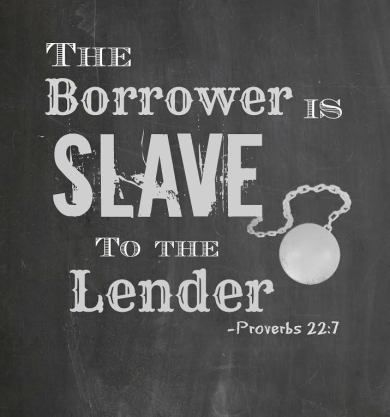
I can’t possibly afford to be here.

Two years ago, I was working in communications at the University of Minnesota. I had spent six years as the president’s speechwriter and enjoyed a solid salary, stellar benefits, and the respect and friendship of several wonderful colleagues.

Nevertheless I felt adrift. The U hired a new president, and I changed jobs three times in two years—with each one less and less to my liking. I knew I needed to make a change. I thought about working for the Church, but communications positions were few and far between; most other positions required a theology or professional degree I didn’t have, and the pay and benefits couldn’t compete with a large public university.

Plus, like too many couples, Jodi and I were not smart with our money in our younger days. We never had a budget and ran up debt almost without thinking. So when the faith formation job opened up here in our home parish, my first thought was: We can’t afford it.

Unbeknownst to me, wiser minds and more faithful hearts than mine were at work. Friends and family were praying for me. And providentially, Jodi and I had attended Financial Peace University the year before. Jodi’s brother Jason followed Dave Ramsey’s program, and it changed his life—so when new parishioners Jason and Robyn Jones brought Financial Peace University here, we saw it as a sign and joined their first course. It changed our lives, too.

I won’t walk you through the entire program—instead, I’ll share one example. Ramsey insists that a zero-base budget is essential to managing your money. Every dollar you bring in is assigned a specific role. Bills. Groceries. Giving. Savings. Even monthly “blow money,” so you can treat yourself to whatever you want, no questions asked. Each month, you tell every dollar where it goes.

“At the end of the first couple months,” we were told, “you’ll feel like you got a raise.” Why? Because when you don’t assign every dollar to a specific priority, you waste money, without even knowing it.

After living paycheck to paycheck for years, we were skeptical—but sure enough, when we started the zero-base budget, we realized we were blowing an extra $500 to $1,000 a month on…nothing. We had barely covered our bills, and we had no money left and nothing to show for it except a few greasy pizza boxes and empty beverage containers. We started budgeting this way each month and realized we had been living and giving below our potential!

So when opportunity knocked here at St. Michael, we ran the numbers and discovered I could answer the call. The incredible thing is that we have the same bills as before (gas and parking went down; healthcare went up), yet everything is covered, even with less coming in.

When we speak about it, it makes no sense—where does the money come from?—but on paper it’s clear: when we track every dollar, we can see the money was there all along. When we couldn’t see it, we didn’t realize it was missing.

We aren’t debt free yet, but we’re on our way—and just getting on that path gave us the freedom to change, not just jobs, but our whole family dynamic and outlook. We make less money, and yet we are giving more to the church and other charities, enjoying ourselves more, paying off more debt more quickly—and worrying less. Although we still owe, we are no longer slaves to money. And that is a great feeling.

A Baby Catholic’s First Steps

be26f-cover_october_2014_web

Fr. Bill, from an article on Confession
in the Diocese of Grand Rapids magazine Faith.

I have mercy on the brain this month. At LIFT we talked about the sacrament of Confession, and several parishioners shared powerful stories of how God’s mercy had strengthened their faith. Then, in recognition of the Pope’s Year of Mercy, our parish retreat focused on God’s message of Divine Mercy. Fr. Alar’s presentations were both consoling and challenging—showing me clearly the great ocean of mercy that stretches before us and how slow we are to tap into it for ourselves, much less for others.

I made my first Communion around age 10, during a brief period in which my mom returned to the church with my sister and me. As a young husband, I attended Mass with Jodi, out of respect for tradition and curiosity more than anything else. When I became a father, I began to open up to the possibility of becoming a practicing Catholic, but I had many questions and was deeply enmeshed in many of the typical sins of young men. I hid those sins under a thick blanket of pride, convinced that I knew better about right and wrong—but Jodi’s solid, peaceful faith played on my curiosity. So one evening, I sat down in the rectory to talk with our priest.

I told Fr. Bill I wasn’t sure it was possible to know if God exists. I told him I disagreed with the Church’s teaching on birth control. I told him I didn’t understand the Church’s teachings on the real presence of Jesus in the consecrated bread and wine at Mass. I told him I couldn’t believe that a merciful God could condemn good men to Hell for not believing in Him.

Fr. Bill addressed my issues calmly and thoughtfully. He told me I had a good head on my shoulders, and God gave it to me to use. He told me not to be afraid of my doubts or questions—that even priests struggle with the same and need faith to follow God.

“But you’re not going to find the answers to these questions by holding your faith at arm’s length,” he said. “My advice is to go to Confession and begin receiving Communion again, and ask your questions from inside the Church.”

I thanked him, and he said, “I could hear your confession now, if you want.” I protested that it had been many years and I didn’t remember how, and he said, “Don’t worry—I will help you.”

So right there, in the living room of the rectory, I made the first Confession of the rest of my life—my first face-to-face Confession—with the priest who first showed me the depths of God’s mercy. I began receiving Holy Communion again the following Sunday, was Confirmed in the Church a few years later, and began a lifelong march to Calvary and Christ, because Fr. Bill saw my dignity as a son of God under layers of pride and years of sin.

Here’s the kicker: I know now that my Confession that evening wasn’t technically valid. The sins I was struggling with come in buckets; I confessed most of them that night, but not all, because some I didn’t agree were sins and had no intention of changing. But I made the best Confession I could in my ignorance and was sincerely contrite—as sorry as I could be in that moment of faltering pride and budding faith. Fr. Bill started me on a road I may not have taken otherwise. Had I waited a week, that spark may have gone out, and had he said, “Good effort…but come back when you’re ready to confess everything else I suspect you’re doing,” I may never have come back.

I need to remember that my first steps on the path to an adult faith were baby steps, small and unsteady, and that Fr. Bill saw enough in me to invite me back to communion with God. We need to see each other as he saw me—as Jesus sees every sinner—and encourage those first faltering steps.

A God-Size Space

This morning’s thought comes courtesy of St. John of the Cross via Deacon Ralph Poyo, whom our parish staff had the pleasure of following on retreat yesterday, and who never actually mentioned St. John of the Cross by name.

Jesus tells us throughout the Scriptures that we must leave everything behind to follow him. Certain of these passages seem particularly harsh: “Let the dead bury the dead;” “No one who sets his hand to the plow and looks to what is left behind is worthy of the kingdom of God.” I have struggled with these passages over the years, but in the wee hours this morning, lying in the dark, I had a brief moment of clarity.

Dcn. Ralph reminded us that choosing to be a disciple of Christ (in particular, Christ crucified, since Jesus himself tells us that in order to be a disciple we must pick up our cross and follow) is a black-or-white, all-or-nothing choice. He asked us to imagine, on one hand, Jesus suffering on the cross, and on the other hand, a table filled with all these little icons of the people, places, and things of this passing world that matter to us: our spouse, children, family, and friends; our pets, possessions, and pastimes; our worries, anxieties, and sins.

Of the two, we are called to choose Christ—you shall love the Lord your God with all your heart, soul, mind, and strength—but it’s hard to embrace the cross and even harder to carry it any distance. So we are tempted to walk to the foot of the cross and break a chunk off from it, to shape that piece of the cross into another little icon representing our Christianity, and to place it on the table with the rest, our tiny God, lost in a sea of idols.

St. John of the Cross writes of the tremendous longing God has for union with us (and vice versa). He wants to live within us, but before He can enter fully, He needs a God-size space. And since our God is infinite and eternal—the source of being for everything—the only space big enough is complete emptiness. Nothing else fits where God fills.

I have thought about this before in terms of the little pieces of the world we cling to or the tiny sins we allow to continue because “they aren’t so bad.” But early this morning, it occurred to me that even clinging to the good things of this world—my wife and children, my vocation as a husband and father, my job, and the parish that I love—can push God out.

This does not mean I must give these things up, only that I let them go to make space for God. If I can empty myself completely and seek Him alone, He who is the source of all good things will fill me, and like Job, I will regain what seemed lost, and more!

God is indivisible, the ultimate All, and we cannot claim just a piece of Him—“But seek first the kingdom of God and his righteousness, and all these things will be given you besides” (Matthew 6:33).