Servant of the Servants

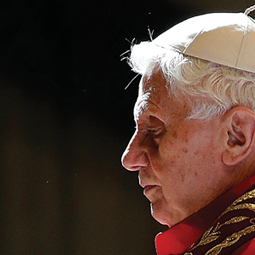
My daily commute has been a blessing of late: relatively smooth and expeditious, with just enough windshield time to pray a morning rosary, then listen, think, and free associate to my heart’s content. This morning’s mental ramble started as I got into the car and backed from the driveway, already reciting the Creed. I made my way slowly through our neighborhood, announcing my morning intentions as I went (the conclave to select the new pope first and foremost today) and turned toward the freeway. As I rumbled over the railroad tracks, I recalled it was Tuesday, and thus, the Sorrowful Mysteries. I thought of that humble title of the Holy Father: the Servant of the Servants of God. I thought of Pope Emeritus Benedict XVI, and Blessed John Paul the Great before him — each a suffering servant and an image of Christ. I thought of the college of cardinals contemplating, voting, perhaps praying that theirs was not the name called. Heavy is the head that wears the crown…

* * * * *

Last night on the way to Brendan’s wrestling banquet, Bren, Gabe, and I were discussing the presidency.

“Did you know,” said Gabe, “that calling the president ‘Mr. President’ isn’t something you have to do? It’s just what George Washington asked to be called, and now everyone else does it, but it’s not a rule or a law.* So a president could ask to be called whatever he wanted. Wouldn’t it be funny if the president said he wanted to be called King?”

“It would be even funnier if he wanted to be called King George,” said Bren.

“Did you know,” I said, “that people supposedly wanted George Washington to be king after the Revolution, but he refused? The story is that he didn’t want to win independence from one king just to install another.”

* * * * *
Also on my commutes, especially in the evenings, I’m listening to an audiobook version of The City of God by St. Augustine. It’s a wonderful recording, not least of all because the reader is an older British man with a wise, witty, and kindly voice, who occasionally runs out of wind on Augustine’s longer rants, adding a touch of saintly exasperation to the reading.

The language and writing style are poetic and complex, but the book, thus far, is full of insight and contemporary relevance. For instance, after describing the folly and decline of Rome from many different angles, citing as evidence the descent of morality and the rise of materialism, celebrity, and indecent entertainment, St. Augustine ties the fall of the empire specifically to the fall of liberty and the rise of domination as the fundamental value of Rome.

This makes sense to me, then and now. Liberty recognizes the value of the individual; it can be defended, or in peaceful times, it can be content to live and let live. Domination, on the other hand, is aggressive and discontented by nature; it consolidates power and values the state. Augustine asks if a person might be considered more blessed who had modest wealth, sufficient resources for survival, and peace, compared to one who has untold riches and power and constant fear of war, assassination, or overthrow. So, too, a superpower? At what point did we aspire to be the greatest nation on earth, and what has that cost us?

* * * * *

86884-hemingwayIn November of 1935, Ernest Hemingway wrote a commentary for Esquire magazine called “The Malady of Power: A Second Serious Letter.” Hemingway was a great observer of the nature of men, and of war, and he knew another great war was coming to Europe. He closed the piece with the following:

Whoever heads the nation will have a chance to be the greatest man in the world for a short time — and the nation can hold the sack once the excitement is over. For the next ten years we need a man without ambition, a man who hates war and knows that no good ever comes of it, and a man who has proved his beliefs by adhering to them. All candidates will need to be measured against these requirements.

What makes our previous two popes such powerful witnesses? Both were humble servants who led a flock of millions with steadfast conviction and the utmost humility — Blessed John Paul II, in his willingness to be diminished by illness and age on the world stage for the edification of the world, and Benedict XVI, in his willingness to diminish himself and exit that stage for good of the Universal Church. As we wait for white smoke, and the cry Habemus papem in Rome, I am longing for a Servant of the Servants of Liberty here at home.
*According to Wikipedia, our first president was originally addressed as, “His High Mightiness, the President of the United States and Protector of their Liberties,” but critics thought it “smacked of monarchy.”

 

Book Break: What We Can’t Not Know

You should want to read this book based on the perplexing title alone. J. Budziszewski’s What We Can’t Not Know is an unusual philosophy book: it presents an overview of the Natural Law, its classical roots and Catholic application, in an easy-to-read, relatively-easy-to-understand, often humorous, sometimes disturbing, and always thought-provoking volume. It is also something I never thought I’d see after two college courses in philosophy: a page-turner.

I say that with with a caveat: I’m the type of guy who likes a cohesive worldview, in which the foundation and principles at the root are applicable at the terminal twig of every branch. I believe in objective morality and universal truth — and I believe that, with effort, we can come close to discerning these things. More than that, I want to discern them — and so, it seems, does Budziszewski. In this respect I was a sympathetic reader solidly in the book’s target audience.

The book is packed with insight, and is an easier read in many ways than the shorter C.S. Lewis volume The Abolition of Man. I recommend it wholeheartedly for anyone interested in the ideas of objective truth, universal morality, or the philosophical underpinnings of Catholic teaching. It articulates the ways in which we can discern that there is a Natural Law and uncover what the Natural Law is, and it also suggests practical application of its principles, which is much needed in the materialistic, relativistic, self-consciously diverse, “it’s all good” society of today.

Half-Cocked, or The Trouble With Too Many Views

Twice in the past week I have forced myself to not write. This has been much to my discomfort, for two reasons: first, because a full 97 percent of the time, I am in the mode of forcing myself to write, which makes not doing so when I actually desire to quite irritating — like an itch you can’t scratch — and second, because in both cases the topic was near to my faith and dear to my heart.

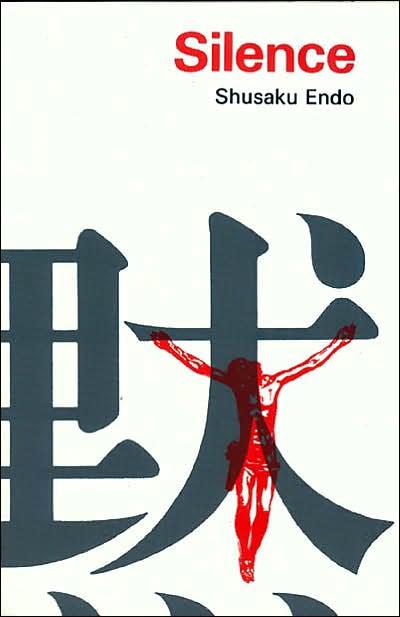
In the first instance, I had just finished a thought-provoking novel and wanted desperately to blog about it. The book, Shusako Endo’s Silence, was cautiously recommended to me by my friend Fr. Tyler as a great book, but dark and terribly sad. He was right, and as I finished, I wanted immediately to engage someone — anyone other than myself — on what it all meant.

The book is a relatively brief account of a Portuguese priest who travels secretly to feudal Japan during a time of intense persecution of Christians to discover the truth of rumors that his mentor, another Catholic priest-turned-missionary, has apostatized, or renounced, his faith and vocation. In broad terms, it deals primarily with the younger priest’s own thoughts about his priestly vocation, the poor Christians around him, the very real possibility of capture and torture, dreams of a glorious martyrdom, the brutal reality around him, and his own weaknesses.

I’m being purposefully vague. The final chapters cannot be revealed without diminishing the power of the book and straying into areas of faith of which I am ignorant, so I will go no further at this point. Suffice it to say, these final chapters are what threw me into a tailspin — what made want to talk first and think later, and what made it impossible for me to do so in good conscience. Ordinarily, I write quick, from-the-gut reviews shortly after completing a book, while it’s still fresh. But in this case, there was simply nothing I could say about the book that would not a) show my own ignorance and potentially stumble into error about our Catholic faith, or worse, drive someone else to error; b) spoil the story in order to get answers (Fr. Tyler!) and peace of mind; or c) both.

In the days since, I have thought a great deal about the book, and have regained my footing — though I still hope to discuss it in greater depth with someone who has read it and is better formed in the faith than me. I have also had a brief exchange with Fr. Tyler via Facebook — I brought myself to say this much: “[I]t’s masterful at making you ‘hate the sin and not the sinner’…” Father replied: ” For Catholics, it is a book that should contain the warning, ‘Handle with Care’.”

My caution in neither recommending nor casually reviewing this book, it appears, was not ill founded.

The second instance of holding my proverbial tongue came this morning, when I noticed a blogger for the Chronicle of Higher Education holding forth on the Natural Law and the Catholic Church’s stance on contraception. (The blogger in question is not supportive, surprise, surprise.) As I read his post, I felt the blood rise in my cheeks, and my mind raised ahead, formulating the response I would write: witty, pointed, deftly picking at the holes I saw in his arguments until they were gaping and obvious even to his likeminded readers.

My first reality check was the sheer volume of work I had to do today; I simply didn’t have time — especially to engage someone I didn’t know, personally or professionally, in an environment that was likely to be full of hostiles who were unlikely to be persuaded by wit or wisdom (let alone my own writing).

I felt a momentary pang of guilt for not standing up and being heard, until I finished the piece and reflected on my formal knowledge of the Natural Law and Aquinas’s writings (relatively little). I don’t know what the blogger knows — I feel like his expertise is not deep — but going off half-cocked might leave my own weaknesses exposed, even to someone who’s knowledge is only slight deeper than my own. A poorly formed effort would make this “Defender of the Faith” a liability, easily dismantled and dismissed — and the Church, by association.

So I said a prayer and sat on my hands. For a half-hour or so, my heart actually hurt, so badly did I want to speak out. Then something else came to mind: a passage I read yesterday, ostensibly for work, but with strong ties to my faith, written in 1852 by Blessed John Henry Newman and published in the preface to The Idea of a University (the underlining is mine, for emphasis):

“This is the emblem of [boys’] minds; at first they have no principles laid down within them as a foundation for the intellect to build upon; they have no discriminating convictions, and no grasp of consequences. And therefore they talk at random, if they talk much, and cannot help being flippant, or what is emphatically called ‘young.’ They are mere dazzled by phenomena, instead of perceiving things as they are.

“It were well if none remained boys all their lives; but what more common than the sight of grown men, talking on political or moral or religious subjects, in that offhand, idle way, which we signify by the word unreal? ‘That they simply do not know what they are talking about’ is the spontaneous silent remark of any man of sense who hears them.”

Cardinal Newman goes on to talk about the importance of impressing “upon a boy’s mind the idea of science, method, order, principles, and system; of rule and exception, of richness and harmony.”

“Let him once gain this habit of method, of starting from fixed points, of making his ground good as he goes, of distinguishing what he knows from what he does not know, and I conceive he will be gradually initiated into the largest and truest philosophical views, and will feel nothing but impatience and disgust at the random theories and imposing sophistries and dashing paradoxes, which carry away half-formed and superficial intellects.”

Cardinal Newman’s words resonated with me as I re-read them this morning. Starting from fixed points and making your ground good as you go enables you to keep your feet even as the world spins around you. This is why, in both instances this week, I hesitated – I was (wisely, I think) looking to the placement of my feet.

Newman goes on:

“Such parti-coloured ingenuities are indeed one of the chief evils of the day, and men of real talent are not slow to minister to them. An intellectual man, as the world now conceives of him, is one who is full of ‘views’ on all subjects of philosophy, on all matters of the day. It is almost thought a disgrace not to have a view at a moment’s notice on any question from the Personal Advent to the Cholera or Mesmerism.”

Indeed. When was the last time you heard anyone in a suit answer a question with a simple I don’t know?

“This is owing in great measure to the necessities of periodical literature, now so much in request. Every quarter of the year, every month, every day, there must be a supply, for the gratification of the public, of new and luminous theories on the subject of religion, foreign politics, home politics, civil economy, finance, trade, agriculture, and the colonies. Slavery, the gold fields, German philosophy, the French Empire, wellington, Peel, Ireland, must all be practiced on, day after day, by what are called original thinkers. …[T]he journalist lies under the stern obligation of extemporizing his lucid views, leading ideas and nutshell truths for the breakfast table.”

Again, he wrote this in 1852 – well before the cable TV, the internet, and the 24-hour news cycle, let alone Twitter. If the constant fluidity of views was eroding the foundations of Newman’s society, how much more so today, when the weekly or daily trickle has become an incessant torrent? (And yes, I recognize the mild irony that I am posting this on a blog.)

Today, everyone’s got an opinion. We know too much, perhaps – and we often think we know more than we do. We think we know better – especially, better than those “ignorant” souls who came before us. Poor saps. Poor Cardinal Newman.

At Yale I learned to argue, among other things, and not always in an honest manner. Unfortunately, strength of conviction and principle often seem less valued than compromise or an ill-defined “progress.” Partly in concession, partly to defend my views, which in college were considered quaint and outdated, I learned to bait-and-switch. I learned to massage my meanings as I went. And when I’m angry or impatient, I still do these things today.

But these days I find I trust people more who stand firm, even if in opposition to me, and I hope to solidify my own stances. More importantly, I hope to cultivate in myself the tendency to “spout off” less and listen more, read more, think more first. Indeed, this week I’ve found Lenten inspiration not only from Newman, but also from the Book of James (in the daily readings for this whole week) and this post from Catholic Drinkie. This Lent and thereafter, I hope to better embody the proverb, often attributed to Lincoln: “Better to remain silent and be thought a fool than to speak and remove all doubt.”

Book Break: Triumph

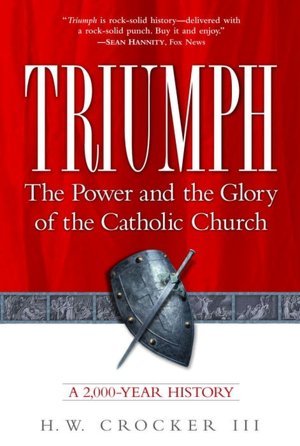
The title of this book tells you exactly what to expect. Triumph: The Power and the Glory of the Catholic Church by H.W. Crocker III was recommended to me by two or three different friends within a single month, which I found hard to ignore. It presents a well-referenced but “popular” history of the Catholic Church, written with a confident pro-Catholic bias, presumably for a Catholic audience. It was an enjoyable jaunt through the Church’s history, and it will give fire to the lukewarm. It will not, I predict, win the hearts and minds of many non-Catholic readers, should they choose to pick it up, because most will not finish it.

As I said, I enjoyed the book, but found it to be very uneven in quality. Of course, any history of an institution as old and rich as the Church cannot be confined to 427 pages without leaving out a few details. For the first half of the book, Crocker bounds through the centuries, focusing his attention on the most colorful or heroic defenders of the faith, painting a fascinating portrait of the Catholic Church ascending, but also justifying the shortcomings of its leaders in a way that borders on “the end justifies the means” at times, and dismissing sin within the Church as no worse than what was happening elsewhere, a standard I’m not sure Christ would have supported. This is not to say that the book is inaccurate — and historical context is important — but the ease with which war and wickedness are noted and discounted is disconcerting when we are called to be perfect, as God is perfect. If not perfect, we should at least be penitent…

Crocker’s unfiltered bias, wit, and sarcasm reach a fever pitch with Martin Luther and the Reformation. References to “the Hitler in Luther” and “Luther’s Khmer Rouge” suggest the author’s motivation is stirring Catholic pride and outrage rather than advancing scholarship in Church history. The criticism of Luther, Calvin, and other Protestant “fathers” is sometimes humorous, occasionally disturbing, and rarely if ever even-handed. I hope we would not tolerate a similar treatment of our priests.

The second half of the book seemed more balanced, although I’m curious if the support expressed for strong monarchies and an educated upper class over more democratic ideals is a true reflection of the 18th and 19th century Church or the author’s own preferences. I guess I have more reading to do in the regard. But the stance of the Church against the tide of liberalism, relativism, materialism, and all the other -isms encompassed in modernism did cause a warm swelling in my breast. There is wisdom in the Catholic Church, and an intellectual tradition that embraces the arts, the sciences, and the classics and needs not fear the world…if only more of us were better versed in it. I have made that a goal of my own, and Triumph provided further inspiration to pursue it.

This book is every bit as pro-Catholic as so many other accounts of world history are anti-. Personally, I would’ve liked to have seen more of the Church’s intellectual tradition itself in the book, and less of characters, wars, and political intrigue. I’d love to hear your thoughts on it, but if you read it, know what you’re getting into — especially if you are Protestant!

Book Break: A History of Corruption

As I mentioned last summer, I’ve been reading a number of diverse books as research for a novel that I hope to complete in 2012. These have included three books on the Irish mob in the U.S. which, together, paint a sobering picture of corruption extending back to the earliest days of our republic.

The Gangs of New York: An Informal History of the Underworld

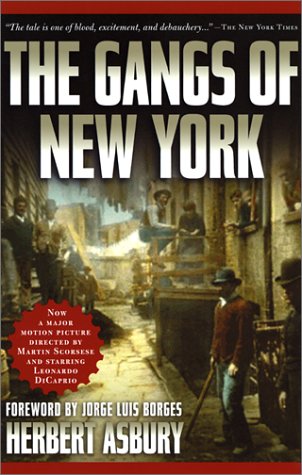
Written by journalist Herbert Asbury and published in 1927, this book provided much of the fodder for the Scorcese film Gangs of New York, if not the actual storyline. It paints a picture of unimaginable squalor, poverty, violence, racism, and political corruption beginning in post-colonial New York City and continuing through Prohibition. Filled with colorful characters and a mix of historical facts and gangster lore and legend, it is a darkly engaging read that makes the reader question how close our animal instincts may lurk beneath our human surface. The propensity for grotesque violence among those with no hope and nothing to lose stands in sharp contrast to our usual views of American ideals and opportunity at the time of our nation’s founding. I will see the film soon, but I don’t expect to enjoy it much…

Paddy Whacked: The Untold Story of the Irish American Gangster
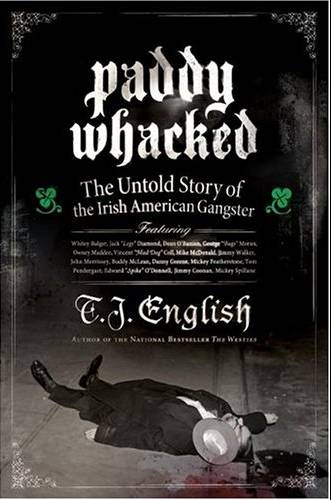
This 2006 volume by T.J. English draws on the Asbury book as a source, but digs deeper, extending beyond New York City to Chicago, New Orleans, Kansas City, and Boston, and including the mid- and late-20th century. The book is more explicit about the relationships between Irish mobsters and hoods and the Italian Mafia, organized labor, corporate strikebreakers, and politicians on both sides of the aisle. (It also paints a less romantic picture of the Kennedy family and suggests multiple strong motives for the assassination of President Kennedy.) It appears to be well researched and is also an engaging, if disturbing, read. Whereas The Gangs of New York made me question human nature, Paddy Whacked made me question the nature of our democracy.

Black Mass: The Irish Mob, the FBI, and a Devil’s Deal
This 2001 book by Boston Globe journalists Dick Lehr and Gerald O’Neill tells the story of the legendary South Boston crime boss Whitey Bulger: his rise to power and secret status as a federal informant whose corrupt FBI handlers protected him and his men from prosecution for years. The recent Scorcese film The Departed may have been a remake of the Hong Kong crime thriller Infernal Affairs (in some cases shot-for-shot), but the South Boston setting and the Jack Nicholson character are inspired by this true tale, and Bulger’s capture this past summer after 16 years on the lam does little to fend off the disquieting feeling that we cannot know who the bad guys are or how far their reach extends. A parallel history of Bulger’s brother, formerly a prominent state senator and president of the University of Massachuesetts, adds to that feeling…

Taken together, these books provide a sobering look at the seamy underbelly of “truth, justice, and the American way.” Strong language and violence abound, and these books won’t leave you feeling warm and fuzzy about the world, but they are good, solid reads.