Intro to Wrestling with Tenacious-G and Trevasive

I spent last evening at a takedown tournament, watching Gabe, Trevor, and the rest of the multitude of boys in St. Michael-Albertville’s Youth Wrestling Program this year. With scores of young wrestlers — some rookies, like my sons; some crusty veterans of numerous club seasons — I guess they figured a takedown tourney would be the easier way to be sure everyone got some experience.

It ran like this: the boys were divided into eight squads, and the squads were paired off. Wrestlers were matched with opponents as close as possible to their same size and weight, and given one minute to score as many takedowns against each other as possible. A referee (members of the high-school JV team) would signal each takedown and quickly stand the boys up again and restart them. The team received one point for every takedown scored by their wrestler.

Trevor was fortunate enough to have wrestled an actual match a few weeks back, against a friend of his. He lost that match by pin, but had a good time, so I was excited to see him in action. Gabe has yet to wrestle a match. He has done plenty of  live wrestling in practice, but never with a timer or someone keeping score — so he was disappointed with the format. He’s built like me in both size and temperament (or rather, like I was back then: an easygoing melon on matchsticks), so I figured a takedown tourney, with an emphasis on speed and aggression, was going to be a big test.

In the end, Gabe won against his first opponent — a boy about his size but, he was guessing, a couple years younger, and frightfully passive — then lost against his second and third opponents, who were his age, 20-plus pounds heavier, and had their own singlets. Following his first match, Gabe was somber: he knew the boy had been scared and barely resisted, and took no pleasure in knocking him over repeatedly. The second kid let Gabe grab his leg, then dropped on him and scrambled behind again and again; Gabe was aggressive and persistent, but couldn’t do anything from beneath. Afterward, Gabe’s coach showed him how to slip sideways, then try to snatch an ankle without getting beneath a larger opponent. In his final match, Gabe was aggressive, persistent, and much better on his feet; he was simply overpowered by a bigger, stronger boy. His coach said, “You were tenacious — I like to see that!”

So does his dad.

Trevor dropped all three of his matches, and did his best to keep his opponent away from him with outstretched arms and quick feet. He has long disliked loud noises, and was worried about the buzzer that would sound at the end of the match — he kept stealing glances at the clock, and with a few seconds left, actually stopped moving and covered his ears! In his last match, he made a few grabs for his opponent’s legs, but when his opponent grabbed him back, he turned to the mat and fell — almost like they were taking turns, except he never got a turn. Even so, he was all smiles; win or lose, he enjoyed hanging with the other boys and rolling around on the mats.

A friend’s dad smiled and said, “Trevor’s pretty evasive out there!”

On the way home, I asked Tenacious-G and Trevasive if they wanted to join Brendan for the extended wrestling season — a series of extra practices over the next few weeks. Trevor had already said several times that he had a great time, while Gabe had told us weeks ago that he didn’t think he would wrestle again next year. “I want to do DI (Destination Imagination),” he said, “and I like soccer and want to try track and cross-country. I think I prefer leg sports…”

“So what about the extended season?” I asked.

“I don’t want to,” Trevor said. “I think I’m just ready to be done.”

“I want to,” said Gabe — explaining that he’s not planning to do it next year, so he wants to get as much out of wrestling this year as he can…and he wants to be sure he gets to wrestle a real match.

I guess we’d better find him a real tournament. Meanwhile, Trevor’s talking baseball: keeping score and three strikes this year. So proud of these boys!
Book Break: Triumph

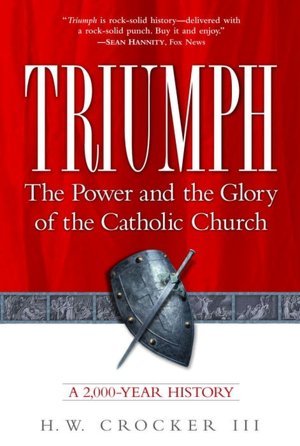
The title of this book tells you exactly what to expect. Triumph: The Power and the Glory of the Catholic Church by H.W. Crocker III was recommended to me by two or three different friends within a single month, which I found hard to ignore. It presents a well-referenced but “popular” history of the Catholic Church, written with a confident pro-Catholic bias, presumably for a Catholic audience. It was an enjoyable jaunt through the Church’s history, and it will give fire to the lukewarm. It will not, I predict, win the hearts and minds of many non-Catholic readers, should they choose to pick it up, because most will not finish it.

As I said, I enjoyed the book, but found it to be very uneven in quality. Of course, any history of an institution as old and rich as the Church cannot be confined to 427 pages without leaving out a few details. For the first half of the book, Crocker bounds through the centuries, focusing his attention on the most colorful or heroic defenders of the faith, painting a fascinating portrait of the Catholic Church ascending, but also justifying the shortcomings of its leaders in a way that borders on “the end justifies the means” at times, and dismissing sin within the Church as no worse than what was happening elsewhere, a standard I’m not sure Christ would have supported. This is not to say that the book is inaccurate — and historical context is important — but the ease with which war and wickedness are noted and discounted is disconcerting when we are called to be perfect, as God is perfect. If not perfect, we should at least be penitent…

Crocker’s unfiltered bias, wit, and sarcasm reach a fever pitch with Martin Luther and the Reformation. References to “the Hitler in Luther” and “Luther’s Khmer Rouge” suggest the author’s motivation is stirring Catholic pride and outrage rather than advancing scholarship in Church history. The criticism of Luther, Calvin, and other Protestant “fathers” is sometimes humorous, occasionally disturbing, and rarely if ever even-handed. I hope we would not tolerate a similar treatment of our priests.

The second half of the book seemed more balanced, although I’m curious if the support expressed for strong monarchies and an educated upper class over more democratic ideals is a true reflection of the 18th and 19th century Church or the author’s own preferences. I guess I have more reading to do in the regard. But the stance of the Church against the tide of liberalism, relativism, materialism, and all the other -isms encompassed in modernism did cause a warm swelling in my breast. There is wisdom in the Catholic Church, and an intellectual tradition that embraces the arts, the sciences, and the classics and needs not fear the world…if only more of us were better versed in it. I have made that a goal of my own, and Triumph provided further inspiration to pursue it.

This book is every bit as pro-Catholic as so many other accounts of world history are anti-. Personally, I would’ve liked to have seen more of the Church’s intellectual tradition itself in the book, and less of characters, wars, and political intrigue. I’d love to hear your thoughts on it, but if you read it, know what you’re getting into — especially if you are Protestant!

Book Break: The Santa of Oz?

A quick review today: as part of my ongoing reading in support of my writing, just before Christmas I checked out L. Frank Baum’s The Life and Adventures of Santa Claus and began to read it to the family. It’s a delightful book with an essentially pagan take on The Old Man’s origins and his status as a saint. It tracks his rescue from a hungry lioness by the nymph Necile when he was an abandoned infant in the Forest of Burzee (the lioness is later made to nurse the child and becomes his friend); it explains the origins of his unusual powers; the “why” behind the reindeer and little people who help him; and what motivated his mission on behalf of children in the first place.

As you might expect from the creative mind behind the Wizard of Oz, Baum’s story is delightful, quirky, and dark at times, but never too dark for children. His writing “voice” is distinctive, and I found it lent itself quite well to reading aloud. This book is a completely unique take (to my knowledge) on the Santa Claus legend, which is why I wanted to read it…but while it is kid-safe, parents may wish to read it first to see how it jives with the experience of Santa Claus in their own homes. It could also be a fun read for older kids who are beginning to question their beliefs; again, however, parents should peruse it first. The edition I read (a Signet Classics paperback, pictured) included an introduction and an afterword (the latter by a Jewish man who, as a boy, was against the very notion of Santa Claus) that make for interesting reading for adults, but might cause greater confusion for youngsters. All in all, our kids enjoyed it well enough, but afterward, Trevor said, “I think it was just a story he made up.”

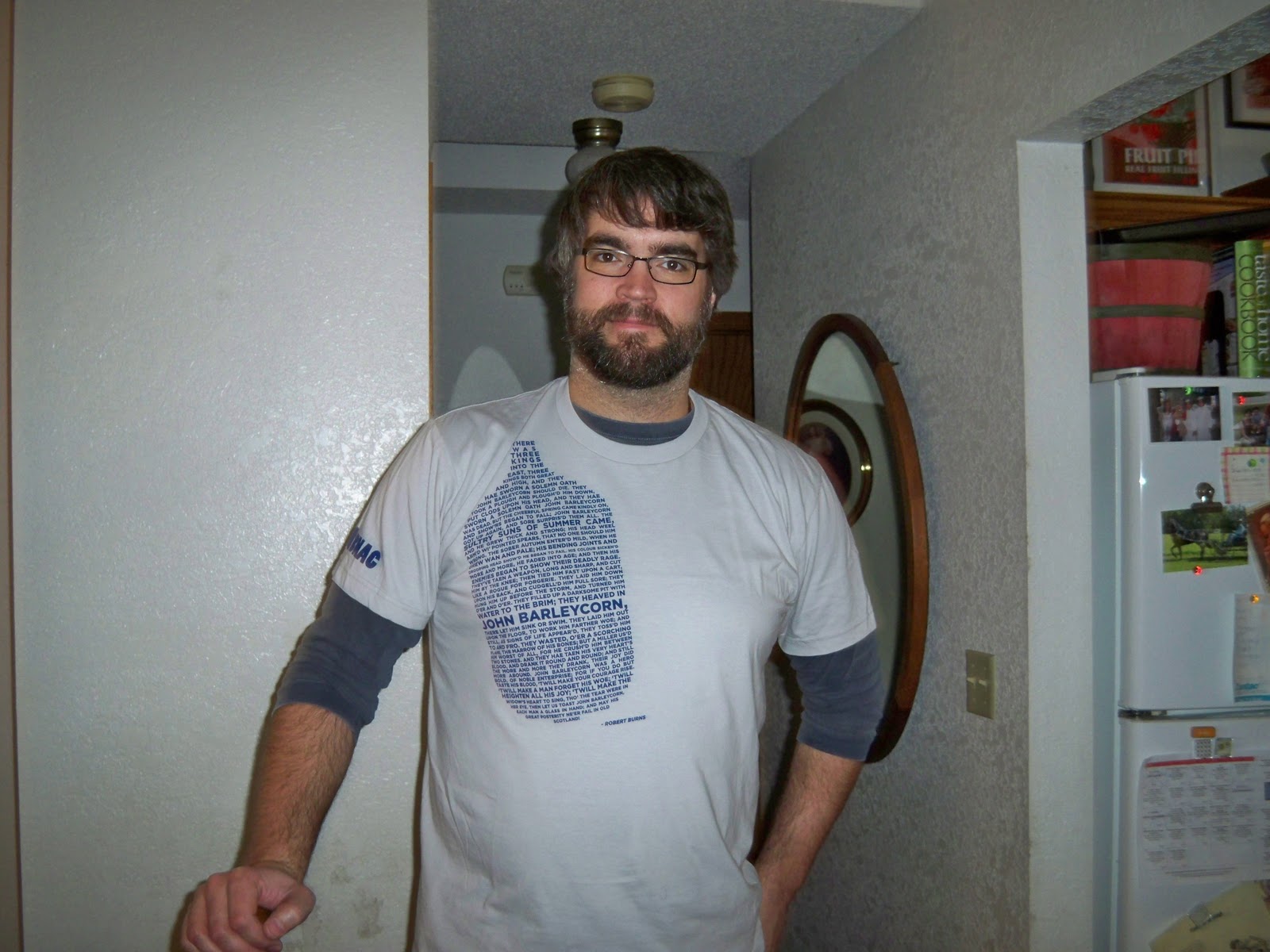
John Barleycorn

Photo by Trevor

One of the cooler things I received for Christmas, as an aspiring brewer and literary type (also aspiring), was this t-shirt from The Brewing Network, which features Scottish poet Robert Burns’s version of the old folk song, “John Barleycorn” (or “John Barleycorn Must Die”) in the shape of a brewing carboy. The poem tells barley’s story from planting to brewing as a ballad and a tale of heroic sacrifice. The words are below, but to hear a proper reading, check out the YouTube clip at the bottom.

John Barleycorn
by Robert Burns

There was three kings into the east,
Three kings both great and high,
And they hae sworn a solemn oath
John Barleycorn should die.
They took a plough and plough’d him down,
Put clods upon his head,
And they hae sworn a solemn oath
John Barleycorn was dead.
But the cheerful Spring came kindly on,
And show’rs began to fall;
John Barleycorn got up again,
And sore surpris’d them all.
The sultry suns of Summer came,
And he grew thick and strong;
His head weel arm’d wi’ pointed spears,
That no one should him wrong.
The sober Autumn enter’d mild,
When he grew wan and pale;
His bending joints and drooping head
Show’d he began to fail.
His colour sicken’d more and more,
He faded into age;
And then his enemies began
To show their deadly rage.
They’ve taen a weapon, long and sharp,
And cut him by the knee;
Then tied him fast upon a cart,
Like a rogue for forgerie.
They laid him down upon his back,
And cudgell’d him full sore;
They hung him up before the storm,
And turn’d him o’er and o’er.
They filled up a darksome pit
With water to the brim;
They heaved in John Barleycorn,
There let him sink or swim.

They laid him out upon the floor,
To work him further woe;
And still, as signs of life appear’d,
They toss’d him to and fro.
They wasted, o’er a scorching flame,
The marrow of his bones;
But a miller us’d him worst of all,
For he crush’d him between two stones.
And they hae taen his very heart’s blood,
And drank it round and round;
And still the more and more they drank,
Their joy did more abound.
John Barleycorn was a hero bold,
Of noble enterprise;
For if you do but taste his blood,
‘Twill make your courage rise.
‘Twill make a man forget his woe;
‘Twill heighten all his joy;
‘Twill make the widow’s heart to sing,
Tho’ the tear were in her eye.
Then let us toast John Barleycorn,
Each man a glass in hand;
And may his great posterity
Ne’er fail in old Scotland!

I love The Brewing Network’s other shirts and its “hop grenade” logo. I haven’t checked out any of the radio shows or podcasts yet. It must be a small outfit, since the emails Jodi exchanged when ordering this shirt were signed “Linda, Justin’s Mom.”

Anyway, check out the reading below, then check out The Brewing Network.

Book Break: Shogun

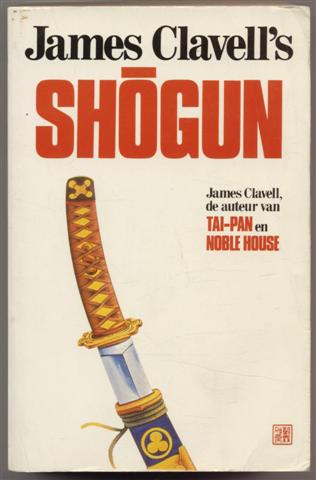
Cross another book off the Fiction Writing Reading List that I posted last summer: James Clavell’s Shogun. I have a vague recollection of Richard Chamberlain in a TV miniseries adaptation in the 1980s, but I’m certain it’s from the advertisements and not actually watching it. (Maybe Mom watched it? Maybe I’m thinking of The Thorn Birds?)


This book is sprawling, convoluted, vulgar, and violent  and engaging for most of it’s 1,000-plus pages. What made it most interesting to me is its point of view (or ultimate lack thereof) with regard to the cultures clashing throughout the story. Set in feudal Japan in the 1600s, the novel gives us an arrogant, foul-mouthed, and cunning English Protestant protagonist; surrounds him with a narrow-minded and ever fouler-mouthed Dutch Protestant crew; and strands them in a strict (and mostly Shinto/anti-Christian) samurai culture that is deeply enmeshed in trade with the Catholic Portuguese and rushing headlong toward civil war. Initially, it is a very anti-Catholic read; although the Protestant characters are not particularly virtuous or sympathetic characters, the initial perspective is theirs, and their biases shine through.


The British pilot is removed from the group because various samurai see value in his knowledge and his ability to antagonize the Catholics by his very existence in Japan. Gradually he gains favor, and ultimately influence, among the samurai, and becomes conflicted as he begins to see value in their way of life (and of course, falls in love with a well-known samurai woman who has converted to Catholicism).


That’s the gist…but lest you think this is Last Samurai or “Dances With Blue-Man Group” rehash, understand that A) Shogun came first, and B) no one group emerges as the noble savage. All are savage, and ultimately, the only group shown without nobility is the Dutch Protestant crew. (Clavell shows does a tremendous job writing in multiple languages and using “dialects” (written in English) and curses or other interjections to distinguish between Portuguese, Latin, “gutter Dutch,” and Japanese.) The hero never goes completely samurai, never loses his English-Protestant bias against priests and the papacy, and is always “in it for the money”—but he comes to love at least one Catholic convert, respects at least one priest, and has his life saved by another priest. He is a married father of two in England, and as such, is an adulterer; he equally enjoys Japanese views on sexuality and is horrified by them because so much is permitted in the name of pleasure. He enjoys the order, the cleanliness, the beauty of Japanese living, but not the brutality and bigotry that enforce it. Love and life here are regarded as meaningless, replaced by duty and death — as he is immersed in this culture, he begins to use it to his advantage, but it also begins to re-shape him.


Beneath this story is a violent political thriller that uncoils slowly only, to be completely understood at the very end — and perhaps not even then. According to Clavell, in a small crowded country with paper walls, politeness is paramount; everything is planned (and counter-planned, and counter-counter-planned); everyone hears and everyone knows, but no one speaks until it is to their devastating advantage. The result is a fascinating book that seems overlong at times, but not monotonous. He wrote six novels in what came to be known as his Asian Saga; Shogun was the third written, but is set the earliest in history. Rumor has it he had other Asian novels planned at the time of his death, and I have no doubt there’s a great book to be written exactly where this one leaves off.