Book Break: Three Quick Reads

I’m playing catch-up on “reviewing” a few faith-building books I’ve read in recent months. I recommend all three, depending on where you and your family are on your faith journey.

Blessed Are the Bored in Spirit by Mark Hart

cee7e-boredinspiritMark Hart is a former Catholic youth minister, self-proclaimed Bible geek, and vice president of LIFE TEEN…and a recovering cultural Catholic who was just going through the motions in his younger years. Blessed Are the Bored in Spirit: A Young Catholic’s Search For Meaning is a short (less than 150 pages), light, and humorous look at the temptations, attitudes, and obstacles that keep teens and adults lukewarm in their faith. If you’ve heard Hart speak (as in this video we shared at LIFT this past year), you’ve got some idea of the tone and level of this book. I recommend it for teens, young adults, and family discussions.

Jesus Shock by Peter Kreeft

19ac5-jesusshockThe title and cover of Peter Kreeft’s 176-page Jesus Shock make you wonder if it’s by that Peter Kreeft. It is. Kreeft  is a professor of philosophy, lecturer, and author of countless books on theology, philosophy, history, and apologetics — but Jesus Shock is the result of asking God, “What do You want me to write?” The answer, he says, was “Me.” Kreeft asks questions of his readers to help them probe their knowledge of and attitude toward Jesus, and uses Scripture to show how the Incarnation, the God-Man, the Word of God and Savior of the World, is everything we long for and anything but boring. This a somewhat deeper and more academic read that Mark Hart’s book, and more clever than humorous, but still very accessible for adults and motivated teens. It’s a good book for self-reflection or discussion.

The Weight of Glory by C.S. Lewis

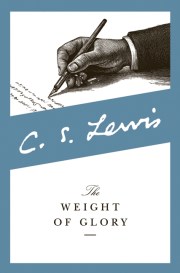
5a453-weightofgloryAnd now for something completely different: The Weight of Glory by C.S. Lewis is a collection of beloved homilies, lectures, and essays by the great writer and apologist, on topics as diverse as the problems with pacifism, why study of the liberal arts matters, the challenge of forgiveness, the incoherence of a strictly scientific worldview, what membership means (and what it should mean), and more. These individual pieces are not directly related to each other, except by authorship, but they present a picture of Lewis’s Christian outlook and concerns about the direction of modern culture that have stood the test of time and are perhaps more relevant today than ever. If you enjoy Lewis’s writings beyond the Narnia series, or if you want to dig more deeply into Christianity in the modern world, brew some coffee, get comfortable, and enjoy. This book is great for personal reflection and deeper discussion, especially if you like stretching your intellectual muscles a bit!

Time Flies: A Thorp Family Update

The most recent photo of us all, with my folks and
sister’s family thrown in for good measure.

I’ve remarked more times than I can count in the past year: “My age doesn’t bother me; it’s the fact that Brendan is heading to college.” It’s my kids’ ages that get to me — not the the additional salt in my pepper, the aches and pains, the fact that I’m often tired and can rarely sleep.

This past year has flown, and with a grad party and a trip to Poland for World Youth Day, the summer promises to be even faster. So I thought I’d offer you all an update on our family before we blink and the leaves fall again.

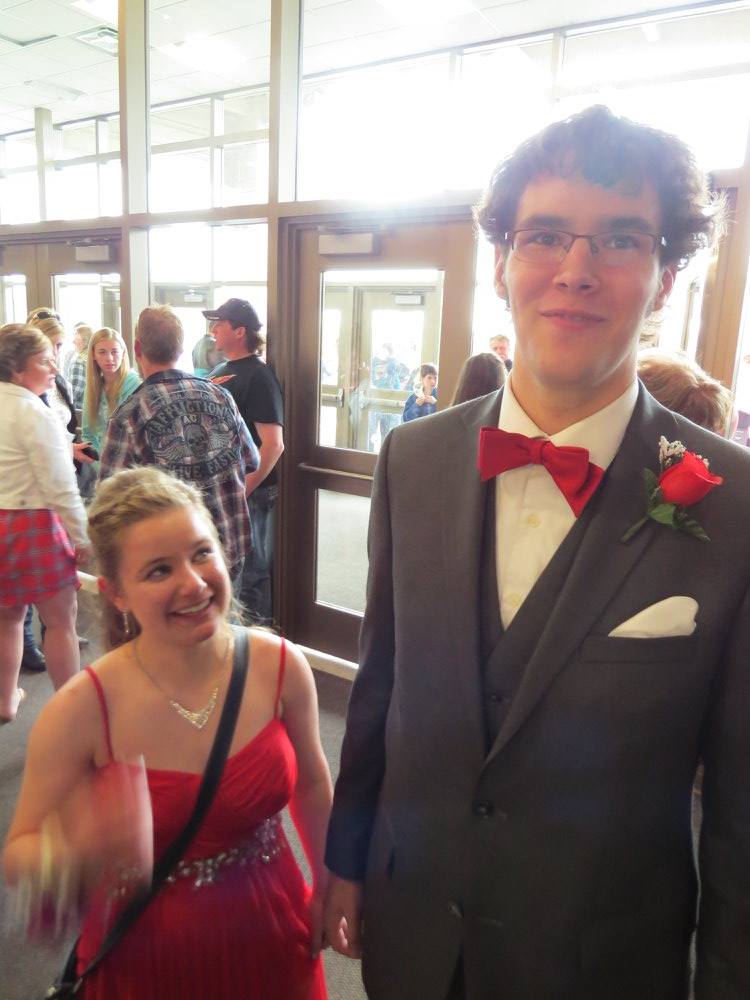
Prom-goers: Brendan and Olivia

Brendan, as you may have heard, is headed to UMary in the fall. He will graduate early in June in the top 10 in his class, with a varsity letter in wrestling and local scholarships from Knights of Columbus Council 4174 (of which he is one of the newest members), the American Legion, and the Hanover Athletic Association. He loves Ultimate Frisbee (actually all four of our teens/tweens do), dabbles in swing-dancing, and is still happily dating Olivia. (Last night’s consisted of Adoration and ice cream.) He is still working at the hardware store, and just starting a second job with a local electrical contractor for the summer. He loves his bass and his music (Foo Fighters is his current favorite band), and yesterday, he bought an acoustic guitar for song writing and kicks. And he has a pipe, which he smokes on occasion.

Swing-dancers: Gabe and Kate

Gabe is now the tallest in our family, by perhaps a quarter inch. He is working on getting his driver’s license this summer, helping our friend’s taxidermy business, and preparing for his junior year of high school. He was confirmed this month, was just inducted into the National Honor Society like his older brother (NHS at our high school does a great deal in service to the school and community), and will be one of the leaders of the high-school pro-life group in the fall. He played soccer but didn’t wrestle this year, and is on the fence about next year — too many other interests, including reading and writing, teaching himself piano, learning Quenya (J.R.R. Tolkien’s Elvish language), and swing-dancing. In this last activity, he works hard and excels — especially when paired with his friend and fellow Lord of the Rings geek Kate. They aren’t dating, just dancing and discerning together.

Emma and two of her flute-playing besties

Emma is easily the tallest female in the house and explored the high-school for the first time yesterday as an incoming freshman. She played volleyball in the fall and is running track this spring — plus playing flute in the band and woodwind ensemble and singing in the middle-school choir. The music, at least, will continue in high school. Emma has followed her brothers to help with the church’s Core Team and is also an avid swing-dancer (which means boys); Gabe’s dance-partner is one of Rosebud’s mentors in becoming a young woman of virtue. Emma dabbles in piano, too; reads voraciously, and bakes like our family is twice the size (and it will be, unless we share her goodies). She is hoping to start baby-sitting soon and wants a new dog almost as much as her dad.

Trevor rocking

Trevor will be our sole middle-schooler next year, and plans to work out this summer in hopes of wrestling on the school team in seventh grade. He is a rhythmically gift version of the boy his father was: a creative thinker and storyteller, easily distracted, heart-on-his-sleeve…but coordinated enough to rock a drum kit (or the kitchen table, a couch cushion, his thighs…), to play basic piano music with relative ease, and to dance to almost any song when the mood strikes him. Also an avid reader and a good student, but with a style all his own: whereas Gabe has a hat collection and wears them on occasion, Trevor wears a brown fedora each day to school. He shows signs of a mechanical knack (another difference from his father) and still loves Legos.

Typical Lily

Lily completed her year of Catholic co-op preschool yesterday. She is colorful, funny, opinionated, and creative, with an ever-expanding vocabulary and a precocious sense of humor for a four-year-old, included puns and word-play and physical comedy along with the typical (non-sensical and never-ending) knock-knock jokes. She, too, likes to dance and to watch her swing-dancing elders, and she makes her siblings friends her own whenever she has the chance. She, too, has sprouted in the past year — she is a head taller than her plastic barn playset she so enjoyed last summer — and although she rarely eats a lot at a sitting, she would eat constantly if allowed. And she loves superheroes, especially Batman and the Justice Leaque.

Jodi and I are well — and abundantly blessed, in the midst of such breakneck activity. My bride often says it feels like only a short while ago that Brendan got on the bus for kindergarten the first time, and so it seems to be as well. We will have been married 20 years this August, and for my part, I am as happy as I have ever been.

That said, I had to be reminded of something not long ago, with the help of a priest friend: as Christians, spouses, parents, we have a serious call in this world, which requires a serious, heartfelt response — but none of that means that God doesn’t desire our happiness or enjoyment of this life. He came that His joy may be ours — shame on us if that joy does not pervade all that we do, and all that we are. It can seem terribly romantic to think ourselves unworthy of the blessings in our lives — the soft warmth of the one who lies next to us in the wee hours before waking, or the noise of a full and laughing house — and to strive and sacrifice to show our appreciation and earn our worth. But in truth, we are worthy — intrinsically — as God’s beloved children. So while I must not take my beautiful bride and these five awesome children for granted, I can love them best if I realize that my worth, and each of theirs, comes from our creation in His image and in resting in his embrace.

We are so blessed. As sinners, we don’t deserve it…but what else should we expect from such a God as this?

Last summer…where does the time go?

A Higher Education

As we crossed the plains of North Dakota this weekend, I made a surprising discovery: my college roommate Frank is now the Honorable Franklin R. Parker, assistant secretary of the Navy.

We were headed to Bismarck to register Brendan for his first-year classes at the University of Mary. Jodi was driving, and I sat hunched in the back seat of our little commuter car, giving Brendan and his mom some quality time up front. We had been talking to him about things that change as you move through life: interests and priorities shift, people you were close once slowly drift away. “It just sort of happens,” I said. “Often it’s not even intentional: my buddy Frank from Yale and I used to be in touch a couple times a year — we would at least exchange letters at Christmas — but this last winter I didn’t hear from him and our Christmas letter bounced back to us. They must’ve moved.”

I sat a moment, then said, “Of course, he is an attorney and has worked for some pretty big firms, so I could probably find him again in just a few minutes on Google.”

* * * * *

I pulled out my phone, entered “franklin r parker,” and voila: “President Obama Announces More Key Administration Posts.” To be sure this was, in fact, Frankie Parker of Durfee Hall D-21, I dug deeper and found his official bio page on the U.S. Navy’s website

That’s him. That’s guy I roomed with freshman and sophomore year, whose parents took us to see Ray Charles perform in New Haven, who stood up as a groomsman in our wedding at tiny St. Liborius Catholic Church in Polo, South Dakota, and whose own wedding  was a Chicagoland mashup of African-American and Asian influences with a little Cherokee thrown in.

I shared my discovery with Jodi and Brendan, and for the next hour or more, periodically shook my head, murmuring, “Wow…Frank Parker…working for the President…who knew?…assistant secretary of the Navy..huh…”

If I’m honest, a small part of me was, not jealous, but curious if I could have been something more. As evidenced by his resumé, Frank is a smart fellow, and he’s always been better at making connections than I am — but I did well in college and well in every job I’ve had since. What is it that separates two men with an Ivy league education and a liberal arts degree, such that one goes on to graduate school, prestige, and power, and the other works retail, starts a family, and lands at his local church as faith formation director?

Ever have that happen? It’s not envy — I don’t begrudge him his success or even want what he has. It’s  more like a form of pride or vanity, wondering if I could have been more than I am.

* * * * *

Ultimately I remembered something I wrote during freshman year at Yale: I came East for an education. It was never about a career for me, and I never planned to stay there. I came to learn all I could at one of the great old universities our country has to offer. And I did.

Brendan is a smart young man. He can do almost anything he sets his mind to, and for years his goal was the Naval Academy and the Marine Corps, until he began to grow deeper in his Catholic faith and realized he wasn’t sure he could trust our country’s leadership to deploy him to only just wars. Then his focus was engineering, until he began to think specifically about what he liked (understanding how things work and making stuff, like his Dziadzi) and what he didn’t like (lots of math, computer work, and CAD, like a professional engineer). He’s always loved history and enjoyed theology and literature — so he began thinking about studying, teaching, and writing about the things that he loves.

I can’t fault him for that.

* * * * *

We spent the night in the Expressway Inn in Bismarck (nicer and quieter than it sounds) and the next morning, headed out of town and up the hill to the University of Mary for Mass and registration activities. I hadn’t visited yet, and though I knew it was small, I hadn’t imagined what small might look like in this case. My last higher-education employer, the University of Minnesota, has about 51,000 students; my previous higher-ed employer, Ferris State University, boasts 14,500, and Yale has around 12,000, with a bit more than 5,000 undergraduates.

UMary, by contrast, has a total enrollment of just 3,000 — a tiny cluster of stone and concrete buildings hunkered on the edge of a high bluff overlooking the Missouri River. The buildings aren’t beautiful in any conventional sense; built in the middle of the last century for the wear and tear of young people and the wind and weather of the plains, they are low, solid structures with the quiet strength of stones unmoved by the world and its ceaseless spinning.

* * * * *

We started our day in a tiny chapel, well lit and peaceful, with a handful of prospective students and their families, current students, and administrators. We were first to arrive just behind the priest, a gray-haired Benedictine, and prayed in silence until Mass began. It being the feast of St. Mathias, the readings were focused on the selection of Mathias to replace Judas among the Apostles and Jesus’ command to love one another.

In his homily, Fr. Anthony contrasted our current presidential election process with the prayerful selection of St. Mathias, and contrasted the fame and power of our political leaders with the relative anonymity of St. Mathias both before and after his selection: basically the only things we know for sure are that he was with the other apostles in following Jesus from the beginning through the Resurrection and that he died while sharing the faith with an unbelieving world. He does not appear to have been self-seeking, but to have had one desire: to “to go and bear fruit that will remain” and to lay down his life.

I have reflected on his homily numerous times since, and while I don’t fault Frank for working hard to be where he is in his life, I am no longer curious where else I could be.

* * * * *
After Mass I told Brendan and Jodi I had a tremendous sense of peace about UMary. “This is a good place,” I said.
The original school was founded by Benedictine nuns at what was, at the time, the end of the railroad tracks headed West. During the opening session of the day, the current religious sisters who live in the monastery at the edge of the campus came to pray over the incoming students and their families. They ended their prayers with a beautifully harmonized sung blessing, and we were separated into smaller groups from the rest of the day. 

Brendan was assigned an upperclassman to his liking: a triple-major in history, Catholic studies, and secondary education; the drummer in a rock band who was studying Polish in hopes of doing graduate work in Poland. Jodi and I talked with various campus representatives, including an administrator in Admissions who said our parish’s reputation precedes us and asked what we thought it was that makes St. Michael a special place. We also wandered the campus, talking and taking a few photos, and I ended the day with a sense of great joy: I believe Brendan is where he belongs.
It is true, practically speaking, that students should enter college with some sort of plan for what they want to do with a degree — otherwise the time and money are potentially wasted. But I believe it is also true that, for good students, a structured approach to the liberal arts can help create flexible, resilient young men and women who are prepared to lead, to sacrifice, and to preserve our culture in the days to come. I believe, in choosing UMary, Brendan has chosen a higher education (higher even than Yale in the ways that count most), and I’m proud and excited to see where this path leads.

A Father’s Greatest Fear

This past week, 130 teens from our parish and school received the Sacrament of Confirmation. A few of these young people are already leaders in the community, drawing others to Christ. More will enter into the fullness of the Catholic faith and begin to live as disciples of Jesus, called to follow, and gifted to reach out to their family, friends, and strangers in new and beautiful ways.

But unfortunately, many others will view Confirmation as the last requirement of “growing up Catholic.” They will be happy to be done with religion classes and will begin almost immediately to drift away from the Church.

Last weekend my bride and I spent Sunday afternoon with three other couples trying to raise Catholic families. We talked about cultivating perseverance in our children: strengthening them to look for ways forward when the going gets tough, to have the courage of their convictions, and to fall and rise again. We talked, in particular, about the difficulty of letting our teens make decisions we don’t agree with in order for them to learn on their own those things that our experience could teach but that they won’t hear.

At least two of us agreed that our biggest fear is our children falling away from the faith. My friend said that when he shares this fear, people will seek to reassure him: You are doing everything you can; they have to make their own choices.

“In reality, it’s not about me,” he said. “I worry, because I know how long a road it is to come back.”

I would add to his observation the sobering reality of eternity, heaven, and hell. We don’t like to think about these things—hell, in particular—but Jesus speaks plainly about them. I remember, in my younger years, seeing TV commercials featuring Carol O’Connor of Archie Bunker fame, after he had lost a son to drugs and suicide, saying: “Get between your kids and drugs any way you can.”

If only we took the same approach in the spiritual life.

So how do we keep our kids Catholic? It is not as simple as demanding they show up on Sundays and Wednesdays and go through the motions. All of us have a choice to make, every day, to follow Jesus and make God and our faith the center of our lives. To deny the reality of that choice is to deny the very thing that makes us special in this universe: bodily creations with rational spirits, with intellect and will, so loved by God that He allows us the freedom to choose for or against Him.

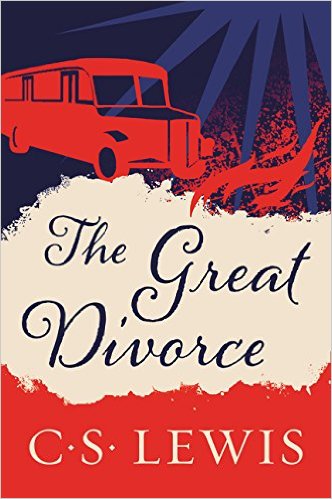
Why would anyone choose against God? C.S. Lewis’s short novel The Great Divorce lays out many reasons, rooted primarily in the earthly things—even blessings—that we put ahead of God and cling to at the expense of Him who is all Truth and all Love. God, spouse, children, everything else—is my house in order? Not as often as I’d like.

So what hope is there for our young people? Well, we have a Redeemer who, undeserving though we are, has already suffered on our behalf, and a Father in Heaven who doesn’t want to lose our children, either. He is constantly calling them, and us, to Himself—as singer-songwriter Jon Guerra puts it: “My Father ever chasing/My Chaser ever keeping/My Keeper ever giving/My ever-living God.”

I’ve referenced before an online article called “Keeping Our Kids Catholic: The Indispensable Minimum.” The writer describes our role as parents as forming “a thread of solid formation in morals and Church teaching that will keep even our most errant kids tethered to God—and which God himself can twitch to bring them back someday.”

Ultimately our children belong to the same heavenly Father that we do, and they are His to love, to call home, to save. We are not alone, and we don’t have to do it all. We only have to do all we can.

Book Break: The Great Divorce

I mentioned in an earlier post that I had a profound Good Friday, but that was only half the story. The other half of the story is that, early that Friday morning, I sought out some spiritual reading for the day, and wound up with a new top-five favorite book: C.S. Lewis’s The Great Divorce.

Of course, when reading spiritually, the Bible is always a good place to start, and I’m also making slow but steady progress through Dante’s Divine Comedy a canto or two a day. But I wanted something fresh, something I could possibly read in a day, and something related to the penitential character of Good Friday and the great saving act of our Lord.

On a hunch, I took C.S, Lewis’s The Great Divorce from the bookshelf. I have great regard for Lewis as a writer and had heard good things about the book, particularly from my good friend Angie at Take Time for Him.

Lewis had me hooked from the preface, which begins by explaining the title of his fantasy:

BLAKE WROTE the Marriage of Heaven and Hell. If I have written of their Divorce, this is not because I think myself a fit antagonist for so great a genius, nor even because I feel at all sure that I know what he meant. But in some sense or other the attempt to make that marriage is perennial. The attempt is based on the belief that reality never presents us with an absolutely unavoidable “either-or”; that, granted skill and patience and (above all) time enough, some way of embracing both alternatives can always be found; that mere development or adjustment or refinement will somehow turn evil into good without our being called on for a final and total rejection of anything we should like to retain.

The book begins with our narrator in line at a bus stop in a grey and gloomy town, surrounded by people he doesn’t know and wouldn’t want to — unsure of where he is or where he’s going. It unfolds like Dante’s Divine Comedy in modern miniature: a pilgrim’s journey from hell to the edge of heaven in just 128 pages. I’m reading Dante now, too, canto by canto, and it is powerful in its way, but this held my attention from the preface to the end, with every word relevant to this sinner and this sinful time. Lewis articulates with poetic beauty and unflinching honesty the glory of God and his angels and saints, the pain of detaching from this world, and the stubbornness, the grasping, the pride and distrust that keep even “good” people from choosing God and reaching Heaven.

The book challenges the reader particularly on the Greatest Commandment: “You must love the Lord your God with all your heart, with all your soul, and with all your mind” (Matthew 22:37). On this point, Dante provides an unintended summary (being some seven centuries older) which, as providence would have it, I read over lunch on Easter Monday. In Purgatorio, Canto IX, Lines 127-132, he writes the words of the angel guarding the gates of Purgatory proper:

“I hold these keys from Peter, who advised
‘Admit to many, rather than too few,
if they but cast themselves before your feet.'” 
Then pushing back the portal’s holy door,
“Enter,” he said to us, “but first be warned;
to look back means to go back out again.”

We sin when we put anything — even the blessings of life on this good Earth — ahead of loving and seeking God. Pilgrim after pilgrim turns his or her back on Heaven because the cost of entry is too high: the cost of admitting that they are mere creatures and of letting go of their earthly pleasures, passions, and prejudices. They want Heaven on their own terms and choose Hell to feel like they have some say in the matter. They cannot stand the humiliation of grace as an unmerited gift.

It is a powerful book: perhaps tied at this moment with Steinbeck’s East of Eden as my favorite of all time (although Tolkein’s The Lord of the Rings (which I still need to review as an adult) and Sigrid Unset’s Kristin Lavransdatter trilogy are right up there, too!) It paints a stark and revealing picture of how far so many of us have to go to be purged of all sin. So I will end this post with Lewis’s words from the Preface, on a hopeful note:

I do not think that all who choose wrong roads perish; but their rescue consists in being put back on the right road. A wrong sum can be put right: but only by going back till you find the error and working it afresh from that point, never by simply going on. Evil can be undone, but it cannot “develop” into good. Time does not heal it. The spell must be unwound, bit by bit, “with backward mutters of dissevering power”– or else not. It is still “either-or.” If we insist on keeping Hell (or even earth) we shall not see Heaven: if we accept Heaven we shall not be able to retain even the smallest and most intimate souvenirs of Hell. I believe, to be sure, that any man who reaches Heaven will find that what he abandoned (even in plucking out his right eye) was precisely nothing: that the kernel of what he was really seeking even in his most depraved wishes will be there, beyond expectation, waiting for him in “the High Countries.”

The Great Divorce. Find it. Read it.