Blogger’s Note: The links below are to good stuff, but not necessarily kids’ stuff. Use discretion.
Probably the most transformation part of my conversion to Catholicism — not just going to church on Sunday, but full-tilt “this is who I am and how I try to live” conversion — has been the reorientation of my thinking on the topics of marriage, sexuality, and procreation. See, the Catholic Church is perhaps the one institution on Earth that has refused to divorce these three things from each other…and when Jodi and I were preparing for marriage, I was not entirely on board with that.
Now Jodi and I speak at retreats for engaged couples, sharing with frankness how we were, in fact, where they are — crazy in love, uncertain about parenthood, frightened by the Church’s teachings, and unready to “risk” a baby. (What an awful phrase, in retrospect.) We share the Truth we’ve come to know as best we can — but I’m always looking for new ways of going about it. And once in a while, I stumble across really good stuff.
So — if you’re struggling to understand or explain the Church’s teachings marriage and sexuality, check out these links:
NFP Doesn’t Work…You Have So Many Kids!: Read your Genesis: fertility is the original blessing from God — and if it ain’t broke, don’t “fix” it! This blog post hits the nail on the head with humor and truth to spare.
How Premarital Sex Rewires the Brain: a simple, biology-based explanation for why relationships that get too serious too quickly last too long, crash so hard, and hurt so bad.
After Steubenville: 25 Things Our Sons Need to Know About Manhood: a mother’s poetic and heart-wrenching response to the teen sexual assault that made national headlines.
Not long ago, an old friend asked if I still had big plans for my career, as a writer, or maybe running for office. He had known me years before when I used to daydream about such possibilities. I told him that these days, if I raise my sons to respect women and my daughters to respect themselves, I’ll have done alright.
Some kids are too young to hear this sort of material — but as parents, when the time is right, we’ve got to share it. I firmly believe it’s the only way we can redeem the culture. I’m grateful that, judging from the links above, others feel the same.
I recently completed two biographies of great Americans, set roughly two hundred years apart. Both books tell stories of oppression, resistance, and the struggle for freedom. Both are great books, in very different ways. I’ll offer a few quick thoughts on each, but in short: read them!
American Cicero: The Life of Charles Carroll by Bradley J. Birzer American Cicero tells the story of the bastard son of a wealthy colonist who is sent abroad for a Jesuit education, is formally named his father’s heir, and returns home to Maryland to become one of the early advocates for independence from Britain and one of the foremost shapers of the fledgling American republic. If you aren’t a history buff, you may not know (and if you aren’t a Roman Catholic, you may be surprised to learn) that in his day, Charles Carroll was well educated and capable (not to mention from the wealthiest family in the colonies) and could neither vote nor serve in public office — because of his “papist”tendencies and “Romish” influences. He is also portrayed as a devout Englishman who nevertheless saw independence as a necessary fresh start for the English constitution and English law, which were being usurped and corrupted by the government elected to uphold them.
Carroll initially took the public stage by writing under a pen name in the newspapers of his home colony of Maryland (the most anti-Catholic of the lot in his day), earned the trust and admiration of Washington, Franklin, and others among the founders, and outlived them all — and relatively few have heard his name. Here is a man who, with all his money, couldn’t buy a vote (and would never have tried); who advocated against democracy and in favor of a republic based on his reading of history and the times; and who drew on the ancient Greeks and Romans and his own faith tradition, as well as contemporary thinkers, to propose limits on the power of both the government and the “mob” in order to preserve those rights. In my review of Triumph: The Power and Glory of the Catholic Church, I asked if the author’s apparent preference for the monarchies of old was personal, or somehow tied to the Church — I think you can begin to see a sensible philosophical connection here, in Carroll’s dismay at the more populist, democratic leanings of some of his contemporaries. (This is not your high school’s American history!)
The author is the Russell Amos Kirk Chair in American Studies, Professor of History and Director of the Hillsdale College Program in American Studies, and is also the author of J. R. R. Tolkien’s Sanctifying Myth: Understanding Middle-Earth. Birzer tells the story as much as possible though Carroll’s own public writings and private letters, and this is an academic history, so it is not a breezy read. Nevertheless, I thoroughly enjoyed getting to know this relatively unsung Founding Father. I enjoyed Birzer’s ability to connect Carroll’s thinking to his education and core values. This book is well worth the effort!
Unbroken: A World War II Story of Survival, Resilience, and Redemption by Laura Hillenbrand
This is a true-life tale of Gumpian proportions: a young misfit from a working-class Italian family (complete with a doting mother and an impeccable older brother) graduates from thieving prankster to Olympic track star and meets Hitler in the 1936 Olympics. A gifted athlete (on track to be the first man to break the four-minute mile) has his athletic career cut short by World War II and becomes a bombardier on a B-24 in the Pacific Theater, surviving a temperamental plane, numerous missions, and long odds while enjoying the celebrity of being both an athlete and an airman. A World War II veteran endures weeks adrift in a life raft with two wounded comrades, battling starvation and dehydration, sharks, madness, and occasional strafing, only to come ashore in Japanese territory and become a prisoner of war. A POW is singled out by the Japanese for his celebrity and made to endure physical, mental, and emotional tortures for more than two years of captivity. A survivor of Japanese prison camps returns home and marries a vibrant, blue-blooded beauty despite warning signs that the war has taken a psychological toll.
Any one of these story lines could make a novel or a movie in itself — the fact that all of them really happened to one man is almost too much to be believed. Louis “Louie” Zamperini is still alive, 96 years old and active decades after he should have been dead so many times. He comes from an earlier time when track stars and airmen were celebrities, and, like Norman Borlaug, is an unsung Great American who should help us redefine “hero.”
Louis Zamperini
This is not a book for the young or faint of heart — the treatment of POWs by the Japanese is brutal and horrifying, and the book includes scenes of inhumanity you may not soon forget. In this respect, it called to mind two other books I wrote about not long ago — James Clavell’s Shogun and Shusako Endo’s Silence. I recall past conversations with previous generations about how veterans of the World Wars came home and went about their lives, but veterans of later wars began to report emotional scars and psychological impacts. The implication, in some of these conversations, was that men have softened — but Unbroken makes a distinction, based on historical data, between the mental health of POWs in the European theater and POWs in the Pacific theater. This led me to ponder whether, in wars with Eastern cultures, Westerners are encounter philosophies with such different rules (or no rules at all) that we are, in fact, ill-equipped to deal with them.
The author, Laura Hillenbrand, does great work writing a biography you can’t put down, with a level of historic detail that does not diminish the readability of the book, but lets you know that she did her homework. Internet evidence suggests Louie Zamperini’s story may soon become a movie. Don’t wait for the movie — you’ll miss the chance for a fresh read of an exceptional book.
Back in early December, I announced that I was suspending this blog and taking it off-line. I likened my writing career thus far to standing on my head for show: requiring modest skill; impressive at first, then amusing, before becoming repetitive, uncomfortable, and unnatural. I even went so far as to declare, “ I won’t call myself a writer again until I write something worthwhile, and I don’t know what it will be.” Those who know me well know I have a tendency to take myself entirely too seriously. I was in a bad spot at the time: way too busy at work, home, and church; unable to make a satisfactory start on the annual Christmas letter; and unhappy in my work. Some several things needed to give — but this blog was not one of them.
As a full-time husband, father, and director of communications, this little corner of the internet is one of the few places I actually do write stuff that people read. The people who matter most to me are here, but they aren’t the only ones — consider that this tiny, rhyming prayer is the most viewed post on my site, in large part due to readers (or skewed search results) from Russia. A favorite web site of mine, The Art of Manliness, posted an article awhile back entitled, “How a Man Handles a Miscarriage.” I read the post and the appreciative comments, before adding a comment of my own and sharing a bit about our little Jude. Men came and read, and though they left no comments, who knows whom it touched?
In fact, if I want to be truly serious about writing, I would not permit myself to be limited by the potential for monetary gain. A few weeks ago I was looking through the Catechism of the Catholic Church to see specifically what the Church teaches about property rights — and learned that while she makes no bones about supporting the right to private property, she is insistent that we steward our property and talents for the greater good:
“In his use of things man should regard the external goods he legitimately owns not merely as exclusive to himself but common to others also, in the sense that they can benefit others as well as himself.” The ownership of any property makes its holder a steward of Providence, with the task of making it fruitful and communicating its benefits to others, first of all his family.
Goods of production — material or immaterial — such as land, factories, practical or artistic skills, oblige their possessors to employ them in ways that will benefit the greatest number. Those who hold goods for use and consumption should use them with moderation, reserving the better part for guests, for the sick and the poor (CCC 2404 and 2405).
I read and re-read it: Goods of production, including practical or artistic skills, “oblige their possessors to employ them in ways that will benefit the greatest number … reserving the better part for guests, for the sick and the poor.”
A “serious” writer , then, should speak the truth, regardless of gain or loss, for the good of those who need to hear or whomever will listen.
My daily commute has been a blessing of late: relatively smooth and expeditious, with just enough windshield time to pray a morning rosary, then listen, think, and free associate to my heart’s content. This morning’s mental ramble started as I got into the car and backed from the driveway, already reciting the Creed. I made my way slowly through our neighborhood, announcing my morning intentions as I went (the conclave to select the new pope first and foremost today) and turned toward the freeway. As I rumbled over the railroad tracks, I recalled it was Tuesday, and thus, the Sorrowful Mysteries. I thought of that humble title of the Holy Father: the Servant of the Servants of God. I thought of Pope Emeritus Benedict XVI, and Blessed John Paul the Great before him — each a suffering servant and an image of Christ. I thought of the college of cardinals contemplating, voting, perhaps praying that theirs was not the name called. Heavy is the head that wears the crown…
* * * * *
Last night on the way to Brendan’s wrestling banquet, Bren, Gabe, and I were discussing the presidency.
“Did you know,” said Gabe, “that calling the president ‘Mr. President’ isn’t something you have to do? It’s just what George Washington asked to be called, and now everyone else does it, but it’s not a rule or a law.* So a president could ask to be called whatever he wanted. Wouldn’t it be funny if the president said he wanted to be called King?”
“It would be even funnier if he wanted to be called King George,” said Bren.
“Did you know,” I said, “that people supposedly wanted George Washington to be king after the Revolution, but he refused? The story is that he didn’t want to win independence from one king just to install another.”
* * * * *
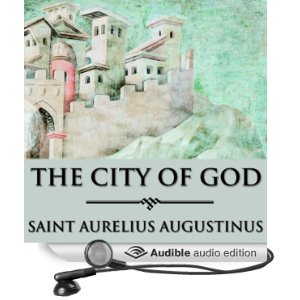
Also on my commutes, especially in the evenings, I’m listening to an audiobook version of The City of God by St. Augustine. It’s a wonderful recording, not least of all because the reader is an older British man with a wise, witty, and kindly voice, who occasionally runs out of wind on Augustine’s longer rants, adding a touch of saintly exasperation to the reading.
The language and writing style are poetic and complex, but the book, thus far, is full of insight and contemporary relevance. For instance, after describing the folly and decline of Rome from many different angles, citing as evidence the descent of morality and the rise of materialism, celebrity, and indecent entertainment, St. Augustine ties the fall of the empire specifically to the fall of liberty and the rise of domination as the fundamental value of Rome.
This makes sense to me, then and now. Liberty recognizes the value of the individual; it can be defended, or in peaceful times, it can be content to live and let live. Domination, on the other hand, is aggressive and discontented by nature; it consolidates power and values the state. Augustine asks if a person might be considered more blessed who had modest wealth, sufficient resources for survival, and peace, compared to one who has untold riches and power and constant fear of war, assassination, or overthrow. So, too, a superpower? At what point did we aspire to be the greatest nation on earth, and what has that cost us?
* * * * *
In November of 1935, Ernest Hemingway wrote a commentary for Esquire magazine called “The Malady of Power: A Second Serious Letter.” Hemingway was a great observer of the nature of men, and of war, and he knew another great war was coming to Europe. He closed the piece with the following:
Whoever heads the nation will have a chance to be the greatest man in the world for a short time — and the nation can hold the sack once the excitement is over. For the next ten years we need a man without ambition, a man who hates war and knows that no good ever comes of it, and a man who has proved his beliefs by adhering to them. All candidates will need to be measured against these requirements.
What makes our previous two popes such powerful witnesses? Both were humble servants who led a flock of millions with steadfast conviction and the utmost humility — Blessed John Paul II, in his willingness to be diminished by illness and age on the world stage for the edification of the world, and Benedict XVI, in his willingness to diminish himself and exit that stage for good of the Universal Church. As we wait for white smoke, and the cry Habemus papem in Rome, I am longing for a Servant of the Servants of Liberty here at home.
*According to Wikipedia, our first president was originally addressed as, “His High Mightiness, the President of the United States and Protector of their Liberties,” but critics thought it “smacked of monarchy.”
Every year for the past five or so, Jodi and I and the kids have joined 30 or so families from St. Michael’s and St. Albert’s parishes at a camp near Upsala, Minnesota, called Camp Lebanon. The first year I didn’t want to go, a) because with a dining hall, water toys, and showers, it wasn’t really camping; b) because I was going to be surrounded by kids not my own; and c) because I didn’t feel like I knew enough people and wasn’t looking forward to being “on” all weekend.
All true observations…none of which had any impact on my actual enjoyment of the weekend. We’ve been going back ever since, and even organized it a couple of years.
No time to do a complete recap of the weekend, but here are the Top 10 Highlights:
10. Not My Job! I had hoped to be done with my work early on Friday so we could be on the road by 3 p.m. or so. Not even close, and when 4 p.m. rolled around and I was still packing, my blood pressure started to rise.
Then I remembered: We’re not running things this year. We can get up there any time before tomorrow, and it’s all good.
Turns out we made it in plenty of time for Friday evening activities — and with Lily this year, it’s a good thing we weren’t the organizers! Kudos to Sustaceks, Duerrs, and Fredricksons for a great weekend!
9. New Faces. We missed a number of dear friends who weren’t there…but there were so many new families, too, that you couldn’t help but make new connections. I met potential homebrewers, Axis and Allies enthusiasts, future KCs, and just all-around good guys — hopefully next year the old and the new will all show up, and then some!
8. Albany Invasion. Albany, Minnesota, is the last stop for food on the way to the camp. A gas station just off the freeway houses A&W, Subway, Godfather’s Pizza, Taco John’s, and Chester’s Fried Chicken counters under one roof — and Friday afternoon, it hosted nearly every family bound for Camp Lebanon in constant rotation. I’m sure the locals had to be wondering about the volume of strangers greeting each other with hugs and handshakes.
7. Has Anyone Seen… Once we settle in at camp, the kids are off and running with their friends. Jodi and I ate with grown-ups and Lily, and generally soaked up the weekend, only rousing ourselves occasionally to ask around, “Has anyone seen [CHILD’S NAME HERE]?” And we were hardly the only ones.
6. Holy Spirit at Work. More than once, someone stopped to share that the weekend itself, or something someone did or said, was just what they needed — that the Holy Spirit was at work last weekend. But the most striking example came on Sunday morning, when one of my own overextended children decided to disobey Jodi and run off to play with friends. I confronted the child and had a long talk about the responsibilities that come with being family — and I thought it sunk in. Only a few minutes later, a local seminarian, Paul, offered a scripture reflection in which he talked about how family is diminished when one person acts selfishly — and I looked over to see wide, staring, glassy eyes. I asked about it later, and was told, “I heard him and I was like, “Seriously?!” Wow.
5. Zip Line! I watched two grown men race over a wooded ravine, brazen in their talk but white in their knuckles. I watched our priest and seminarian zip through the tree tops — Father was pounding his chest; Paul was all smiles and thumbs up. But best of all, I watched Emma nervously strap up after watching the men, whimpering and sighing a bit under her breath; watched her set out across the ravine tentatively, and watched her slide back over, screaming and giggling, barely able to speak “That was awesome!” to the camera. She is the only Thorp to have done it so far. She deserves applause.
4. Dating Survey. A few friends began asking an unofficial survey question of the couples at camp: “Do you and your spouse go on dates?” Jodi said, “Not really.” I said, “Occasionally.” Then we both said, “Unless running errands or getting groceries alone together count.” The ruling came back: if we are specifically going together and leaving the kids behind, it counts. Oh, yes, we are still romantic!
3. Early Morning Run. Brendan rose at 6:45 a.m. on a Saturday to go running with a few of the guys from school — and a few girls. I rose a little after 7, and when I emerged from the bathhouse, they were coming the hill from the lake: four or five girls, graceful and light on their feet, and two clomping boys bringing up the rear. Turns out the girls were all cross-country runners, and the two wrestlers were the only boys motivated enough to get up that early. What motivated them to keep pace with the fleet-footed young ladies over two or three miles? I’m going with sheer stubborn pride…though at that age, who can guess? (For an alternative explanation, see the video below…)
2. Family Prayer. Family rosaries each night, and Saturday evening mass with sunbaked parents and waterlogged kids doing their best to be reverent. Families praying together with families. There’s nothing better, except…
1. Serenading Lily. Every year we listen to The White Stripes on the way to the camp. This year Lily was fussing until the guitars and drums kicked in, and, to a person, all four of her siblings began to sing to her.
Wish I could’ve recorded them doing it — leaning over her car seat, almost in harmony, and her grinning, gasping, laughing face. She’s pretty good-looking (for a girl).




 In November of 1935, Ernest Hemingway wrote a commentary for Esquire magazine called “The Malady of Power: A Second Serious Letter.” Hemingway was a great observer of the nature of men, and of war, and he knew another great war was coming to Europe. He closed the piece with the following: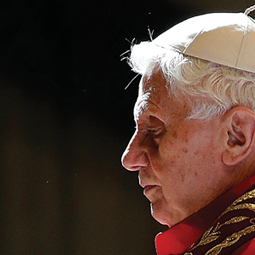
 Archangel Stomp