Servant of the Servants

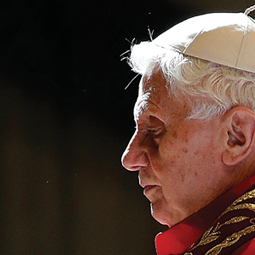
My daily commute has been a blessing of late: relatively smooth and expeditious, with just enough windshield time to pray a morning rosary, then listen, think, and free associate to my heart’s content. This morning’s mental ramble started as I got into the car and backed from the driveway, already reciting the Creed. I made my way slowly through our neighborhood, announcing my morning intentions as I went (the conclave to select the new pope first and foremost today) and turned toward the freeway. As I rumbled over the railroad tracks, I recalled it was Tuesday, and thus, the Sorrowful Mysteries. I thought of that humble title of the Holy Father: the Servant of the Servants of God. I thought of Pope Emeritus Benedict XVI, and Blessed John Paul the Great before him — each a suffering servant and an image of Christ. I thought of the college of cardinals contemplating, voting, perhaps praying that theirs was not the name called. Heavy is the head that wears the crown…

* * * * *

Last night on the way to Brendan’s wrestling banquet, Bren, Gabe, and I were discussing the presidency.

“Did you know,” said Gabe, “that calling the president ‘Mr. President’ isn’t something you have to do? It’s just what George Washington asked to be called, and now everyone else does it, but it’s not a rule or a law.* So a president could ask to be called whatever he wanted. Wouldn’t it be funny if the president said he wanted to be called King?”

“It would be even funnier if he wanted to be called King George,” said Bren.

“Did you know,” I said, “that people supposedly wanted George Washington to be king after the Revolution, but he refused? The story is that he didn’t want to win independence from one king just to install another.”

* * * * *
Also on my commutes, especially in the evenings, I’m listening to an audiobook version of The City of God by St. Augustine. It’s a wonderful recording, not least of all because the reader is an older British man with a wise, witty, and kindly voice, who occasionally runs out of wind on Augustine’s longer rants, adding a touch of saintly exasperation to the reading.

The language and writing style are poetic and complex, but the book, thus far, is full of insight and contemporary relevance. For instance, after describing the folly and decline of Rome from many different angles, citing as evidence the descent of morality and the rise of materialism, celebrity, and indecent entertainment, St. Augustine ties the fall of the empire specifically to the fall of liberty and the rise of domination as the fundamental value of Rome.

This makes sense to me, then and now. Liberty recognizes the value of the individual; it can be defended, or in peaceful times, it can be content to live and let live. Domination, on the other hand, is aggressive and discontented by nature; it consolidates power and values the state. Augustine asks if a person might be considered more blessed who had modest wealth, sufficient resources for survival, and peace, compared to one who has untold riches and power and constant fear of war, assassination, or overthrow. So, too, a superpower? At what point did we aspire to be the greatest nation on earth, and what has that cost us?

* * * * *

86884-hemingwayIn November of 1935, Ernest Hemingway wrote a commentary for Esquire magazine called “The Malady of Power: A Second Serious Letter.” Hemingway was a great observer of the nature of men, and of war, and he knew another great war was coming to Europe. He closed the piece with the following:

Whoever heads the nation will have a chance to be the greatest man in the world for a short time — and the nation can hold the sack once the excitement is over. For the next ten years we need a man without ambition, a man who hates war and knows that no good ever comes of it, and a man who has proved his beliefs by adhering to them. All candidates will need to be measured against these requirements.

What makes our previous two popes such powerful witnesses? Both were humble servants who led a flock of millions with steadfast conviction and the utmost humility — Blessed John Paul II, in his willingness to be diminished by illness and age on the world stage for the edification of the world, and Benedict XVI, in his willingness to diminish himself and exit that stage for good of the Universal Church. As we wait for white smoke, and the cry Habemus papem in Rome, I am longing for a Servant of the Servants of Liberty here at home.
*According to Wikipedia, our first president was originally addressed as, “His High Mightiness, the President of the United States and Protector of their Liberties,” but critics thought it “smacked of monarchy.”

 

Top 10 Highlights Of Camp Lebanon 2012

http://www.facebook.com/v/3953178462416
Rose’s zip line ride: see number 5, below…

Every year for the past five or so, Jodi and I and the kids have joined 30 or so families from St. Michael’s and St. Albert’s parishes at a camp near Upsala, Minnesota, called Camp Lebanon. The first year I didn’t want to go, a) because with a dining hall, water toys, and showers, it wasn’t really camping; b) because I was going to be surrounded by kids not my own; and c) because I didn’t feel like I knew enough people and wasn’t looking forward to being “on” all weekend.

All true observations…none of which had any impact on my actual enjoyment of the weekend. We’ve been going back ever since, and even organized it a couple of years.

No time to do a complete recap of the weekend, but here are the Top 10 Highlights:

10. Not My Job! I had hoped to be done with my work early on Friday so we could be on the road by 3 p.m. or so. Not even close, and when 4 p.m. rolled around and I was still packing, my blood pressure started to rise.

Then I remembered: We’re not running things this year. We can get up there any time before tomorrow, and it’s all good.

Turns out we made it in plenty of time for Friday evening activities — and with Lily this year, it’s a good thing we weren’t the organizers! Kudos to Sustaceks, Duerrs, and Fredricksons for a great weekend!

9. New Faces. We missed a number of dear friends who weren’t there…but there were so many new families, too, that you couldn’t help but make new connections. I met potential homebrewers, Axis and Allies enthusiasts, future KCs, and just all-around good guys — hopefully next year the old and the new will all show up, and then some!

8. Albany Invasion. Albany, Minnesota, is the last stop for food on the way to the camp. A gas station just off the freeway houses A&W, Subway, Godfather’s Pizza, Taco John’s, and Chester’s Fried Chicken counters under one roof — and Friday afternoon, it hosted nearly every family bound for Camp Lebanon in constant rotation. I’m sure the locals had to be wondering about the volume of strangers greeting each other with hugs and handshakes.

7. Has Anyone Seen… Once we settle in at camp, the kids are off and running with their friends. Jodi and I ate with grown-ups and Lily, and generally soaked up the weekend, only rousing ourselves occasionally to ask around, “Has anyone seen [CHILD’S NAME HERE]?” And we were hardly the only ones.

6. Holy Spirit at Work. More than once, someone stopped to share that the weekend itself, or something someone did or said, was just what they needed — that the Holy Spirit was at work last weekend. But the most striking example came on Sunday morning, when one of my own overextended children decided to disobey Jodi and run off to play with friends. I confronted the child and had a long talk about the responsibilities that come with being family — and I thought it sunk in. Only a few minutes later, a local seminarian, Paul, offered a scripture reflection in which he talked about how family is diminished when one person acts selfishly — and I looked over to see wide, staring, glassy eyes. I asked about it later, and was told, “I heard him and I was like, “Seriously?!” Wow.

5. Zip Line! I watched two grown men race over a wooded ravine, brazen in their talk but white in their knuckles. I watched our priest and seminarian zip through the tree tops — Father was pounding his chest; Paul was all smiles and thumbs up. But best of all, I watched Emma nervously strap up after watching the men, whimpering and sighing a bit under her breath; watched her set out across the ravine tentatively, and watched her slide back over, screaming and giggling, barely able to speak “That was awesome!” to the camera. She is the only Thorp to have done it so far. She deserves applause.

4. Dating Survey. A few friends began asking an unofficial survey question of the couples at camp: “Do you and your spouse go on dates?” Jodi said, “Not really.” I said, “Occasionally.” Then we both said, “Unless running errands or getting groceries alone together count.” The ruling came back: if we are specifically going together and leaving the kids behind, it counts. Oh, yes, we are still romantic!

3. Early Morning Run. Brendan rose at 6:45 a.m. on a Saturday to go running with a few of the guys from school — and a few girls. I rose a little after 7, and when I emerged from the bathhouse, they were coming the hill from the lake: four or five girls, graceful and light on their feet, and two clomping boys bringing up the rear. Turns out the girls were all cross-country runners, and the two wrestlers were the only boys motivated enough to get up that early. What motivated them to keep pace with the fleet-footed young ladies over two or three miles? I’m going with sheer stubborn pride…though at that age, who can guess? (For an alternative explanation, see the video below…)

2. Family Prayer. Family rosaries each night, and Saturday evening mass with sunbaked parents and waterlogged kids doing their best to be reverent. Families praying together with families. There’s nothing better, except…

1. Serenading Lily. Every year we listen to The White Stripes on the way to the camp. This year Lily was fussing until the guitars and drums kicked in, and, to a person, all four of her siblings began to sing to her.

Wish I could’ve recorded them doing it — leaning over her car seat, almost in harmony, and her grinning, gasping, laughing face. She’s pretty good-looking (for a girl).

Book Break: What We Can’t Not Know

You should want to read this book based on the perplexing title alone. J. Budziszewski’s What We Can’t Not Know is an unusual philosophy book: it presents an overview of the Natural Law, its classical roots and Catholic application, in an easy-to-read, relatively-easy-to-understand, often humorous, sometimes disturbing, and always thought-provoking volume. It is also something I never thought I’d see after two college courses in philosophy: a page-turner.

I say that with with a caveat: I’m the type of guy who likes a cohesive worldview, in which the foundation and principles at the root are applicable at the terminal twig of every branch. I believe in objective morality and universal truth — and I believe that, with effort, we can come close to discerning these things. More than that, I want to discern them — and so, it seems, does Budziszewski. In this respect I was a sympathetic reader solidly in the book’s target audience.

The book is packed with insight, and is an easier read in many ways than the shorter C.S. Lewis volume The Abolition of Man. I recommend it wholeheartedly for anyone interested in the ideas of objective truth, universal morality, or the philosophical underpinnings of Catholic teaching. It articulates the ways in which we can discern that there is a Natural Law and uncover what the Natural Law is, and it also suggests practical application of its principles, which is much needed in the materialistic, relativistic, self-consciously diverse, “it’s all good” society of today.

No Greater Gift

Amen, amen, I say to you, when you were younger, you used to dress yourself and go where you wanted; but when you grow old, you will stretch out your hands, and someone else will dress you and lead you where you do not want to go.John 21:18

Some years ago I brought our son Brendan, then in grade school, to work with me for the day. Among other activities that day, he drew a picture for a dear friend of my own dear friend Patty — a young man who had recently enrolled at United States Military Academy My son had already been thinking for some time about a career in the military, and it excited him to know that there were colleges specifically geared toward such things. He sent the drawing and his best wishes to West Point, and began to shape his own dreams around the U.S. Naval Academy and the Marine Corps.

Over Memorial Day weekend, Patty was herself at West Point for her young friend’s graduation and commissioning. She shared photos with us from throughout the weekend, and the boy who left home four years ago has become very much a fine young man, fit and confident, dashing in his India whites. Brendan was impressed.

I remember once sharing with a different colleague that Brendan hoped to be a Marine one day. His response? “Well, at least you have a few years to talk him out of that…”

As Brendan prepares to enter high school in the fall, I think more frequently about the possibility that he could be called to combat one day, and it frightens me. But someone has to do this job, and if he is called, who am I to refuse to let him answer, when I have benefited so much from the lives of those who have gone before?

* * * * *

Around the same time that Brendan was drawing that picture, Gabe began seriously contemplating the priesthood. Admittedly, at age seven or so, seriously contemplating may be defined rather loosely — but  today he is approaching his twelfth birthday and has not wavered. This spring, recognizing that I hadn’t spent much one-on-one time with Gabe in recent months, I offered a day in which we could do whatever he wanted. As a result, we found ourselves at Sunday morning Mass at St. John Vianney Seminary in St. Paul, at the end of which Fr. Michael, the rector and our former pastor, introduced him as “a future priest, Father Gabriel.” We were greeted by a dozen or so seminarians afterward, including a couple from our neck of the woods, then we went to brunch with Father.

During brunch Father and I both made an effort to include Gabe in the conversation, but several times the discussion turned to more “grown-up” topics: men’s evangelization, stewardship, work and home life. I apologized to Gabe on the way home for not doing a better job of steering the conversation to include him.

“It’s not a problem,” he said. “I learn a lot listening to you guys talk.”

I see him, hear him, in these situations, and think he’s serious about this vocation. Father thinks he is, too. I’ve written about this before … and a friend characterized the religious life, in her view, as a sort of “performance art,” which I took to mean richly symbolic and interesting, but ultimately strange, impractical, and somewhat meaningless. Needless to say, I disagree.

* * * * *

A year or more ago, an an older man I know learned that these two sons of mine aspired to the military and the priesthood. “How old are they?” he asked, and when I answered, said, “That says something, that they are thinking seriously about service at such an early age. You must be proud.”

I am. And frightened. For both of them.

Then yesterday a mutual friend of Patty’s and mine stopped me in a stairwell at the university to ask how the long weekend was. “And what’d you think of Patty’s photos?” she asked.

I told her they hit me hard, in a way I hadn’t expected. Those photos, coupled with Memorial Day and the knowledge that two priest-friends of mine are being reassigned to new parishes (our associate pastor is one; Prairie Father is the other), made me think not only about service and sacrifice, which are hard but noble things, but also about obedience, which for Americans, it seems, and men in particular, can be tougher to stomach.

Both of my older sons currently feel called to a life I don’t believe I could lead — a life of obedience in which the very clothing they wear will publicly signify that they are subject to a higher authority and held to a higher standard. Should they continue on their respective paths, they will be scrutinized and criticized; assigned relentless, sometimes monotonous, work; bear impossible burdens; and pour out their life-blood, figuratively and possibly literally, for people who may or may not appreciate or acknowledge their sacrifice.

This alone would be too much to wrap my air-conditioned, pillow-padded mind around…and then I think of the confidence our leaders inspire in me. Am I confident that my oldest son won’t be sent marching into Hell for political gain? I am not. Am I confident my middle son will be able to shepherd his flock without getting crosswise of a government and a society who has little use for Truth and even less for faith? Not at all.

And they will be expected to serve, to sacrifice, to obey, regardless. I don’t know if I would be strong enough to do that. I pray to God that my sons are better men than their father.

* * * * *

In addition to observing Memorial Day, we’ve also celebrated the Feasts of the Ascension and Pentecost — Christ’s Great Commission before returning to His heavenly Father and the descent of the Holy Spirit so the disciples could carry out that commission. On Ascension Sunday, our deacon spoke in terms of graduation to describe the bittersweetness of Jesus’s departure, and it makes sense: Christ Himself was “graduating” from his earthly ministry to assume his true heavenly kingship, but so, too, were the Apostles about to leave behind what they knew (or thought they knew) before to answer a deeper call and become something greater still — a new Body of Christ on Earth.

Then on Pentecost, our associate pastor related the story of his ordination as a transitional deacon (on the way to priestly ordination) — how, in our archdiocese, those seminarians being ordained begin in the pews seated next to their families, then at a certain point, are called forward before the altar and “never return again.” They are no longer the men they once were, but are public persons and servants of Christ.

Reflecting on his words brought to mind a Scripture passage that has often troubled me:

And another said, “I will follow you, Lord, but first let me say farewell to my family at home.” [To him] Jesus said, “No one who sets a hand to the plow and looks to what was left behind is fit for the kingdom of God.” Luke 9:61-62

In the past this passage has felt almost heartless, but in the context of Father’s story, it began to make sense to me.

Once we are called to something — a vocation, an act of love, and opportunity in life to do real good and to do it well, we should act immediately and rejoice in doing so. As believers, in particular, we should have confidence that God is working for the good of all, and that not one of His sheep will be lost or wasted. In this light, my sons should rush headlong into the unknown, provided they are heeding the Master’s call.

The road that stretches before the feet of a man is a challenge to his heart long before it tests the strength of his legs. Our destiny is to run to the edge of the world and beyond, off into the darkness: sure for all our blindness, secure for all our helplessness, strong for all our weakness, gaily in love for all the pressure on our hearts. — My Way of Life: The Summa Simplified

Go get ’em, boys.

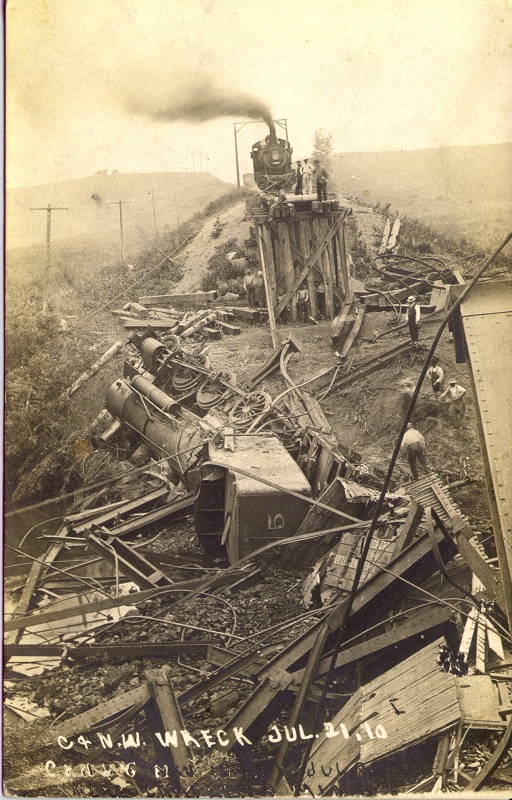
Lenten Trainwreck, and What May Be Learned From It

Courtesy of the History of Lamberton, Minnesota, web site
Teach us, good Lord
To serve thee as thou deservest,
To give and not count the cost,
To toil and not seek rest,
To labor and not ask for any reward
Save that of knowing that we try to do your will.
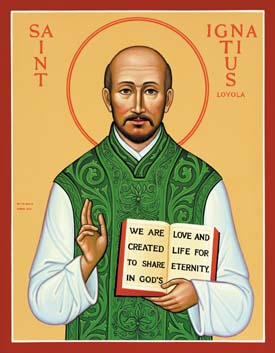
– St. Ignatius of Loyola

We’re nearly three weeks into Lent and thus far it’s been a train wreck of sorts. On one hand, a couple of daily spiritual investments I’m promised to make I have successfully carried through with thus far. On the other hand, every sacrifice I committed to for this Lenten journey I have failed to observe at least once. I suppose it could be construed as a point in my favor that I chose to “give up” aspects of my day and diet that have apparently become compulsive – however, it’s pretty sad that it took Lent to make me realize how habitual my eating and technology usage is, and even sadder that my newfound awareness has yet to translate into consistent action.

On top of these things, in the back of my mind I hear a soft but constant chant: almsgiving, almsgiving, almsgiving… Have I neglected this aspect of Lent? Just posing the question suggests that I have.

Last night I went to the church for brief Knights of Columbus project meeting. While waiting for my collaborator, I listened in as Fr. Meyers answered questions from the Monday night adult catechesis small groups. The first had to do with the icons of the Apostles in our sanctuary, and specifically, the meaning of the positioning and gestures of their hands. Father offered a brief overview of icons and assured everyone that the gestures do have meaning – then, spying me, he said, “In fact, Jim Thorp, who is standing just over there, is being trained to give tours of the church…”

I began to retreat down the stairs, only half in jest.

Jodi and I are a welcome couple, greeting families who are new to our parish at a regular lunch. We are supposed to offer them a tour of the church, but since we’ve never been on one ourselves, I decided to schedule one with a local deacon who knows the art and symbolism in our church very well. Word got out, and now, it appears, I have become a tour guide.

I am overextended, as always – but during Adoration last night, I identified something else in me that needs deeper reflection this Lent: I have become an Unjoyful Giver.

Consider:

  • Each day I have a meeting or evening activities related to the Church or the Knights of Columbus, I have a knot in my stomach all day.
  • I was impatient to learn whether Confirmation classes were cancelled because of the snow last week.
  • I dread running into people who need volunteers, because I dread being asked.
  • I have begged out of a few new commitments lately (after initially saying yes) because I couldn’t give them enough attention.

You may look at that list and say, “Well, maybe you’ve got enough on your plate – you help out plenty, plus you’ve got four involved kids and a new baby. Cut yourself some slack!” And I would be grateful for the vote of confidence, except for the following facts:

  • I am the founding member of our new Catholic brew club, the Bottomless Pint Brewers, and have joined another men’s group.
  • I am considering other new commitments, in part because they involve the possibility of modest compensation.
  • And upon further reflection, I did not mind the idea of conducting periodic church tours.

The truth is, I want to do what I want to do. I’ll make time for the stuff I enjoy, and the rest I find myself trying to avoid. Also, I pay only lip service to discernment. Aside from the rare weak moment when someone catches me totally off-guard, when I’m asked to volunteer, I generally tell people I’ll prayerfully consider it. In my case, “I’ll pray on it” usually means “I’ll pray around it.” Last night I came to realize that saying a prayer and then considering is not the same as prayerfully considering. I have not been asking what God wants me to do – how He wants me deployed. As a result, I’ve said Yes to things I shouldn’t have, and have become bitter about things I want to do but don’t have time to do well. And I’ve probably declined opportunities I should have leapt at, as well.

Indeed, this is part of the problem with my Lent thus far – I did not delve deeply into what God wanted from me, or think through what it would require. I ran headlong into Lent without looking, without prayerfully considering, without sufficiently preparing. I was looking back over my shoulder to see who was in pursuit, and smacked headlong into Ash Wednesday. I’m still recovering, I think.

Right now, I can think of no worse feeling than doing a half-assed job for God – and the latest edition of “Columbia” magazine gave me some insight into why. See, God doesn’t just love us – He isn’t merely a love-ing God. He is love – all love – it’s his very nature and being. Now, think of how you felt as a child (or even now) when you disappoint someone. If you’re like me, your agony over letting them down is often in direct proportion to how much you know that they love you. For example, if a stranger says he is disappointed in you, that will have less of an effect than if a teacher says it, and the teacher will have less of an effect than a dear parent, grandparent, aunt or uncle.

Now multiply that times a billion.

When you contemplate God as limitless, life-giving love, you realize there can be only one response in return: joyful reciprocation. And then, if you’re me, you realize how far short of that ideal you fall every day, not only in the community and at church, but especially at home, with those you try to love, and who do their level best to love you back.

It is my hope that I can make myself slow down and ask, in the solitude of my own heart, where I am supposed to be, and that I can be still and silent enough to hear the reply. Genuinely prayerful consideration of my strengths and weaknesses, as well as where God wants me to be, should lead me in a new direction, in which I become a Joyful Giver, glad to serve, even when it’s difficult, because I know I’m doing the will of the One who sent me. To that end, I hope to make the prayer at the top of this post a daily reminder. Amen?