Book Break: What We Can’t Not Know

You should want to read this book based on the perplexing title alone. J. Budziszewski’s What We Can’t Not Know is an unusual philosophy book: it presents an overview of the Natural Law, its classical roots and Catholic application, in an easy-to-read, relatively-easy-to-understand, often humorous, sometimes disturbing, and always thought-provoking volume. It is also something I never thought I’d see after two college courses in philosophy: a page-turner.

I say that with with a caveat: I’m the type of guy who likes a cohesive worldview, in which the foundation and principles at the root are applicable at the terminal twig of every branch. I believe in objective morality and universal truth — and I believe that, with effort, we can come close to discerning these things. More than that, I want to discern them — and so, it seems, does Budziszewski. In this respect I was a sympathetic reader solidly in the book’s target audience.

The book is packed with insight, and is an easier read in many ways than the shorter C.S. Lewis volume The Abolition of Man. I recommend it wholeheartedly for anyone interested in the ideas of objective truth, universal morality, or the philosophical underpinnings of Catholic teaching. It articulates the ways in which we can discern that there is a Natural Law and uncover what the Natural Law is, and it also suggests practical application of its principles, which is much needed in the materialistic, relativistic, self-consciously diverse, “it’s all good” society of today.

No Greater Gift

Amen, amen, I say to you, when you were younger, you used to dress yourself and go where you wanted; but when you grow old, you will stretch out your hands, and someone else will dress you and lead you where you do not want to go.John 21:18

Some years ago I brought our son Brendan, then in grade school, to work with me for the day. Among other activities that day, he drew a picture for a dear friend of my own dear friend Patty — a young man who had recently enrolled at United States Military Academy My son had already been thinking for some time about a career in the military, and it excited him to know that there were colleges specifically geared toward such things. He sent the drawing and his best wishes to West Point, and began to shape his own dreams around the U.S. Naval Academy and the Marine Corps.

Over Memorial Day weekend, Patty was herself at West Point for her young friend’s graduation and commissioning. She shared photos with us from throughout the weekend, and the boy who left home four years ago has become very much a fine young man, fit and confident, dashing in his India whites. Brendan was impressed.

I remember once sharing with a different colleague that Brendan hoped to be a Marine one day. His response? “Well, at least you have a few years to talk him out of that…”

As Brendan prepares to enter high school in the fall, I think more frequently about the possibility that he could be called to combat one day, and it frightens me. But someone has to do this job, and if he is called, who am I to refuse to let him answer, when I have benefited so much from the lives of those who have gone before?

* * * * *

Around the same time that Brendan was drawing that picture, Gabe began seriously contemplating the priesthood. Admittedly, at age seven or so, seriously contemplating may be defined rather loosely — but  today he is approaching his twelfth birthday and has not wavered. This spring, recognizing that I hadn’t spent much one-on-one time with Gabe in recent months, I offered a day in which we could do whatever he wanted. As a result, we found ourselves at Sunday morning Mass at St. John Vianney Seminary in St. Paul, at the end of which Fr. Michael, the rector and our former pastor, introduced him as “a future priest, Father Gabriel.” We were greeted by a dozen or so seminarians afterward, including a couple from our neck of the woods, then we went to brunch with Father.

During brunch Father and I both made an effort to include Gabe in the conversation, but several times the discussion turned to more “grown-up” topics: men’s evangelization, stewardship, work and home life. I apologized to Gabe on the way home for not doing a better job of steering the conversation to include him.

“It’s not a problem,” he said. “I learn a lot listening to you guys talk.”

I see him, hear him, in these situations, and think he’s serious about this vocation. Father thinks he is, too. I’ve written about this before … and a friend characterized the religious life, in her view, as a sort of “performance art,” which I took to mean richly symbolic and interesting, but ultimately strange, impractical, and somewhat meaningless. Needless to say, I disagree.

* * * * *

A year or more ago, an an older man I know learned that these two sons of mine aspired to the military and the priesthood. “How old are they?” he asked, and when I answered, said, “That says something, that they are thinking seriously about service at such an early age. You must be proud.”

I am. And frightened. For both of them.

Then yesterday a mutual friend of Patty’s and mine stopped me in a stairwell at the university to ask how the long weekend was. “And what’d you think of Patty’s photos?” she asked.

I told her they hit me hard, in a way I hadn’t expected. Those photos, coupled with Memorial Day and the knowledge that two priest-friends of mine are being reassigned to new parishes (our associate pastor is one; Prairie Father is the other), made me think not only about service and sacrifice, which are hard but noble things, but also about obedience, which for Americans, it seems, and men in particular, can be tougher to stomach.

Both of my older sons currently feel called to a life I don’t believe I could lead — a life of obedience in which the very clothing they wear will publicly signify that they are subject to a higher authority and held to a higher standard. Should they continue on their respective paths, they will be scrutinized and criticized; assigned relentless, sometimes monotonous, work; bear impossible burdens; and pour out their life-blood, figuratively and possibly literally, for people who may or may not appreciate or acknowledge their sacrifice.

This alone would be too much to wrap my air-conditioned, pillow-padded mind around…and then I think of the confidence our leaders inspire in me. Am I confident that my oldest son won’t be sent marching into Hell for political gain? I am not. Am I confident my middle son will be able to shepherd his flock without getting crosswise of a government and a society who has little use for Truth and even less for faith? Not at all.

And they will be expected to serve, to sacrifice, to obey, regardless. I don’t know if I would be strong enough to do that. I pray to God that my sons are better men than their father.

* * * * *

In addition to observing Memorial Day, we’ve also celebrated the Feasts of the Ascension and Pentecost — Christ’s Great Commission before returning to His heavenly Father and the descent of the Holy Spirit so the disciples could carry out that commission. On Ascension Sunday, our deacon spoke in terms of graduation to describe the bittersweetness of Jesus’s departure, and it makes sense: Christ Himself was “graduating” from his earthly ministry to assume his true heavenly kingship, but so, too, were the Apostles about to leave behind what they knew (or thought they knew) before to answer a deeper call and become something greater still — a new Body of Christ on Earth.

Then on Pentecost, our associate pastor related the story of his ordination as a transitional deacon (on the way to priestly ordination) — how, in our archdiocese, those seminarians being ordained begin in the pews seated next to their families, then at a certain point, are called forward before the altar and “never return again.” They are no longer the men they once were, but are public persons and servants of Christ.

Reflecting on his words brought to mind a Scripture passage that has often troubled me:

And another said, “I will follow you, Lord, but first let me say farewell to my family at home.” [To him] Jesus said, “No one who sets a hand to the plow and looks to what was left behind is fit for the kingdom of God.” Luke 9:61-62

In the past this passage has felt almost heartless, but in the context of Father’s story, it began to make sense to me.

Once we are called to something — a vocation, an act of love, and opportunity in life to do real good and to do it well, we should act immediately and rejoice in doing so. As believers, in particular, we should have confidence that God is working for the good of all, and that not one of His sheep will be lost or wasted. In this light, my sons should rush headlong into the unknown, provided they are heeding the Master’s call.

The road that stretches before the feet of a man is a challenge to his heart long before it tests the strength of his legs. Our destiny is to run to the edge of the world and beyond, off into the darkness: sure for all our blindness, secure for all our helplessness, strong for all our weakness, gaily in love for all the pressure on our hearts. — My Way of Life: The Summa Simplified

Go get ’em, boys.

Lenten Trainwreck, and What May Be Learned From It

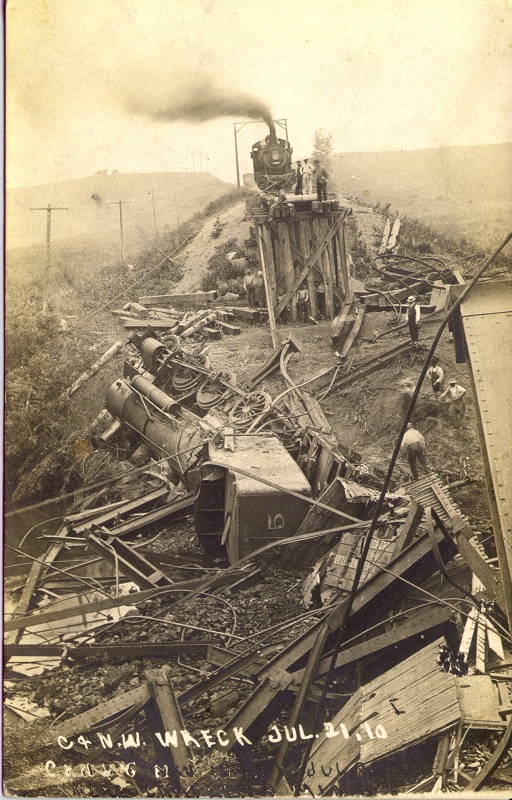
Courtesy of the History of Lamberton, Minnesota, web site
Teach us, good Lord
To serve thee as thou deservest,
To give and not count the cost,
To toil and not seek rest,
To labor and not ask for any reward
Save that of knowing that we try to do your will.
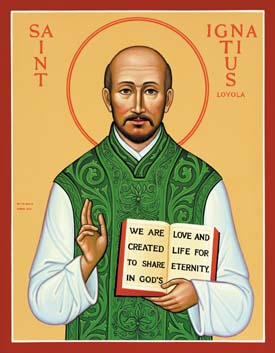
– St. Ignatius of Loyola

We’re nearly three weeks into Lent and thus far it’s been a train wreck of sorts. On one hand, a couple of daily spiritual investments I’m promised to make I have successfully carried through with thus far. On the other hand, every sacrifice I committed to for this Lenten journey I have failed to observe at least once. I suppose it could be construed as a point in my favor that I chose to “give up” aspects of my day and diet that have apparently become compulsive – however, it’s pretty sad that it took Lent to make me realize how habitual my eating and technology usage is, and even sadder that my newfound awareness has yet to translate into consistent action.

On top of these things, in the back of my mind I hear a soft but constant chant: almsgiving, almsgiving, almsgiving… Have I neglected this aspect of Lent? Just posing the question suggests that I have.

Last night I went to the church for brief Knights of Columbus project meeting. While waiting for my collaborator, I listened in as Fr. Meyers answered questions from the Monday night adult catechesis small groups. The first had to do with the icons of the Apostles in our sanctuary, and specifically, the meaning of the positioning and gestures of their hands. Father offered a brief overview of icons and assured everyone that the gestures do have meaning – then, spying me, he said, “In fact, Jim Thorp, who is standing just over there, is being trained to give tours of the church…”

I began to retreat down the stairs, only half in jest.

Jodi and I are a welcome couple, greeting families who are new to our parish at a regular lunch. We are supposed to offer them a tour of the church, but since we’ve never been on one ourselves, I decided to schedule one with a local deacon who knows the art and symbolism in our church very well. Word got out, and now, it appears, I have become a tour guide.

I am overextended, as always – but during Adoration last night, I identified something else in me that needs deeper reflection this Lent: I have become an Unjoyful Giver.

Consider:

  • Each day I have a meeting or evening activities related to the Church or the Knights of Columbus, I have a knot in my stomach all day.
  • I was impatient to learn whether Confirmation classes were cancelled because of the snow last week.
  • I dread running into people who need volunteers, because I dread being asked.
  • I have begged out of a few new commitments lately (after initially saying yes) because I couldn’t give them enough attention.

You may look at that list and say, “Well, maybe you’ve got enough on your plate – you help out plenty, plus you’ve got four involved kids and a new baby. Cut yourself some slack!” And I would be grateful for the vote of confidence, except for the following facts:

  • I am the founding member of our new Catholic brew club, the Bottomless Pint Brewers, and have joined another men’s group.
  • I am considering other new commitments, in part because they involve the possibility of modest compensation.
  • And upon further reflection, I did not mind the idea of conducting periodic church tours.

The truth is, I want to do what I want to do. I’ll make time for the stuff I enjoy, and the rest I find myself trying to avoid. Also, I pay only lip service to discernment. Aside from the rare weak moment when someone catches me totally off-guard, when I’m asked to volunteer, I generally tell people I’ll prayerfully consider it. In my case, “I’ll pray on it” usually means “I’ll pray around it.” Last night I came to realize that saying a prayer and then considering is not the same as prayerfully considering. I have not been asking what God wants me to do – how He wants me deployed. As a result, I’ve said Yes to things I shouldn’t have, and have become bitter about things I want to do but don’t have time to do well. And I’ve probably declined opportunities I should have leapt at, as well.

Indeed, this is part of the problem with my Lent thus far – I did not delve deeply into what God wanted from me, or think through what it would require. I ran headlong into Lent without looking, without prayerfully considering, without sufficiently preparing. I was looking back over my shoulder to see who was in pursuit, and smacked headlong into Ash Wednesday. I’m still recovering, I think.

Right now, I can think of no worse feeling than doing a half-assed job for God – and the latest edition of “Columbia” magazine gave me some insight into why. See, God doesn’t just love us – He isn’t merely a love-ing God. He is love – all love – it’s his very nature and being. Now, think of how you felt as a child (or even now) when you disappoint someone. If you’re like me, your agony over letting them down is often in direct proportion to how much you know that they love you. For example, if a stranger says he is disappointed in you, that will have less of an effect than if a teacher says it, and the teacher will have less of an effect than a dear parent, grandparent, aunt or uncle.

Now multiply that times a billion.

When you contemplate God as limitless, life-giving love, you realize there can be only one response in return: joyful reciprocation. And then, if you’re me, you realize how far short of that ideal you fall every day, not only in the community and at church, but especially at home, with those you try to love, and who do their level best to love you back.

It is my hope that I can make myself slow down and ask, in the solitude of my own heart, where I am supposed to be, and that I can be still and silent enough to hear the reply. Genuinely prayerful consideration of my strengths and weaknesses, as well as where God wants me to be, should lead me in a new direction, in which I become a Joyful Giver, glad to serve, even when it’s difficult, because I know I’m doing the will of the One who sent me. To that end, I hope to make the prayer at the top of this post a daily reminder. Amen?

Half-Cocked, or The Trouble With Too Many Views

Twice in the past week I have forced myself to not write. This has been much to my discomfort, for two reasons: first, because a full 97 percent of the time, I am in the mode of forcing myself to write, which makes not doing so when I actually desire to quite irritating — like an itch you can’t scratch — and second, because in both cases the topic was near to my faith and dear to my heart.

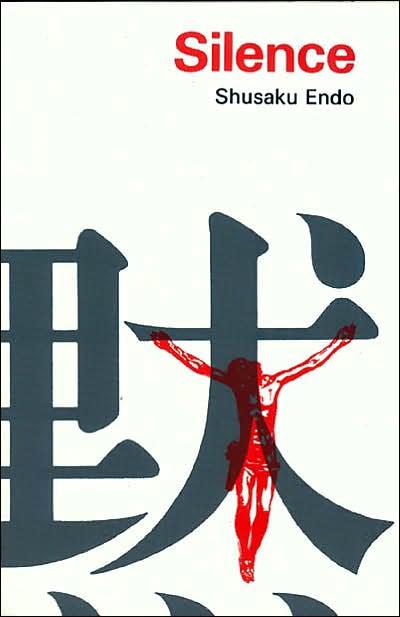
In the first instance, I had just finished a thought-provoking novel and wanted desperately to blog about it. The book, Shusako Endo’s Silence, was cautiously recommended to me by my friend Fr. Tyler as a great book, but dark and terribly sad. He was right, and as I finished, I wanted immediately to engage someone — anyone other than myself — on what it all meant.

The book is a relatively brief account of a Portuguese priest who travels secretly to feudal Japan during a time of intense persecution of Christians to discover the truth of rumors that his mentor, another Catholic priest-turned-missionary, has apostatized, or renounced, his faith and vocation. In broad terms, it deals primarily with the younger priest’s own thoughts about his priestly vocation, the poor Christians around him, the very real possibility of capture and torture, dreams of a glorious martyrdom, the brutal reality around him, and his own weaknesses.

I’m being purposefully vague. The final chapters cannot be revealed without diminishing the power of the book and straying into areas of faith of which I am ignorant, so I will go no further at this point. Suffice it to say, these final chapters are what threw me into a tailspin — what made want to talk first and think later, and what made it impossible for me to do so in good conscience. Ordinarily, I write quick, from-the-gut reviews shortly after completing a book, while it’s still fresh. But in this case, there was simply nothing I could say about the book that would not a) show my own ignorance and potentially stumble into error about our Catholic faith, or worse, drive someone else to error; b) spoil the story in order to get answers (Fr. Tyler!) and peace of mind; or c) both.

In the days since, I have thought a great deal about the book, and have regained my footing — though I still hope to discuss it in greater depth with someone who has read it and is better formed in the faith than me. I have also had a brief exchange with Fr. Tyler via Facebook — I brought myself to say this much: “[I]t’s masterful at making you ‘hate the sin and not the sinner’…” Father replied: ” For Catholics, it is a book that should contain the warning, ‘Handle with Care’.”

My caution in neither recommending nor casually reviewing this book, it appears, was not ill founded.

The second instance of holding my proverbial tongue came this morning, when I noticed a blogger for the Chronicle of Higher Education holding forth on the Natural Law and the Catholic Church’s stance on contraception. (The blogger in question is not supportive, surprise, surprise.) As I read his post, I felt the blood rise in my cheeks, and my mind raised ahead, formulating the response I would write: witty, pointed, deftly picking at the holes I saw in his arguments until they were gaping and obvious even to his likeminded readers.

My first reality check was the sheer volume of work I had to do today; I simply didn’t have time — especially to engage someone I didn’t know, personally or professionally, in an environment that was likely to be full of hostiles who were unlikely to be persuaded by wit or wisdom (let alone my own writing).

I felt a momentary pang of guilt for not standing up and being heard, until I finished the piece and reflected on my formal knowledge of the Natural Law and Aquinas’s writings (relatively little). I don’t know what the blogger knows — I feel like his expertise is not deep — but going off half-cocked might leave my own weaknesses exposed, even to someone who’s knowledge is only slight deeper than my own. A poorly formed effort would make this “Defender of the Faith” a liability, easily dismantled and dismissed — and the Church, by association.

So I said a prayer and sat on my hands. For a half-hour or so, my heart actually hurt, so badly did I want to speak out. Then something else came to mind: a passage I read yesterday, ostensibly for work, but with strong ties to my faith, written in 1852 by Blessed John Henry Newman and published in the preface to The Idea of a University (the underlining is mine, for emphasis):

“This is the emblem of [boys’] minds; at first they have no principles laid down within them as a foundation for the intellect to build upon; they have no discriminating convictions, and no grasp of consequences. And therefore they talk at random, if they talk much, and cannot help being flippant, or what is emphatically called ‘young.’ They are mere dazzled by phenomena, instead of perceiving things as they are.

“It were well if none remained boys all their lives; but what more common than the sight of grown men, talking on political or moral or religious subjects, in that offhand, idle way, which we signify by the word unreal? ‘That they simply do not know what they are talking about’ is the spontaneous silent remark of any man of sense who hears them.”

Cardinal Newman goes on to talk about the importance of impressing “upon a boy’s mind the idea of science, method, order, principles, and system; of rule and exception, of richness and harmony.”

“Let him once gain this habit of method, of starting from fixed points, of making his ground good as he goes, of distinguishing what he knows from what he does not know, and I conceive he will be gradually initiated into the largest and truest philosophical views, and will feel nothing but impatience and disgust at the random theories and imposing sophistries and dashing paradoxes, which carry away half-formed and superficial intellects.”

Cardinal Newman’s words resonated with me as I re-read them this morning. Starting from fixed points and making your ground good as you go enables you to keep your feet even as the world spins around you. This is why, in both instances this week, I hesitated – I was (wisely, I think) looking to the placement of my feet.

Newman goes on:

“Such parti-coloured ingenuities are indeed one of the chief evils of the day, and men of real talent are not slow to minister to them. An intellectual man, as the world now conceives of him, is one who is full of ‘views’ on all subjects of philosophy, on all matters of the day. It is almost thought a disgrace not to have a view at a moment’s notice on any question from the Personal Advent to the Cholera or Mesmerism.”

Indeed. When was the last time you heard anyone in a suit answer a question with a simple I don’t know?

“This is owing in great measure to the necessities of periodical literature, now so much in request. Every quarter of the year, every month, every day, there must be a supply, for the gratification of the public, of new and luminous theories on the subject of religion, foreign politics, home politics, civil economy, finance, trade, agriculture, and the colonies. Slavery, the gold fields, German philosophy, the French Empire, wellington, Peel, Ireland, must all be practiced on, day after day, by what are called original thinkers. …[T]he journalist lies under the stern obligation of extemporizing his lucid views, leading ideas and nutshell truths for the breakfast table.”

Again, he wrote this in 1852 – well before the cable TV, the internet, and the 24-hour news cycle, let alone Twitter. If the constant fluidity of views was eroding the foundations of Newman’s society, how much more so today, when the weekly or daily trickle has become an incessant torrent? (And yes, I recognize the mild irony that I am posting this on a blog.)

Today, everyone’s got an opinion. We know too much, perhaps – and we often think we know more than we do. We think we know better – especially, better than those “ignorant” souls who came before us. Poor saps. Poor Cardinal Newman.

At Yale I learned to argue, among other things, and not always in an honest manner. Unfortunately, strength of conviction and principle often seem less valued than compromise or an ill-defined “progress.” Partly in concession, partly to defend my views, which in college were considered quaint and outdated, I learned to bait-and-switch. I learned to massage my meanings as I went. And when I’m angry or impatient, I still do these things today.

But these days I find I trust people more who stand firm, even if in opposition to me, and I hope to solidify my own stances. More importantly, I hope to cultivate in myself the tendency to “spout off” less and listen more, read more, think more first. Indeed, this week I’ve found Lenten inspiration not only from Newman, but also from the Book of James (in the daily readings for this whole week) and this post from Catholic Drinkie. This Lent and thereafter, I hope to better embody the proverb, often attributed to Lincoln: “Better to remain silent and be thought a fool than to speak and remove all doubt.”

Brew Club!

I’ve got about a dozen ideas for posts, but I’m way behind because a group of friends and I are working to start a Catholic homebrewing club. I’ve dummied up a new blog/web site for it at The Bottomless Pint and have thrown up a few beer-related posts from here (plus a couple of other little postings). Check it out now and again…it should be up and running soon!