Book Break: Saint John Paul the Great: His Five Loves

This past Christmas, our church gave to all parish and visiting families a copy of Jason Evert’s book Saint John Paul the Great: His Five Loves. I finished it this past week while recuperating, and it seems only right that on this tenth anniversary of the great man’s passing, I offer a brief review and encourage family and friends to read it.

First, let me encourage you to read the Foreword and Introduction, as both share personal anecdotes that share what sort of man Pope John Paul II was, The first half of the book, then, is a condensed and easy-to-follow biography of Karol Wojytla from his boyhood in Poland to his death at the Vatican at age 85. Some years ago, on a long solo road trip, I had the pleasure of listening to an audiobook version of George Weigel’s JPII biography, Witness to Hope — Evert’s book uses Weigel as one of several sources, and provides a great overview of the events and circumstances that shaped young Karol into Father Wotyla, then bishop, archbishop, pope, and saint. When I hear these stories, I can’t help but be proud to be (half) Polish and Catholic.

The second half of the the book uses additional sources and anecdotes to outlines the “five loves” that inspired and sustained Pope John Paul II in his priestly ministry and personal holiness:

  • Young People: From his earliest priesthood, he was drawn to youth and young adults, recognizing early on that they were the church’s best hope for the future, and that a watered-down morality would not satisfy their idealism and thirst for the challenge of living full and Godly lives.
  • Human Love: He saw, in human love and sexuality, and image of the Holy Trinity’s loving and life-giving communion, and went to extraordinary lengths to explain the unity of love, sex, marriage,and procreation and to elevate these topics to the realm of the sacred.
  • The Blessed Sacrament: His love for the Holy Eucharist and experience of the Real Presence of Jesus was so deep and strong that he spent hours in adoration and conversation with God, and more than once, located the Blessed Sacrament in hidden chapels and unknown places by his love for and sense of the Divine alone. 
  • The Virgin Mary: After the loss of his mother, and ultimately his brother and father as well, he embraced Mary, the Mother of God, as his own and never ceased his devotion to her guidance and intercession — he knew that she always leads us to Christ.
  • The Cross: He saw the dignity in the elderly, the disabled, the sick, and the suffering, and showed it to them, first by articulating the ways in which human suffering can be used to benefit others, and finally, by living his own painful and debilitating struggles in the public eye, serving the Church until his death.
Last I looked, we still had a few copies of this book in the Gathering Space. If you didn’t get one, let me know. It’s a quick and enlightening read that is almost sure to inspire!

What’s Keeping You?

It’s been nearly eight months since I left the University of Minnesota to work full-time for our parish. At some point in each of my previous jobs, I looked around and asked myself, “Jim, what are you doing here?” Thankfully that has yet to happen since I joined the church staff, but I don’t doubt that it could—work is work, after all.

Faith is work, too. It’s hard sometimes to believe in a good God with so much wickedness in the world, including within the Church. It’s hard to do the right thing when so few people agree on what the right thing is, even within the Church. It’s hard to pray or read or learn more about Jesus, to drag ourselves to Confession, or to haul the family to Mass each Sunday when so many Catholics just…don’t.

I’ll bet at least once you’ve sat in church, looked at Father and the people gathered around you, and asked, “What am I doing here?” It’s a worthwhile question to consider. According to data collected by the Pew Research Center, not only do most U.S. Catholics say they attend Mass once a month or less, but many disagree with the Church’s fundamental teachings regarding marriage, contraception, and the sanctity of life. Yet they persist in calling themselves Catholic. What’s keeping them in the Church?

Well, what’s keeping you? Is it habit or family tradition that brings us here week after week? That makes us seek the sacraments for our children? Is it a hope we hold out for the next generation, even though we may have lost it for our own? Is it a hollow ache in our chest that insists there must be something more to this life? Or is it the peace that radiates from altar, the tabernacle, the Eucharist—peace the world cannot provide?

This month the adults in our LIFT classes focused on the Mass and Holy Communion. We heard the deeply personal testimony of one of our youth ministry volunteers on her own struggles with her Catholic faith—and ultimately, on how she could never turn her back on the Real Presence of Christ in the Eucharist. Jesus said, “This is my body…This is the cup of my blood”—and so it is. Jesus is God, and God’s words are the very words of Creation. They bring about exactly what they say.

I’ve said more than once that if we as Catholics truly understood who was present in the tabernacle, nothing could keep us from Him. We would fill the pews to overflowing, bring family and friends to a personal encounter with Jesus. We would gladly sacrifice to spend time at His feet, listening to Him, learning from Him, serving Him.

And yet I don’t do these things. We don’t do these things.

The red lamp above the tabernacle signifies that He’s always there. What’s keeping you?

Blogger’s Note: This article appears in the Sunday, Jan. 25, church bulletin .

Book Break: Your Life In the Holy Spirit

Blogger’s Note: I reserve the right to re-read this book and revise this review as what I’ve read continues to sink in. I wanted to write about it soon, but honestly, my head is spinning!

If you’re like most Catholics, the concept of the Holy Trinity — three persons; one God — is one of the mysteries of our faith that is most difficult to grasp. The best explanation I’ve heard uses marriage to teach us about the Trinity, and vice versa:

  • God is a loving communion of persons.
  • Just as God the Father loves God the Son, and God the Son reflects that love back to God the Father, so to with husbands and wives: the two are united in love so completely they are inseparable and become one person.
  • Just as that shared love between husband and wife can become so powerful, life-giving, and tangible that it results in a new person and is given a name, the shared love between God the Father and God the Son is so abundant and powerfully life-giving that it takes on a life of its own and becomes a third person, God the Holy Spirit — who, in the Nicene Creed each Sunday, we call “the Lord, the Giver of Life.”

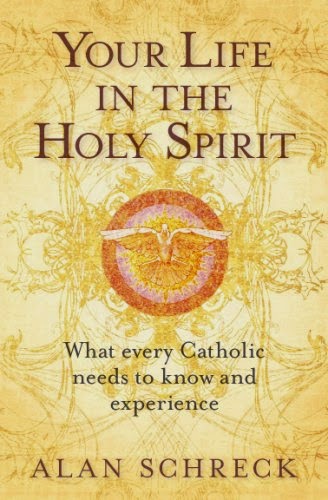
This explanation helps me to conceive of the Three-In-One, but the ability to relate to the Holy Spirit as a person remains elusive to me. I recently found up a copy of Alan Schreck’s Your Life in the Holy Spirit and decided to read it, in hopes that it would relieve this difficulty and help my devotion to the Holy Spirit as a person, rather than some mysterious force that helps me understand the Father and the Son. Schreck is a theology professor at Franciscan University of Steubenville and a contributor to Catholic Answers — so he seems like a good source on the topic.

Continue reading

LIFT Links: On Christmas, Mentoring, and Chastity

Blogger’s Note: In an effort to help friends find great Catholic content that supports them in the practice of their faith, periodically I’ll be sharing articles, websites, books, and other resources that may be of interest.

  • This Christmas, Strive to Look Good on Wood. It’s a bit poetic, but this reflection on the scandal of God coming down to be born in a feed trough and die on a cross is worth a slow read in a comfortable chair. Oh, how He loves us!
  • Sticks and Stones? Those Catholic Men reflect on how important it is for mentors (from fathers to teachers, coaches to catechists) to be thoughtful in their words. I know I’ve been one to snarl, “Man up!” from time to time myself…but how beautiful the words of God: This is my beloved son, in whom I am well pleased!
  • Chastity Is For Lovers. A columnist for the National Catholic Register reviews a book with an important message, not just for young adults, but for old married couples as well. I can speak to this from my own conversion after 11 years of marriage (most of them as a practicing Catholic): marriage does not do away with the need for chastity. Indeed it is essential to happiness in married life!

    Book Break, Feast of the Archangels Edition: Tobit’s Dog

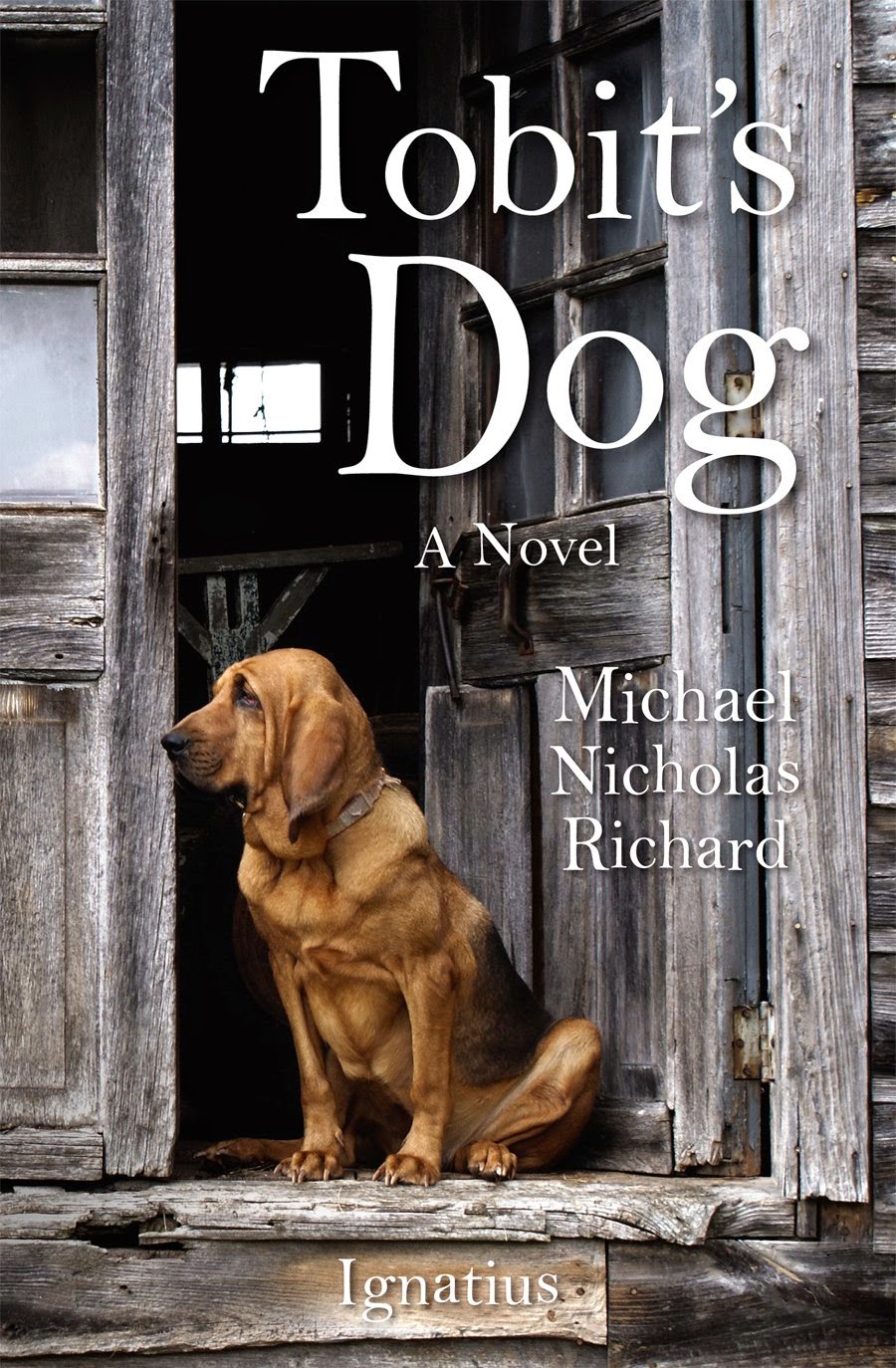
    For those of you who recall our wedding (or those who have heard Jodi and me speak at the engaged couples retreats around these parts), you may remember that the only detail I was specific about in the ceremony was the Old Testament reading, from the Book of Tobit, Chapter 8, verses 4-8. The back story, about the faithful but afflicted Tobit, his son Tobiah, a long-lost kinsman, and a cursed young bride, is retold in the novel Tobit’s Dog by Michael N. Richard.

    Richard re-sets this ancient story as a mystery of sorts, set in the rural South during the Depression, and opens with a vignette of the titular canine visiting a local dump with his master, who is looking for discarded furniture to repair and sell. The dog is torn between the lure of his senses and the love of his master, but ultimately, chooses to follow and obey and is rewarded for it. It’s a compelling analogy to our relationship with God — but I was nervous: if the entire book were written in this way, it could be heavy-handed.

    Thankfully, it isn’t. Instead, the opening scene sets the theme for the rest of the book, in which all of the major characters are conflicted in some way and are either moving toward their Master or further away.

    Though the story is told in an easy and often humorous style, the subject matter is dark — the apparent mutilation and lynching of a teenage boy, rape and racism, and a tragic family cycle of alcoholism and abuse all figure into the tale, as does spiritual warfare as conducted by the old man’s unusual dog and a talented and world-wise traveling musician who may be Tobit’s cousin but doesn’t seem to be from “around here.”

    It is a Catholic book, featuring Catholic characters living their Catholic faith, but you don’t have to be Catholic, or even Christian, to follow the tale or enjoy it — and in fact, nearly all of the characters find themselves questioning their faith and why bad things happen to good folks. As a bonus, for those who know the Book of Tobit or the three archangels named in Scripture and celebrated today, there is a strong connection between the book and today’s feast — but that’s probably more fun to uncover after the fact. As for the novel, I recommend it highly!